Inquire Inquire
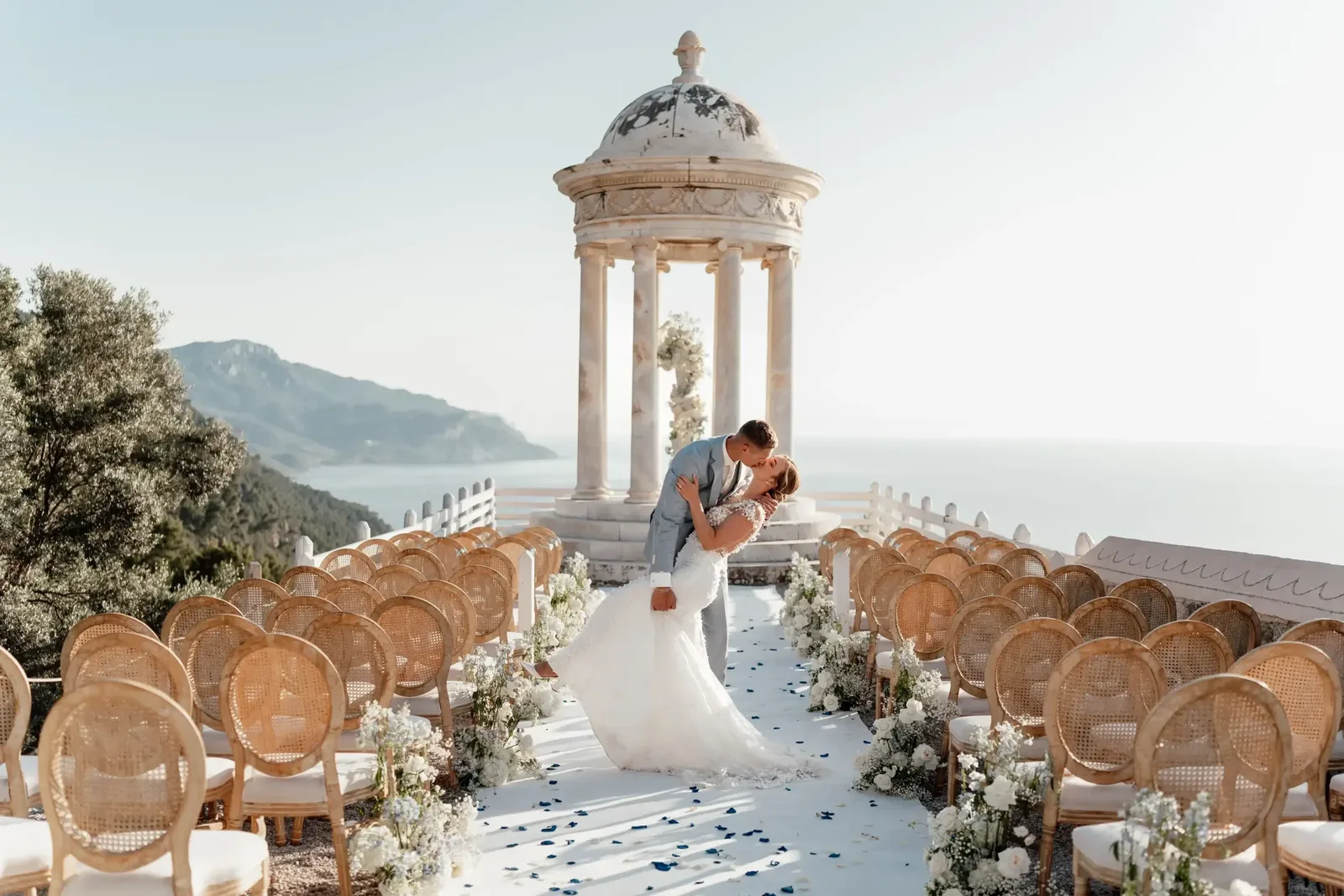
Couple kissing at the clifftop temple at Son Marroig, Deià, Mallorca

Getting Married in Spain

Legal and symbolic options, paperwork, timings and costs

The short answer

Can you get married in Spain?

Yes, but for most couples who live outside Spain the wedding here is a symbolic ceremony, with the legal marriage done at home. A legal civil wedding in Spain normally needs at least one of you to be resident. The realistic legal routes for visiting couples are a Catholic wedding, if one of you is baptised Catholic, or a civil ceremony in Gibraltar, an hour from Marbella.

We plan weddings in Spain for couples from the UK, Ireland and further afield, so we deal with these rules every week. Whichever route suits you, we can shortlist wedding venues in Spain that fit it and handle the wedding planning from start to finish.

Most popular
Symbolic ceremony in Spain, legal marriage at home
Legal in Spain
Civil (residents) or Catholic; Gibraltar for visitors
Plan ahead
12–18 months for peak dates; 4–9 months for legal paperwork
Typical cost
€15,000–€45,000 all in, depending on guests

Ceremony options

Four ways to get married in Spain

Which is right depends on where you live, your faith, and whether the legal part has to happen here. Most of our couples choose the first.

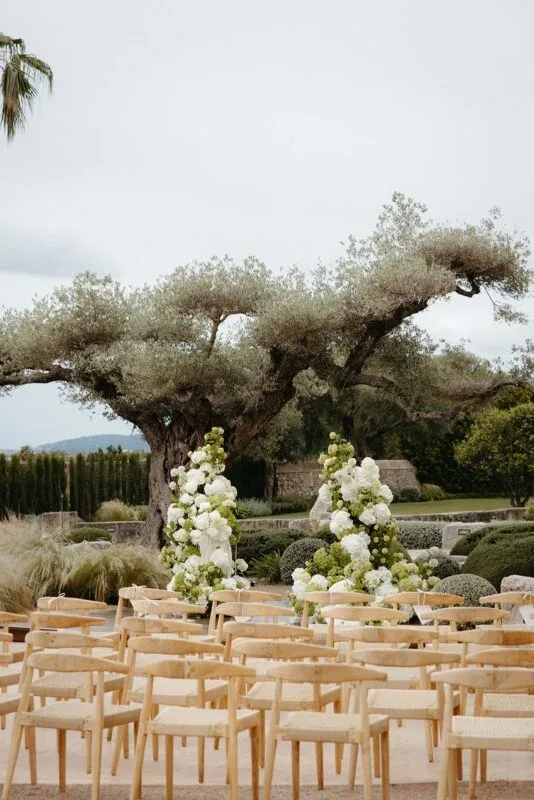
Symbolic wedding ceremony among olive trees and flowers at Finca Morneta, Mallorca

Most popular for visiting couples

Symbolic ceremony in Spain

You marry legally at home, usually a short register-office appointment with two witnesses, then hold the ceremony that matters to you in Spain. It has no legal weight here, which is exactly why it is so popular: no residency rules, no registry timetable and no translated paperwork.

A celebrant writes the ceremony around you, in any language, at any of our handpicked wedding venues.

  • No residency requirement or waiting period
  • Any venue: finca, beach, villa garden, mountainside
  • Readings, vows, ring exchange, hand-fasting, a friend officiating
  • Do the legal part at home, before or after you travel
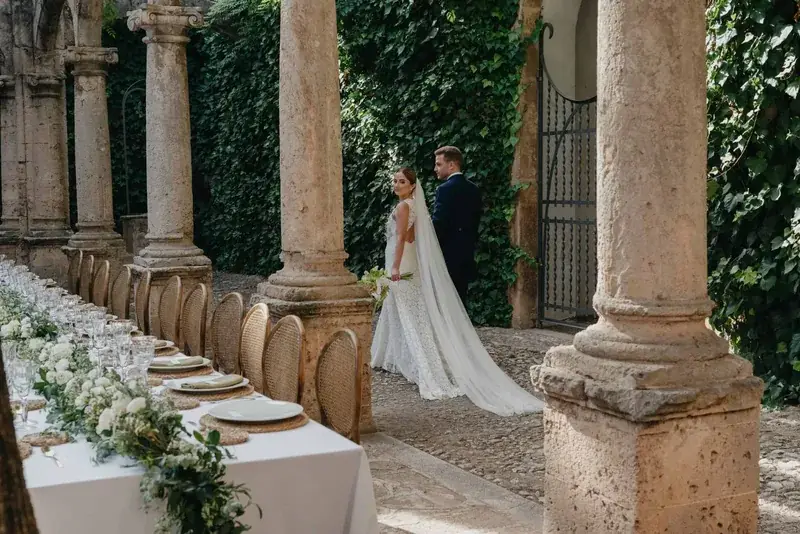
Couple in the stone cloister at Finca Es Convent, Mallorca

Usually for residents

Legal civil wedding in Spain

A civil marriage is handled by the Civil Registry (Registro Civil) through a marriage file, the expediente matrimonial. In practice, at least one of you must be legally resident in Spain and registered on the padrón of the town where you marry; some registries ask for two years of residence.

Rules vary by province and even by office, so check with your registry before you book anything else.

  • One partner normally resident and on the local padrón
  • Allow four to six months, plus an interview
  • Apostilled documents and sworn translations
  • Recognised in the UK once certified, translated and apostilled
Ceremony beside the garden chapel at Finca Monasterio

For practising Catholics

Catholic wedding in Spain

A Catholic wedding is legally recognised in Spain and does not carry the civil residency requirement in the same way, so it is the one legally binding route realistically open to many non-residents.

At least one of you must be baptised Catholic. Your home parish and the Spanish parish exchange the file through the dioceses, and the marriage is then entered on the Civil Registry.

  • Legally binding without the civil residency rule
  • Baptism certificate usually issued within six months
  • Marriage preparation course at home
  • Allow six to nine months; speak to the parish before booking a venue
Palm-lined arch at Las Sirenas, Sotogrande, under an hour from Gibraltar

Simplest legal option near Spain

Legal wedding in Gibraltar

Gibraltar is about an hour from Marbella and about 20 minutes from Sotogrande. Non-residents can marry there by Special Licence, with no residency period: you need to stay in Gibraltar for at least one night immediately before or after the ceremony and bring the required documents.

Many couples do the legal ceremony in Gibraltar on a weekday, then hold the big celebration at a venue in Spain.

  • No residency requirement
  • Stay one night in Gibraltar before or after
  • English-language paperwork; same-sex marriage recognised
  • Registry or approved venues, weekdays and weekends

The routes compared

RouteWho it suitsLegally binding?Where the ceremony happensPaperwork lead time
Legal at home + symbolic in SpainMost couples living outside SpainYes, through the ceremony at homeAnywhere: finca, villa garden, beach, mountainsideUK notice at least 29 days ahead; Ireland 3 months
Spanish civil weddingOne partner Spanish or resident in SpainYes, in Spain, the UK and IrelandRegistry, town hall or licensed venue4–6 months: certificates, apostilles, translations
Catholic wedding in SpainAt least one baptised CatholicYes, once entered on the Civil RegistryA Catholic church or chapel6–9 months
Civil wedding in GibraltarCouples wanting a legal ceremony near southern SpainYesGibraltar registry or approved venueWeeks; one night’s stay in Gibraltar

Not sure which route?

Talk it through with a planner

Tell us where you live, your nationalities and the wedding you have in mind. We will explain which ceremony options are realistic for you and how they fit with your venue and date, before you book anything. Our wedding planners in Spain then take it from there.

Paperwork

Documents you will need

A symbolic ceremony needs no Spanish paperwork. For a legal civil or Catholic wedding in Spain, expect the documents below. Foreign documents usually need an apostille and an official sworn translation into Spanish (traducción jurada), and several must be recently issued, so do not order them too early.

DocumentWho needs itNotes
Identity
Valid passportBoth of youWith plenty of validity left, ideally 12 months. Residents can use a Spanish DNI or NIE card.
Full birth certificateBoth of youThe long-form version showing parents’ names, recently issued, with a Hague apostille if issued outside Spain.
NIE or NIFResidentsYour foreigner identity number (NIE); a Spanish partner provides their DNI/NIF.
Sworn translationsAll foreign documentsOfficial translation into Spanish by a traductor jurado, done after the apostille.
Marital status and capacity
Proof you are free to marryBoth of youBritish: a CNI issued in Spain and/or a marital status certificate (MSC). Irish: a Certificate of Freedom to Marry. Others: a certificate of civil status from your embassy.
Divorce decree or final orderIf divorcedDecree absolute or final order, with the previous marriage certificate.
Death certificateIf widowedYour late spouse’s death certificate, with the previous marriage certificate.
Deed poll or adoption certificateIf applicableWhere your name differs from your birth certificate.
Spanish local documents (residents)
Padrón certificateAt least one of youCertificado de empadronamiento from the town hall, issued within the last three months.
Marriage fileThe coupleThe expediente matrimonial, opened at the Civil Registry, the local Juzgado de Paz in smaller towns, or with a Spanish notary.
Catholic weddings
Baptism and confirmation certificatesCatholic partner(s)Recently issued, usually within six months, and authenticated by your diocese (bishopric).
Pre-marriage course certificateThe coupleCompleted through your home parish.
Civil registrationAfter the weddingThe parish sends the marriage to the Civil Registry so it has full civil effect.

Consulates and registries can be slow, especially in spring. Start the paperwork at least six months before the wedding.

British and Irish couples

Paperwork for British and Irish citizens

If one of you is resident in Spain and you are marrying legally here, your own government will need to confirm that you are free to marry. Ask the registry handling your file which document it wants before you apply for anything.

UK citizens

MSC and CNI from the British Embassy

The UK government issues two documents for marriages in Spain: a marital status certificate (MSC) and a certificate of no impediment (CNI). Some registries want one, some both; the Central Civil Registry in Barcelona city asks for an MSC. Since February 2025, applications are online only.

  • Living in the UK: get a CNI from your UK register office, then apply online to exchange it for a local CNI, because Spanish authorities only accept a CNI issued in Spain.
  • Living in Spain or elsewhere, or already in Spain without a UK CNI: apply by post through the British Embassy in Spain.
  • Need both an MSC and a CNI: one combined application, with no UK CNI needed.
  • The affirmation and notice forms must each be notarised separately by a notary in Spain.

Source: GOV.UK, Getting married in Spain.

Irish citizens

Certificate of Freedom to Marry

Ireland’s Department of Foreign Affairs issues a Certificate of Freedom to Marry, also called a civil letter of freedom or certificat de coutume, confirming you are free to marry. It is a requirement of the country you marry in, not of Ireland, so check first that your Spanish registry needs it.

  • Apply online to the Department of Foreign Affairs, with the fee paid online.
  • The Department advises applying at least three to four months before the wedding.
  • Expect to provide your birth certificate and passport details.
  • For a Catholic wedding, your home parish and diocese also handle the church paperwork.

Source: Ireland.ie, Marriage and civil partnership abroad.

Timeline

Your wedding in Spain planning timeline

  1. 12 to 18 months beforeDecide between a symbolic and a legal ceremony, choose your region, and book the venue and date (our venue sourcing service can shortlist and arrange viewings). Secure the suppliers who book up first: planner, photographer, celebrant.
  2. 9 to 12 months beforeConfirm caterer, music and flowers, send save-the-dates and give guests a hotel and travel guide.
  3. 6 months beforeStart any legal paperwork: order certificates, apostilles and translations, or book your register-office appointment at home. Finalise styling, menu and the shape of the weekend.
  4. 2 to 3 months beforeConfirm guest numbers, seating plan, running order and final supplier details. Send invitations if you have not already.
  5. Final weeksTravel arrangements, final payments and handover. Your planner or on-the-day coordinator takes over the logistics so you can arrive and enjoy it.

When to marry

Best time of year, and dates for 2027

Late spring (May and June) and early autumn (September and early October) are the favourites: warm, settled weather, long evenings and fewer crowds than high summer. July and August suit coastal and evening weddings, though inland heat can be intense. Southern Spain stays mild enough for winter weddings. See the season-by-season guide on our homepage, and plan around local holidays such as Semana Santa and the summer ferias.

Memorable dates in 2027

Sat 22 May 2027Late spring, before peak season
Sat 19 June 2027Long days, warm evenings
Sat 26 June 2027Just after San Juan
Wed 7 July 202707.07.27, midweek pricing
Sat 25 September 2027Warm sea, softer light
Sat 9 October 2027Harvest season, fewer crowds
Sat 27 February 202727.2.27, mild in the south
Any weekdayBetter venue and supplier rates

Popular dates book up 12 to 18 months ahead. Plan ahead with our guides to getting married in Spain in 2027 and a Spanish destination wedding in 2028.

Destinations

Where to get married in Spain

  • Marbella and the Costa del SolVillas, estates and beach clubs with reliable sunshine, easy flights from the UK and Ireland, and Gibraltar close by.
  • Mallorca and IbizaStone fincas, clifftop estates and beach venues, from rustic to contemporary.
  • Andalucía inlandCortijos, white villages and the gorge at Ronda, with Seville and Granada for history and architecture.
  • Barcelona and the Costa BravaMasías and medieval villages, city sophistication and a rugged coastline.

Browse all of our wedding venues in Spain.

Budget

What a wedding in Spain costs

Our couples typically spend €15,000 to €30,000 for 40 to 60 guests and €25,000 to €45,000 for 80 to 100 guests, all in: venue, catering, drinks, flowers, music, photography and planning. A multi-day celebration at a private estate can reach €80,000 or more. Our packages start at €175 a head for 100 guests, venue separate.

Legal weddings add their own costs: certificates, apostilles, sworn translations and, sometimes, an extra trip for an interview. See our wedding costs in Spain for a breakdown by destination, or view our wedding packages.

Got a question?

Common questions about getting married in Spain

Can foreigners legally get married in Spain?
Yes, but a civil wedding normally needs at least one of you to be a Spanish national or legally resident in Spain, registered on the padrón of the town where you marry. Couples who live abroad usually marry legally at home and hold a symbolic ceremony in Spain, or choose a Catholic wedding (if one of you is a baptised Catholic) or a civil wedding in Gibraltar.
Can two British citizens who live in the UK legally marry in Spain?
Generally not as a civil wedding. UK government guidance says you or your partner must live in Spain or be a Spanish national to marry in Spain. Most British couples marry legally at a UK register office and hold the ceremony they care about in Spain. The alternatives are a Catholic wedding, if one of you is baptised Catholic, or a civil wedding in Gibraltar, an hour from Marbella.
How long do you need to live in Spain to get married there?
It depends on the registry. Some only ask that one of you is currently registered on the padrón (the town hall census) where you marry; others expect around two years of legal residence before they will open a civil marriage file. Ask the Civil Registry for the town you have in mind before you book a venue or date.
Do we need to be resident in Spain to have our wedding there?
Not for a symbolic ceremony. Residency only matters if the ceremony in Spain has to be the legal marriage. You can hold a symbolic wedding at any villa, finca, hotel, beach club or estate with no Spanish paperwork, and the legal part is done at home before or after you travel.
What is the minimum age to get married in Spain?
Both of you must be 18 or over. The only exception is a 16 or 17-year-old who has been legally emancipated, for example by a court; marriage below 16 is not permitted. In practice, almost every wedding we plan involves two adults, and venues and celebrants work on that basis.
What documents do we need for a legal civil wedding in Spain?
Expect passports or national ID, full birth certificates, proof that you are free to marry, a padrón certificate issued within the last three months, and your NIE (foreigner identity number) if you are resident. If either of you has been married before, add the divorce decree or the death certificate of your late spouse with the previous marriage certificate. The registry will tell you which extra documents it needs.
Do our documents need an apostille and a translation?
Usually, yes. Documents issued outside Spain normally need an apostille (in the UK, from the FCDO legalisation office) and an official sworn translation into Spanish by a traductor jurado. Several documents, such as birth certificates and certificates of civil status, must also be recently issued, typically within three to six months, so time your requests carefully.
What is a certificate of no impediment, and do British citizens need one?
It is a certificate confirming you are free to marry. For a wedding in Spain, the UK issues a certificate of no impediment (CNI) and a marital status certificate (MSC); your registry will say which it wants. If you live in the UK you get a CNI from your register office, then exchange it online for a local CNI issued in Spain, because Spanish authorities only accept one issued there. Irish citizens apply to the Department of Foreign Affairs for a Certificate of Freedom to Marry.
How long does the legal process take in Spain?
Allow four to six months for a civil wedding and six to nine months for a Catholic wedding. The civil process starts with an appointment at the Civil Registry or town hall to open the marriage file (expediente matrimonial), followed by document checks and an interview. Some registries also publish notice of the intended marriage for around 15 days so objections can be raised. Once approved, you book the ceremony.
How many witnesses do we need for a wedding in Spain?
Two witnesses aged 18 or over, who attend the ceremony with ID. Some registries also ask for a witness when you open the marriage file. The official who marries you then records the marriage in the Civil Register and you receive a marriage certificate.
Can we have a legally recognised Catholic wedding in Spain?
Yes, if at least one of you is a baptised Catholic. Contact the parish where you want to marry at least six months ahead, and your home parish to start the marriage file. Expect to provide recent baptism and confirmation certificates and to complete a marriage preparation course. The file passes between dioceses, and the marriage is then entered on the Civil Registry so it has civil effect.
Are Protestant, Jewish and Muslim weddings recognised in Spain?
Yes. Spain gives civil effect to ceremonies of faiths with formal agreements with the state, including Protestant, Jewish and Muslim communities, and some other established faiths. You first obtain a certificate of capacity to marry from the Civil Registry; the religious ceremony must then take place within six months, conducted by a minister authorised to do so, and is registered afterwards.
Can same-sex couples get married in Spain?
Yes. Spain legalised same-sex marriage in 2005, with exactly the same rules and residency requirements as any other couple. Symbolic ceremonies are open to every couple, and Gibraltar also allows same-sex marriage.
Is a symbolic wedding ceremony in Spain legally binding?
No, and that is what makes it so flexible. A symbolic ceremony has no legal effect, so there is no residency rule, registry timetable or translated paperwork. You marry legally at home, usually a short register-office appointment with two witnesses, and the ceremony in Spain can include everything else: your entrance, readings, vows, rings and a certificate signing. Guests will only know it is symbolic if you tell them.
Can we get legally married in Gibraltar instead?
Yes. Gibraltar allows non-residents to marry by Special Licence, with no residency period. You must stay in Gibraltar for at least one night immediately before or after the ceremony and provide the required documents in advance. Ceremonies can be held at the registry or approved venues, and many couples marry there on a weekday before a celebration in Spain.
Is a marriage in Spain recognised in the UK and Ireland?
Yes, a marriage carried out correctly under Spanish law is generally recognised in both. It cannot be registered with the UK authorities, so keep your Spanish marriage certificate safe and order an apostilled, translated copy for future use, for example for a name change.
How far ahead should we plan a wedding in Spain?
Ideally 12 to 18 months for a summer Saturday at a popular venue. Six to nine months is often enough for a symbolic ceremony or an off-season date, but start any legal paperwork at least six months ahead, as registries, consulates and parishes can be slow. Elopements can come together in a few weeks.
Is getting married in Spain cheaper than in the UK?
It can be, particularly for smaller weddings and outside July and August. Our couples typically spend €15,000 to €30,000 for 40 to 60 guests and €25,000 to €45,000 for 80 to 100, all in. Budget separately for travel, accommodation, certificates, apostilles, sworn translations and supplier deposits.

If you have any further questions, read our FAQs or contact us.

Official sources

Where to check the current rules

Marriage rules change and vary by registry, so always confirm the latest requirements with the official source for your situation. These are the pages we use and recommend:

Last reviewed 7 November 2026. This guide is general information, not legal advice.

Wes, founder and wedding planner at Wedding Venues ES

Written by Wes, founder and wedding planner, and reviewed by Miriam, wedding planner. Last updated 7 November 2026. Based on the weddings our team has planned in Spain since 2023; legal requirements checked against GOV.UK, Ireland.ie and Spanish and Gibraltar government guidance, and confirmed with each registry or parish for every couple.

Start planning

Find the perfect Spanish wedding venue

We're Marbella-based, but we don't just plan weddings on the Costa del Sol. We help couples plan weddings in Spain from Barcelona and the Costa Brava to Mallorca, Ibiza and Andalucía, and we know these venues first-hand. We can shortlist and tour venues on your behalf, then help with the wedding planning or on-the-day coordination. Send us a short inquiry and you'll get a link to book a free consultation call.

With thanks

Thank you for the images

Our thanks go to the venues and the talented wedding photographers whose work brings these pages to life. All images remain the copyright of the venues and their photographers.

Is this one of your images?

If you took any of the photographs on this website, please send us your details. We would be delighted to credit you by name and feature you as a vendor on weddingvenues.es.

Send us your details

Register your wedding services with us

Wedding photographer, videographer or supplier? Join our directory of wedding vendors in Spain and reach couples who are planning their wedding in Spain.

Register your services