Discover your perfect wedding venue in Spain

Wedding Venues Mallorca
Where Mountains Meet the Sea. Mallorca's Best Wedding Venues.
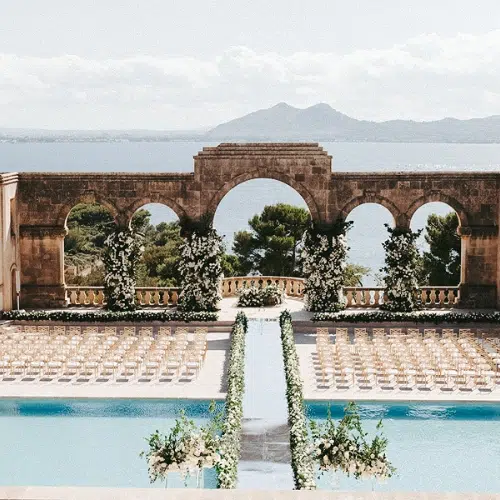
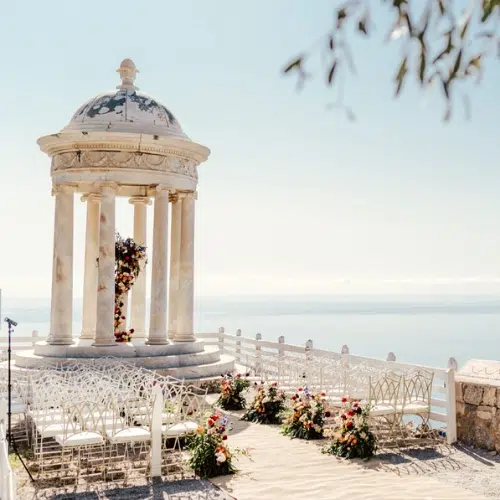
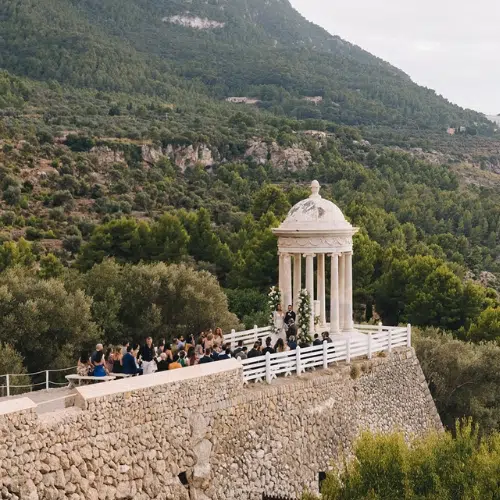
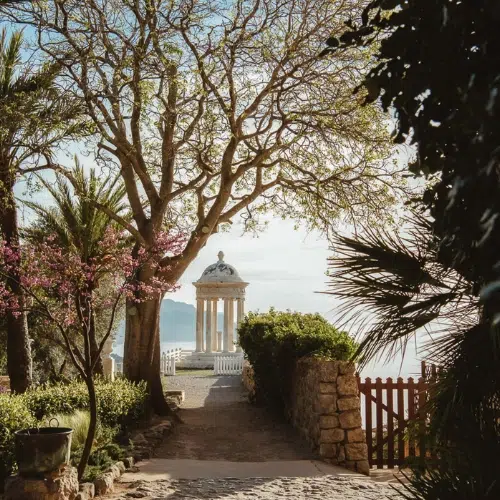
Mallorca is the most versatile of the Balearic islands, and the one that surprises couples most. People arrive picturing beaches and find a mountain range: the Serra de Tramuntana, a UNESCO World Heritage site, running the length of the northwest coast with stone villages, terraced hillsides and centuries-old fincas tucked into it. Within forty minutes of Palma you can be at a seaside resort, a private villa, or a working country estate in the hills. That range is the reason it suits so many different weddings.
It’s also the easiest Balearic island to marry on. Palma has one of Spain’s busiest airports, with direct flights from across the UK and Europe year round, so guests arrive without connections. And unlike Ibiza and Menorca, which largely shut down in winter, Mallorca is big enough to function all year, which quietly makes it the sensible choice as well as a beautiful one.
We’re based in Marbella and plan across the Balearics, and the honest summary of Mallorca is this: coast for convenience, the Tramuntana for drama and cooler summer air, Palma for a city-and-sea combination that few islands can offer. Where you land depends on the day you’re picturing and how far you want guests to travel once they’ve arrived.
Getting Your Guests to Mallorca
Palma (PMI) is the island’s single airport and one of the best-connected in Spain, with direct flights from most UK and European cities and typical UK flight times around two and a quarter hours. That’s a real advantage for an international guest list, and it’s why guests arrive fresh rather than frazzled.
A few practical points. Book flights and accommodation early for July and August, since both sell out rather than simply getting pricier. Hire cars are worth arranging months ahead in high summer, when availability collapses. And factor in the drive: the island is bigger than it looks, and a venue in the Tramuntana can be an hour from Palma on winding roads, so arrange guest transport rather than assuming everyone will self-drive.
Luxury Wedding Venues in Mallorca

Mallorca Weddings
What a Mallorca Wedding Costs
Mallorca sits in the middle of the Balearics on price: below Ibiza, above Menorca, with more genuine choice at every level than either. As a guide, most Mallorca weddings we work on come in between €25,000 and €35,000 all in for 100 guests, though a Tramuntana finca and a five-star coastal resort sit at very different ends of that.
Three things move the number more than couples expect. Season, because peak summer is a real step up, not a small one. Accommodation, which is finite, so book blocks early or guests pay resort rates. And the ecotasa, the Balearic sustainable tourism tax charged per guest per night on top of their accommodation, which is modest per head but adds up across a full guest list. IVA is 21%, so always ask whether a quote includes it.
Choosing Your Setting
Mallorca broadly offers four kinds of venue, and they suit genuinely different weddings.
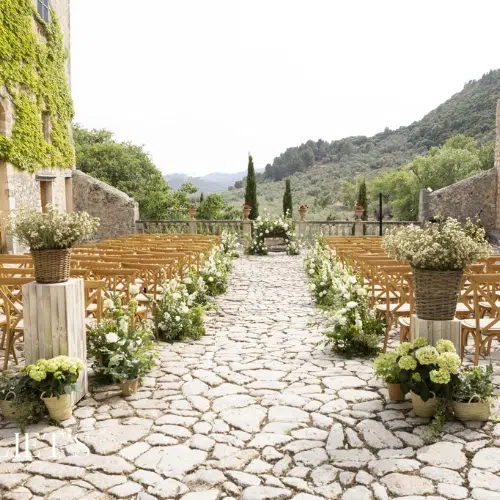
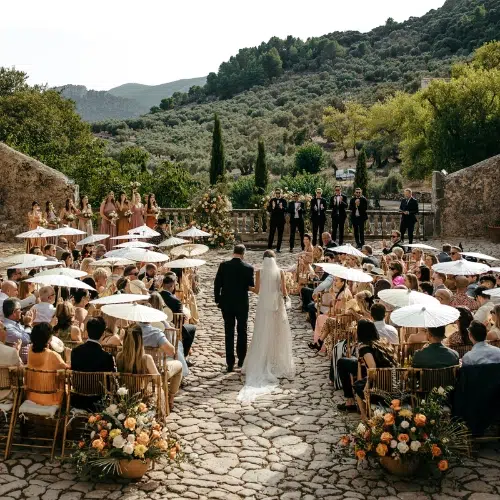
Tramuntana fincas. Traditional stone estates in the mountains, often with olive groves and accommodation on site. Cooler than the coast in August, private, and unbeatable for a wedding that runs over two or three days. The trade-off is the drive, so plan guest transport.
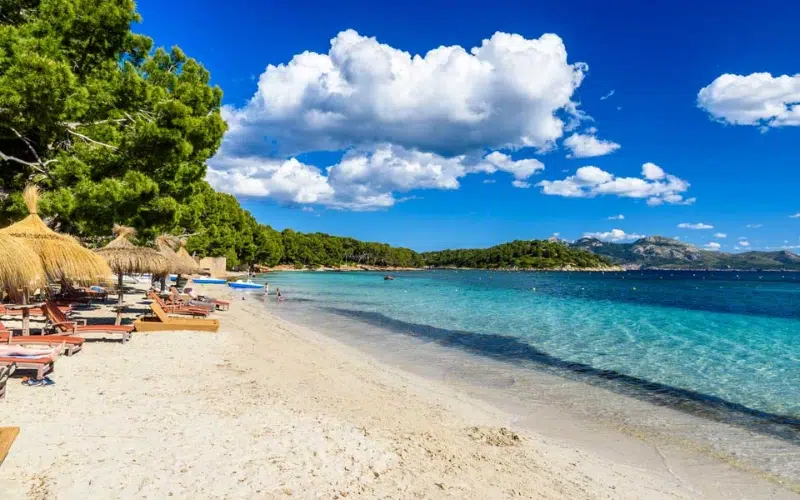
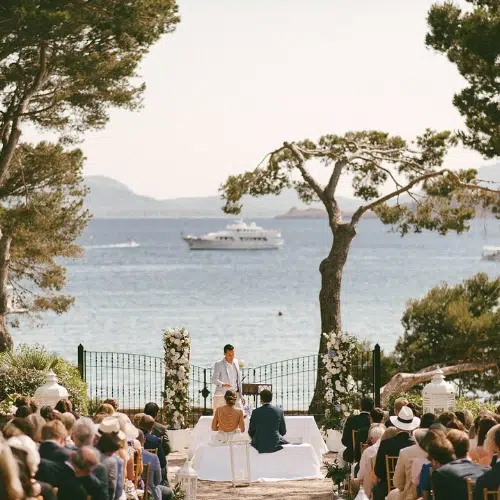
Coastal villas and resorts. Sea views, easy beach access and a shorter transfer from Palma. Ranges from exclusive-use private villas to full-service resorts that handle everything in-house.
Palma and the bay. For couples who want a city as well as a sea. Rooftop venues, historic buildings and hotels, with everything walkable and plenty for guests to do either side of the wedding.
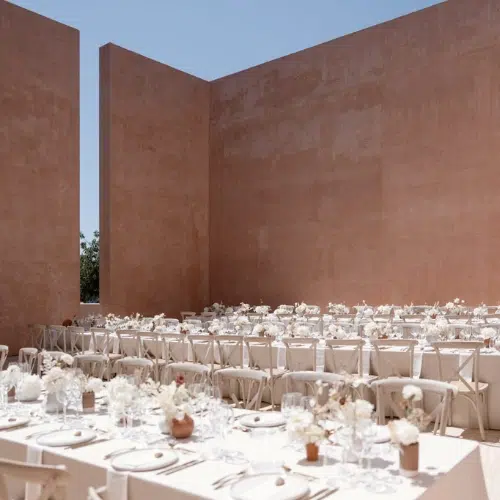
Country estates inland. Away from both mountains and coast, these are the working-farm equivalents of the Andalusian cortijo, with courtyards, gardens and space, usually at better value than the coast.
Looking for a Wedding Venue in Mallorca Contact Us
Wedding Venues | We expertly source stunning fincas, villas, and beachfront locations, then coordinate every detail, from catering and décor to entertainment and transportation. Let us turn your vision into a flawless celebration, so you can relax and enjoy each magical moment. Reach out today, and our dedicated team will be in touch within 24 hours to start planning your perfect day.
See All Our Wedding Venues
With a bit of local knowledge, a Mallorca wedding comes together far more smoothly. A few things worth getting right early:
- Season: May, June and September are the sweet spot, warm and dry without the peak-summer crowds and prices. And because Mallorca stays open year round, winter is a genuine option when the other islands aren’t.
- Suppliers: Use Mallorcan florists, photographers and caterers who know the venues, the light and the logistics here. It’s what we draw on when we source your team.
- Paperwork: A legal wedding in Spain can be involved for non-residents, so many couples marry symbolically here and complete the formalities at home. We’ll handle either route.
- Travel: The island’s bigger than it looks, so plan the drive from Palma and arrange guest transport rather than assuming everyone will hire a car.
Our services include:


Contact us for more information
Weddings in Mallorca
Contact Us
Make Your Day Special with Us
Start Your Wedding Journey and discover our exceptional services, designed to make your day extraordinary and unforgettable. We look forward to creating wonderful memories with you.
Our Services

Venue Sourcing
Venue Sourcing & Tours | We expertly source and tour secure idyllic Mallorca wedding venues, from luxurious beachfront villas to rustic countryside fincas, perfectly tailored to your unique vision and style. See our hand selected Wedding Venues in Spain

Wedding Planning
Wedding Planning Services & Packages | Our professional Mallorca wedding planners meticulously handle every detail, from budgeting and guest logistics to design aesthetics, crafting personalised, stress-free celebrations. Also see our: Wedding Packages

On-Day Coordination
On-Day Wedding Coordination | Our dedicated on-the-day wedding coordinators ensure your Mallorca celebration flows seamlessly by managing timelines, vendors, and guest arrangements, so you can enjoy your special day.

Vendor Sourcing
Vendor Sourcing & Management | Leveraging our trusted network of premium local suppliers, from top caterers and talented DJs to photographers and florists, we seamlessly manage all vendor interactions.
Mallorca Wedding Venues
Planning an island wedding from another country raises questions the mainland doesn’t, so it’s worth a look at our FAQs before you get too far in.
We’ve pulled together what couples actually ask us: how the season affects price and availability, the legal routes for non-residents, what the different venue types suit, and how to keep guests happy across a three-day island wedding.
Our Frequently Asked Questions are there to save you the guesswork, so you can get on with the enjoyable part.
Both errors fixed, “breathtaking” and “peace of mind” gone, and the middle sentence now names what’s actually in the FAQs rather than listing adjectives — which gives someone a reason to click.
Contact Us For More Information
Common Questions
Is it Mallorca or Majorca?
Same island, two spellings. “Mallorca” is the Spanish and Catalan name locals use; “Majorca” is the older English version you’ll still see in UK guides and signage. Whichever you search, you’ll land on the same place. We use Mallorca, since that’s what you’ll see once you’re there.
Which airport do guests fly into, and is it easy?
There’s just one, Palma (PMI), and it’s among the best-connected in Spain, with direct flights from most UK and European cities and around two and a quarter hours from the UK. One airport keeps things simple: everyone arrives at the same place, and transfers are easy to coordinate.
Do we need a car for a Mallorca wedding?
It depends where your venue is. Around Palma and the bay you can manage on taxis and transfers. For a Tramuntana finca or an inland estate, a car helps, but with a full guest list it’s usually simpler to arrange coaches than to have everyone navigating mountain roads after dinner.
Can we have a beach ceremony in Mallorca?
Yes, but there’s a distinction. A public beach usually needs a permit from the local town hall, with rules and fees varying by municipality and season. A private beach club or a beachfront hotel is far simpler, since they handle the space and the licensing for you.
What's the weather like through the year?
Warm, dry summers and mild winters. July and August are hot and busy; May, June and September are the comfortable months. Winter is mild rather than cold, with the odd rainy spell, and the Tramuntana under winter light is genuinely beautiful. Unlike the smaller islands, Mallorca stays open and functioning year round.
What is the Serra de Tramuntana, and why do couples marry there?
It’s the mountain range along Mallorca’s northwest coast, a UNESCO World Heritage site, full of stone villages, terraced hillsides and centuries-old fincas. Couples choose it for the drama, the privacy and cooler summer air than the coast. The one thing to plan for is the drive, since it’s winding and further from Palma than it looks.
Can guests make a holiday of it?
Easily, and many do. Between events there’s the vintage train from Palma to Sóller, boat trips to hidden coves, the old town of Palma, and the mountain villages of Valldemossa and Deià. A three-day island wedding gives everyone a proper break, which is part of why island weddings work so well.