Discover your perfect wedding venue in Spain

Wedding Venues Tenerife
Where Love Meets Style. Tenerife’s Best Wedding Venues.
Tenerife is the one Spanish destination where “year-round” isn’t marketing. The island sits off the coast of Africa rather than in the Mediterranean, and it holds around 21°C in January. If your date is fixed by something other than the weather, that removes the compromise entirely.
Tenerife is the only Canary Island where non-residents can hold a Catholic church wedding. That matters because a Catholic ceremony is the one route to a legally binding wedding genuinely open to couples who don’t live in Spain. Everywhere else, including the other Canary Islands, you’re marrying legally at home and holding a symbolic ceremony here. On Tenerife you can do the whole thing on the island.
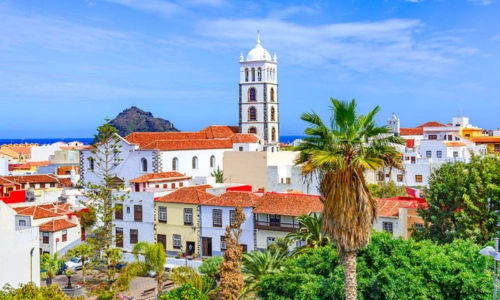
Luxury Wedding Venues in Tenerife
Island Romance: Weddings in Tenerife
Tenerife has something no other Canary Island offers: non-resident couples can hold a legally binding Catholic ceremony here.
That’s worth understanding properly, because it’s unusual. Across the rest of Spain, and on the other islands, a legal wedding is genuinely difficult for non-residents. A civil ceremony runs through the Registro Civil, which expects at least one of you registered on the local padrón, and that rules most couples out. So the standard route everywhere else is to marry legally at home and hold a symbolic ceremony in Spain.
On Tenerife you can do the whole thing on the island.
What it involves. Both of you generally need to be baptised and confirmed Catholics. Your home parish handles the pre-nuptial enquiry and forwards the file to the local diocese, and most dioceses require a pre-marital course. Allow a year, and start with your own priest rather than approaching a church here.
If that isn’t your route, the alternative is straightforward and it’s what most couples do anywhere in Spain. Marry legally at home in a ten-minute registry appointment, then hold a symbolic ceremony here with an English-speaking celebrant. That can be a religious blessing in a Canarian church, or it can be anywhere at all: a black-sand cove, a castle terrace, a garden above the Atlantic. No paperwork, no restrictions on where or when, and complete freedom over the wording.
One thing to be clear about. You’ll see sites suggesting non-residents can simply book a civil ceremony at the local Registro Civil. In practice the padrón requirement applies here as it does on the mainland, so don’t build a plan around it without confirming directly.
Why Get Married in Tenerife?
The weather is the honest answer. Tenerife’s climate is stable in a way mainland Spain’s isn’t: warm and dry from spring through autumn, mild in winter, and without the August heat that makes an afternoon ceremony in Seville an endurance test. Outdoor ceremonies here rarely need a plan B, which is a claim almost nowhere else in Spain can make.
The landscapes are genuinely varied, and within an hour of each other. Teide’s caldera looks like the surface of another planet. The north coast has banana plantations, laurel forest and almond groves. The south has volcanic cliffs above the Atlantic. And there are black-sand coves that look like nothing you’d find in the Mediterranean.
Your guests will be well looked after, which matters when you’re asking people to fly four hours. The island is set up for visitors, so accommodation runs from apartments to five-star resorts, transport is straightforward, and there’s plenty to do across a week: Teide and the cable car, whale watching off the south coast, the Anaga mountains, La Laguna’s old town, and the wine country at Tacoronte-Acentejo.
Two things worth planning around. The trade winds are reliable rather than gentle, particularly on the north coast, so anything freestanding outdoors needs proper fixing. And the calima
Timing. Almost any month works here, which is Tenerife’s real advantage. The south stays reliably warm and dry year-round; the north is cooler and wetter from November to February, which is the trade-off for it being green. If you’re marrying in the north, spring through autumn is the safer bet.
Suppliers. The Canaries have their own supplier market, separate from the mainland’s, so a Marbella florist isn’t flying over. What matters is finding people who work the island regularly and know which side of it you’re on, because the north and south are genuinely different in light, weather and access.
The legal side. Decide before you book a date. Tenerife is the only Canary Island where non-residents can hold a legally binding Catholic ceremony, and that route needs about a year. Otherwise you’ll marry legally at home and hold a symbolic ceremony here, which takes no paperwork at all.
Our services include:


Contact us for more information
Luxury Wedding Venues in Tenerife

Types of Venues in Tenerife
Discover the perfect backdrop for your special day with Wedding Venues ES, your trusted partner in Tenerife
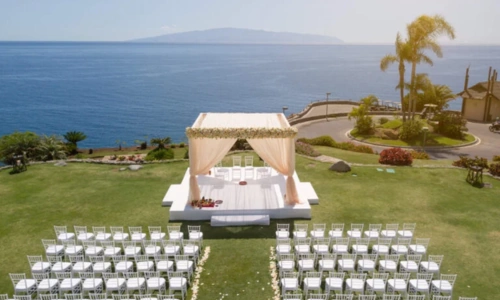
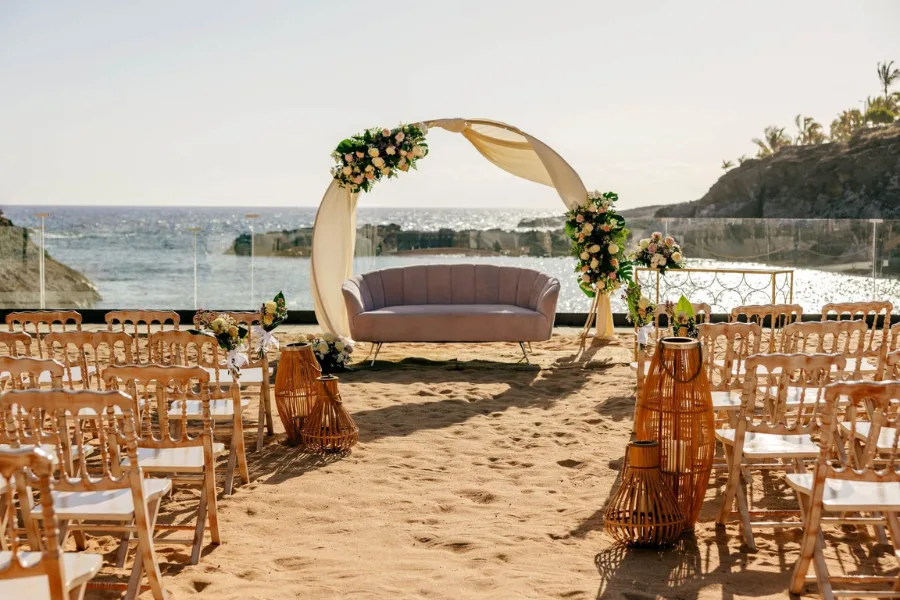
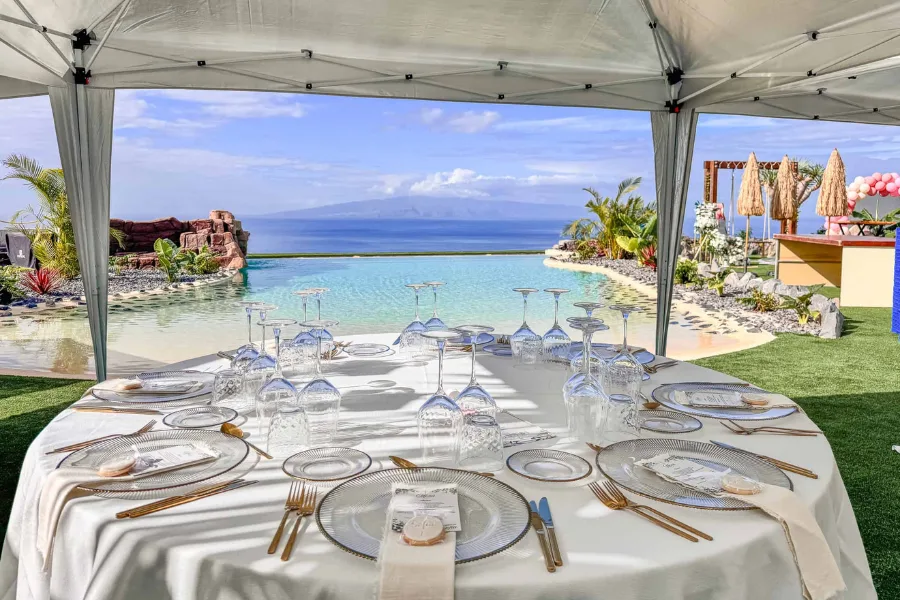
A beach club is the easiest wedding on the island to organise, and the setting does most of the work.
Why they suit Tenerife. The Atlantic here is dramatic rather than gentle, so the venues tend to sit above the water on terraces and decks rather than on the sand itself. That’s an advantage: you get the view and the sound without the wind, the tide or the practical difficulties of a beach.
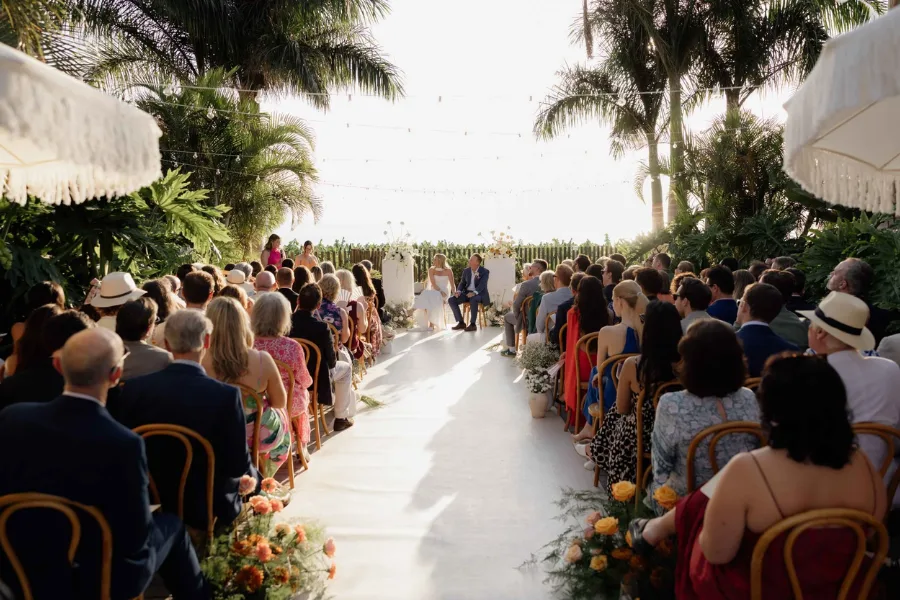
They also handle the whole day in one place. Ceremony on a terrace or a raised platform, drinks by the pool, dinner as the light goes, dancing after. Nobody moves, nobody needs transport, and the venue has the licence, the kitchen and the staff already.
Two things specific to Tenerife. The beaches in the south are largely imported golden sand, brought in from the Sahara, while the north’s are black volcanic sand, which is striking and considerably less conventional. And the trade winds are reliable rather than gentle, so ask any venue how exposed the ceremony space is and how they manage it. A terrace set back from the water is often more comfortable than one on the edge of it.
On music, the same rules apply as anywhere in Spain: these venues sit near accommodation, so outdoor music generally stops between midnight and one. Get the position in writing before you book.
And on public beaches, a ceremony there needs a licence from the ayuntamiento, and the rules vary by beach and by season. It’s arrangeable, but a club is simpler and gives you the same photographs.
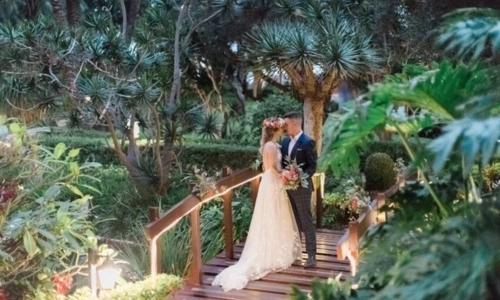
A hotel is the simplest route to a wedding here, and on an island four hours from home that counts for a great deal.
What you’re actually buying is coordination. Ceremony, dinner, party and beds on one contract, run by a team who do this every week. You’re not managing a caterer, a furniture supplier and a bar across a language barrier and a time difference, and your guests aren’t finding transport at one in the morning.
Tenerife has more of them than most Spanish destinations, because the island’s tourism infrastructure is genuinely deep. That means real choice at every level, from cliff-edge five-stars to adults-only properties to garden hotels in the north.
North or south changes what you get. The south has the resort hotels: larger, newer, more reliably sunny, with the airport close. The north has the older, greener properties in subtropical gardens beneath Teide, cooler and considerably more characterful. Which suits you depends on whether the setting or the convenience matters more.
The trade-off is flexibility. You’ll use the hotel’s kitchen and generally its supplier list, and the day will run the way they run weddings. For most couples planning from abroad that’s a fair exchange, but if you have a photographer or caterer you feel strongly about, establish whether outside suppliers are permitted before you commit.
Three things to pin down. Whether the quote includes IGIC at 7%, since the Canary rate differs from the mainland’s 21% and some quote inclusive. Whether a minimum spend or guest count applies, both standard at this level. And what else is booked that day, because unless you’ve taken exclusive use, you won’t be the only thing happening.
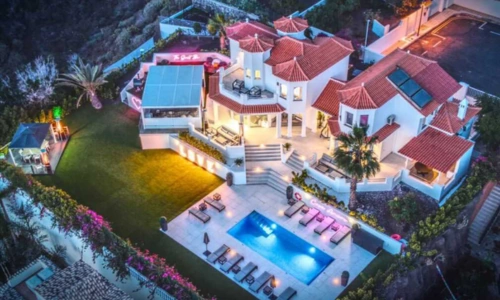
A private villa gives you the whole place to yourselves. No other guests, no house style, and no venue running your day the way it runs every other one.
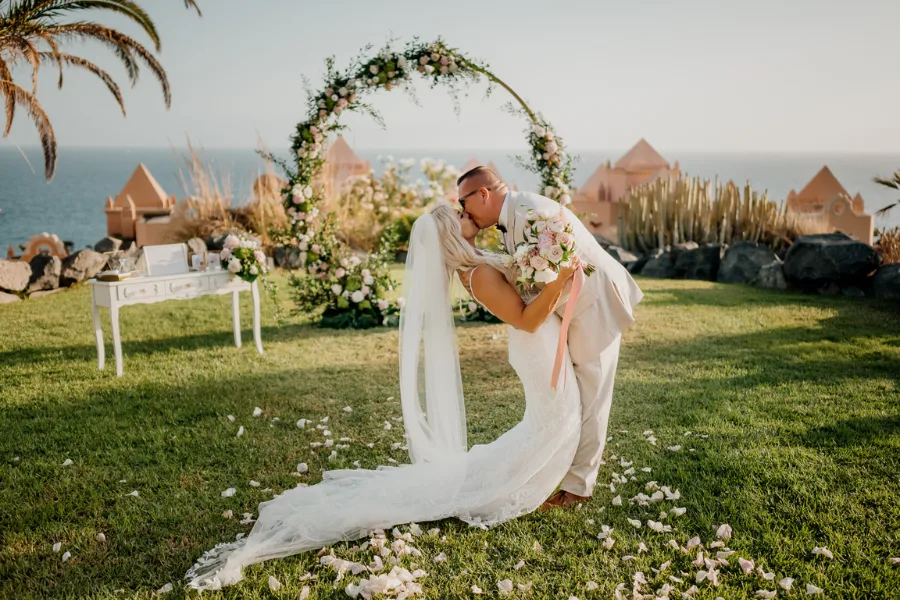
On Tenerife they split by geography. Hillside properties inland with mountain and Teide views. Coastal villas with the Atlantic below. And in the north, older houses set among subtropical gardens, which look like nowhere else on the island.
The thing to understand first is dry hire. Most villas rent you the space and nothing else. Catering, staff, furniture, glassware, bar and often the kitchen equipment come separately. A villa quoted at €5,000 can finish above a hotel at €9,000 once everything’s added, so the headline figure tells you very little. What you get in exchange is total control over who delivers your day.
And it turns the wedding into a weekend. With your closest family staying on site, a welcome dinner the night before and a slow lunch the day after happen almost by themselves. On an island four hours from home, where everyone’s flown out and taken time off, that’s worth more than it costs.
Four things to establish early. The noise curfew, since villas sit in residential areas and it varies property to property. The wet weather plan, because a villa seating 100 outside might shelter 30. Whether the property holds an alcohol licence, since many don’t, which shapes how you run the bar. And the access road, because hillside villas here are often up narrow lanes where a coach can’t turn.
One point specific to the Canaries. The supplier market is separate from the mainland’s and smaller, so for a dry hire villa you’re drawing on a limited pool for catering, furniture and staff. Book earlier than you would in Marbella, and factor it into the timeline rather than the budget alone.
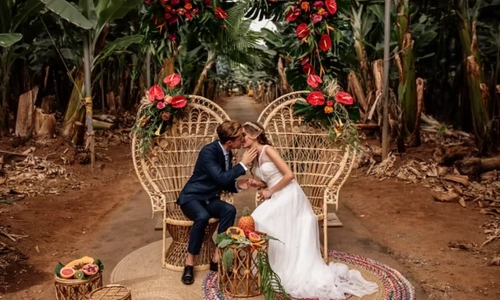
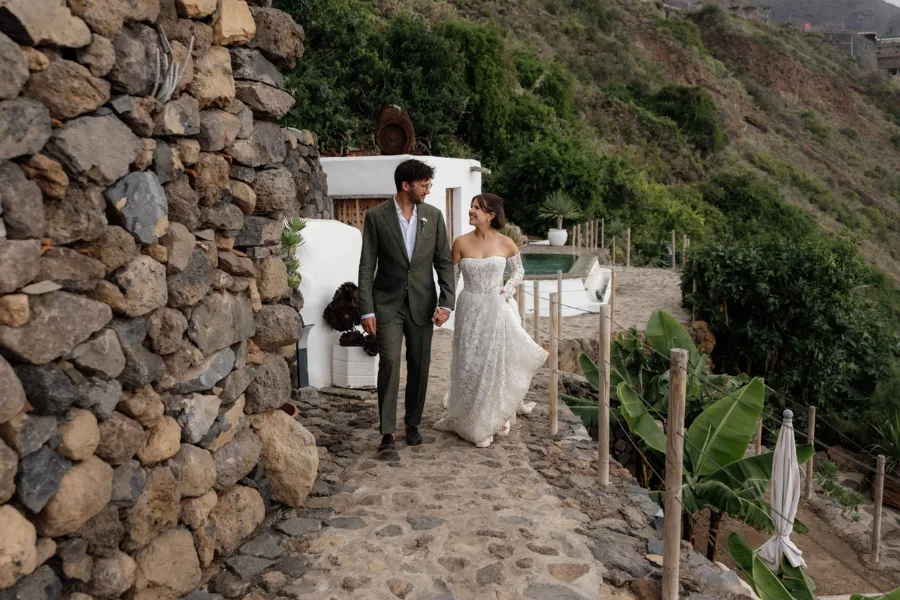
Drive inland and the island changes. The resort strip gives way to terraced hillsides, banana plantations, vineyards and almond groves, and among them sit the old Canarian estates: whitewashed stone, timber balconies and terracotta roofs.
This is where the north comes into its own. Around La Orotava, Los Realejos and the Tacoronte-Acentejo wine country, the landscape is green and volcanic in a way the south isn’t, with Teide behind and the Atlantic below. It looks like nowhere else in Spain.
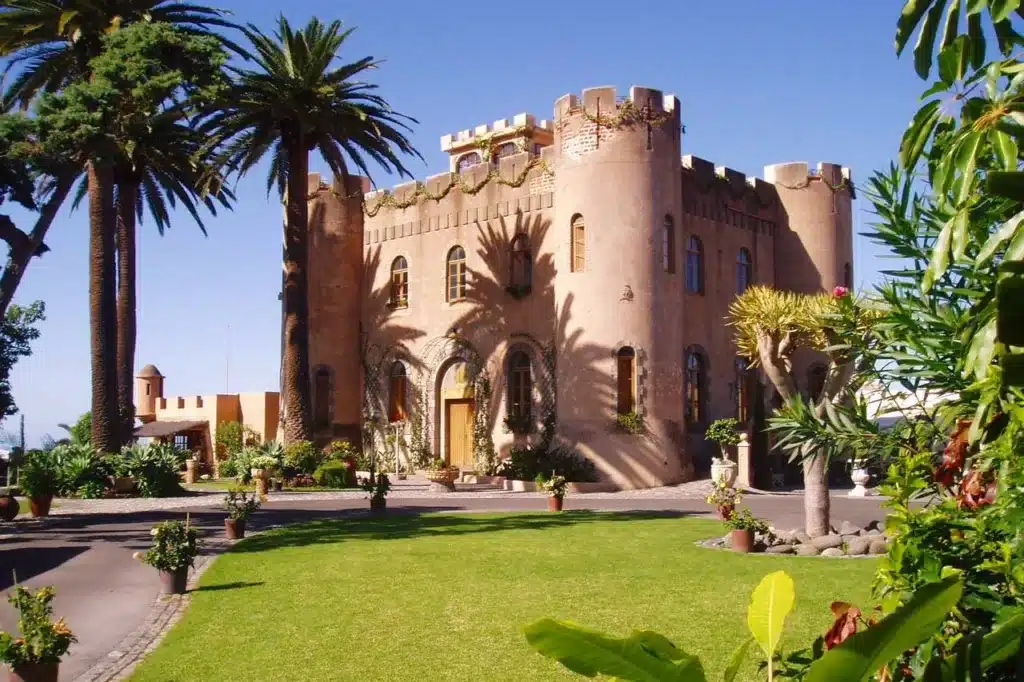
El Castillo de Los Realejos is the estate we work with: a 19th-century property with sea views and gardens, taking up to 250 guests, five minutes from La Orotava’s old town.
The practical advantages of going inland are the same here as on the mainland. No residential neighbours, so curfews are more relaxed. Room to spread the day across separate areas rather than turning one space around. Lower prices than the coastal resorts. And a few degrees cooler in summer, though on Tenerife that matters less than it does in Andalucía.
The trade-off is logistics. Rural venues often need more than the hire fee suggests: lighting, generator capacity, extended staffing, and coaches for guests both ways. Price the full operational cost rather than the rental.
And check the access road. The north’s estates sit on terraced hillsides with narrow lanes between them, and a full-size coach frequently can’t get up or turn. That means minibuses and more trips, which is manageable if it’s planned and a problem if it isn’t.
One genuinely local addition. Tenerife has a real wine industry, with Tacoronte-Acentejo and Ycoden-Daute-Isora both producing commercially from volcanic soil. Several bodegas will host a tasting for a group, and it’s an unusual thing to build a welcome afternoon around.
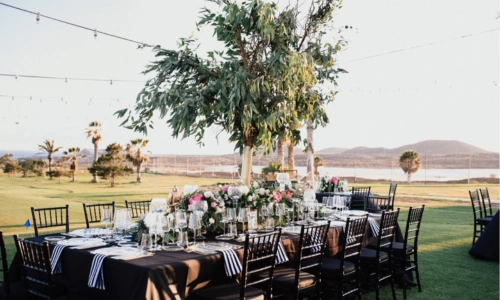
Tenerife has more golf than any other Canary Island, most of it in the south around Costa Adeje, Golf del Sur and Amarilla. The courses sit on volcanic ground with the Atlantic on one side and Teide behind, which is a genuinely unusual round.
Whether it’s right for you depends entirely on your guest list. If a decent number of your guests play, a golf resort gives them three days of something to do rather than one afternoon in a suit. If none of them do, you’re paying for facilities nobody will use, and a hotel or a country estate will serve you better.
What resorts do well is take the organising off your hands. One contract, one events team, everyone sleeping where the wedding is, and no transport to arrange. On an island four hours from home that matters.
The spa is the underrated part. A morning there before the ceremony does more for the day than most things you could spend the same money on, and it gives guests something to do on the days either side.
Three things to pin down. Whether you have exclusive use, because otherwise the resort is running other business alongside your wedding, and a golf competition on your wedding morning changes the feel of the day considerably. Whether the quote includes IGIC at 7%. And whether a minimum spend or guest count applies, both standard at this level.
And be realistic about the fairway. Ceremonies on the course itself are possible at some resorts and not others, and where they are, they’re usually restricted to certain times so play isn’t disrupted. Ask before you plan one.
Contact Us
Make Your Day Special with Us
Start Your Wedding Journey and discover our exceptional services, designed to make your day extraordinary and unforgettable. We look forward to creating wonderful memories with you.
Our Services

Venue Sourcing
Venue Sourcing & Tours | We expertly source and tour secure idyllic Andalucia wedding venues, from luxurious beachfront villas to rustic countryside fincas, perfectly tailored to your unique vision and style. See our hand selected Wedding Venues Spain

Wedding Planning
Wedding Planning Services & Packages | Our professional Andalucia wedding planners meticulously handle every detail, from budgeting and guest logistics to design aesthetics, crafting personalised, stress-free celebrations. Also see our: Wedding Packages

On-Day Coordination
On-Day Wedding Coordination | Our dedicated on-the-day wedding coordinators ensure your Andalucia celebration flows seamlessly by managing timelines, vendors, and guest arrangements, so you can enjoy your special day.

Vendor Sourcing
Vendor Sourcing & Management | Leveraging our trusted network of premium local suppliers, from top caterers and talented DJs to photographers and florists, we seamlessly manage all vendor interactions.
Tenerife Wedding Venues
To ensure you get the most out of your wedding experience in Tenerife, we highly recommend exploring our comprehensive FAQs.
We’ve compiled essential information, expert tips, and practical guidance to help you seamlessly plan every detail, from breathtaking venues and historic traditions to catering, entertainment, and legal requirements.
Our Frequently Asked Questions are designed to answer your most pressing questions, allowing you to approach your special day in Tenerife with confidence, clarity, and peace of mind.
Contact Us For More Information
Common Questions
What's the weather like?
Tenerife sits off the coast of Africa rather than in the Mediterranean, and the south holds around 21°C in January and 28°C in August. It’s the one Spanish destination where a February wedding genuinely works, and where “year-round” isn’t a marketing line.
The north is cooler and wetter, particularly November to February. That’s the trade-off for it being green.
Two things worth knowing about. The trade winds are reliable rather than gentle, so anything freestanding outdoors needs proper fixing. And the calima, an occasional Saharan dust haze, turns the sky orange and pushes the temperature up sharply for a day or two. Unpredictable, short-lived, and worth knowing exists rather than worrying over.
How much does a wedding in Tenerife cost?
For 100 guests, €30,000 to €50,000 all in.
The thing people miss is the tax. The Canaries sit outside the EU VAT area and charge IGIC at 7% rather than IVA at 21%, which on a €40,000 wedding is roughly €5,600 you simply don’t spend.
Where Tenerife costs more is flights: four hours from the UK rather than two and a half, so your guests are committing more.
Ask whether quotes include IGIC. The rate differs from the mainland and not every supplier states it.
What is there for our guests to do?
Enough for a week, which matters when you’re asking people to fly four hours.
Teide National Park is the one everyone remembers. Spain’s highest peak, a volcanic landscape that looks like another planet, and a cable car most of the way up. An hour from most of the island.
Whale and dolphin watching off the south coast, where resident pilot whales are visible year-round rather than seasonally. Boats go from Los Cristianos and Puerto Colón.
La Laguna, the old colonial capital, is UNESCO-listed and worth half a day. La Orotava does the same at smaller scale in the north.
Loro Parque in Puerto de la Cruz is genuinely good, and Siam Park in the south is the one children will talk about.
And in the far north-east, the Anaga mountains: laurel forest, mist, and roads that feel prehistoric. The least visited part of the island and the most striking.
For a wedding weekend, a wine tasting at Tacoronte-Acentejo is the easiest thing to arrange for a group, and the volcanic soil makes for wines nobody will have tried.
Can we visit venues before booking?
Yes, and we’d push for it on your final two or three.
We tour on your behalf first, so you’re not flying four hours to see places that were never going to work. Most couples then come out once, see a shortlist over a few days, and decide.
Can we get married on Teide?
Not on the summit, no. It’s a national park with strict protections and access to the peak itself requires a permit that isn’t issued for events.
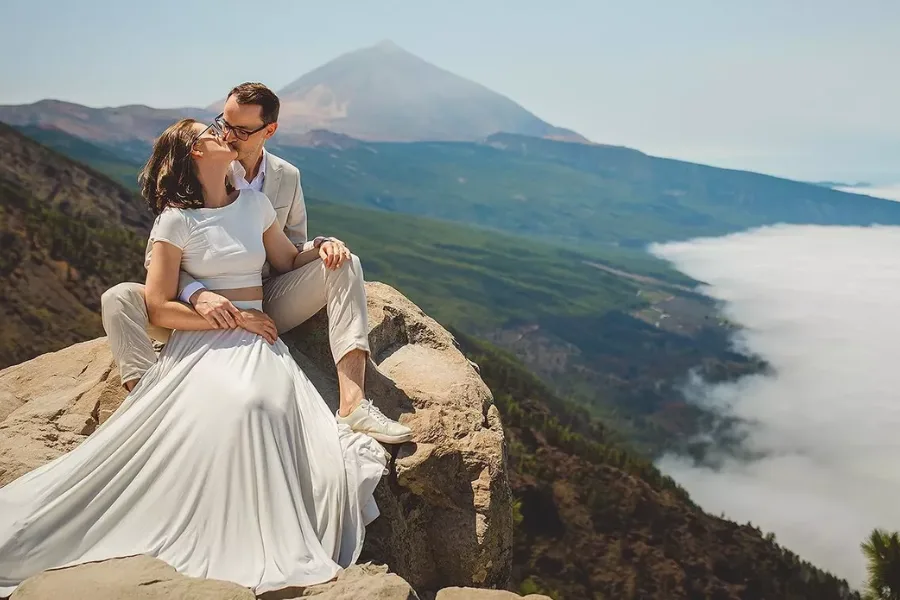
What you can do is photographs. The caldera and the roads around it are accessible, and couples go up for an hour with a photographer. It’s the most striking backdrop on the island and the pictures look like nowhere else in Europe.
Check the permit position for professional shoots before assuming, since the rules on commercial photography in the park are tighter than for visitors.
Enough for a week, which matters when you’re asking people to fly four hours.
Teide National Park is the one everyone remembers. Spain’s highest peak, a volcanic landscape that looks like another planet, and a cable car most of the way up. An hour from most of the island.
Whale and dolphin watching off the south coast, where resident pilot whales are visible year-round rather than seasonally. Boats go from Los Cristianos and Puerto Colón.
La Laguna, the old colonial capital, is UNESCO-listed and worth half a day. La Orotava does the same at smaller scale in the north.
Loro Parque in Puerto de la Cruz is genuinely good, and Siam Park in the south is the one children will talk about.
And in the far north-east, the Anaga mountains: laurel forest, mist, and roads that feel prehistoric. The least visited part of the island and the most striking.
For a wedding weekend, a wine tasting at Tacoronte-Acentejo is the easiest thing to arrange for a group, and the volcanic soil makes for wines nobody will have tried.
Do you offer wedding planning and coordination in Tenerife?
Yes, and there are three levels depending on how much you want to hand over.
Full wedding planning takes it from the beginning: shortlisting and touring venues, building a realistic budget, sourcing and booking every supplier, reading the contracts, and holding the timeline so nothing gets missed. You make the decisions, we do the chasing.
On-day coordination is for couples who’ve planned it themselves and want someone running it. We take over four to six weeks out, confirm timings with every supplier, build a schedule everyone works from, and are on site from set-up to the last dance.
Venue sourcing and tours if you’re still deciding where. We shortlist properly, contact venues in Spanish, and tour on your behalf so you’re not flying four hours to see places that were never going to work.
Plenty of couples take one and not the others. Tell us where you are in the process and we’ll tell you what you actually need.
What wedding suppliers do you work with?
We handle the planning and coordination ourselves, and source everything else from suppliers we know.
Catering and private chefs · Photographers and videographers · Florists and floral designers · DJs and entertainment · Mobile bars · Content creators
Plus hair and makeup, celebrants, transport, furniture and styling hire.
One thing specific to the Canaries. The supplier market here is separate from the mainland’s and considerably smaller. A Marbella florist isn’t flying over, and the good local suppliers work a short, busy season. That means booking earlier than you would on the Costa del Sol, and it means knowing who’s reliable matters more, because there are fewer alternatives if someone lets you down.
And you don’t have to take all of it. Plenty of couples bring a photographer from home and use us for everything else, or handle the flowers themselves and leave us the rest. We’ll work around whatever you’ve already booked.