Inquire Inquire
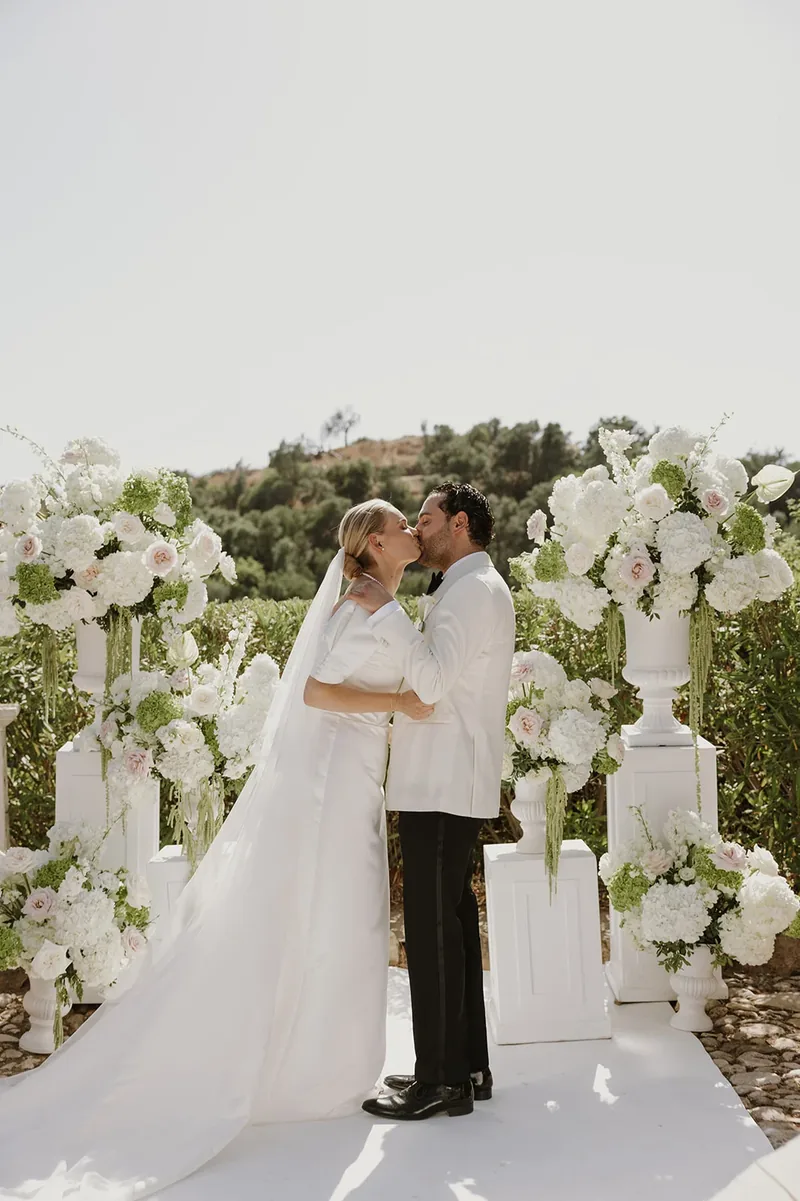
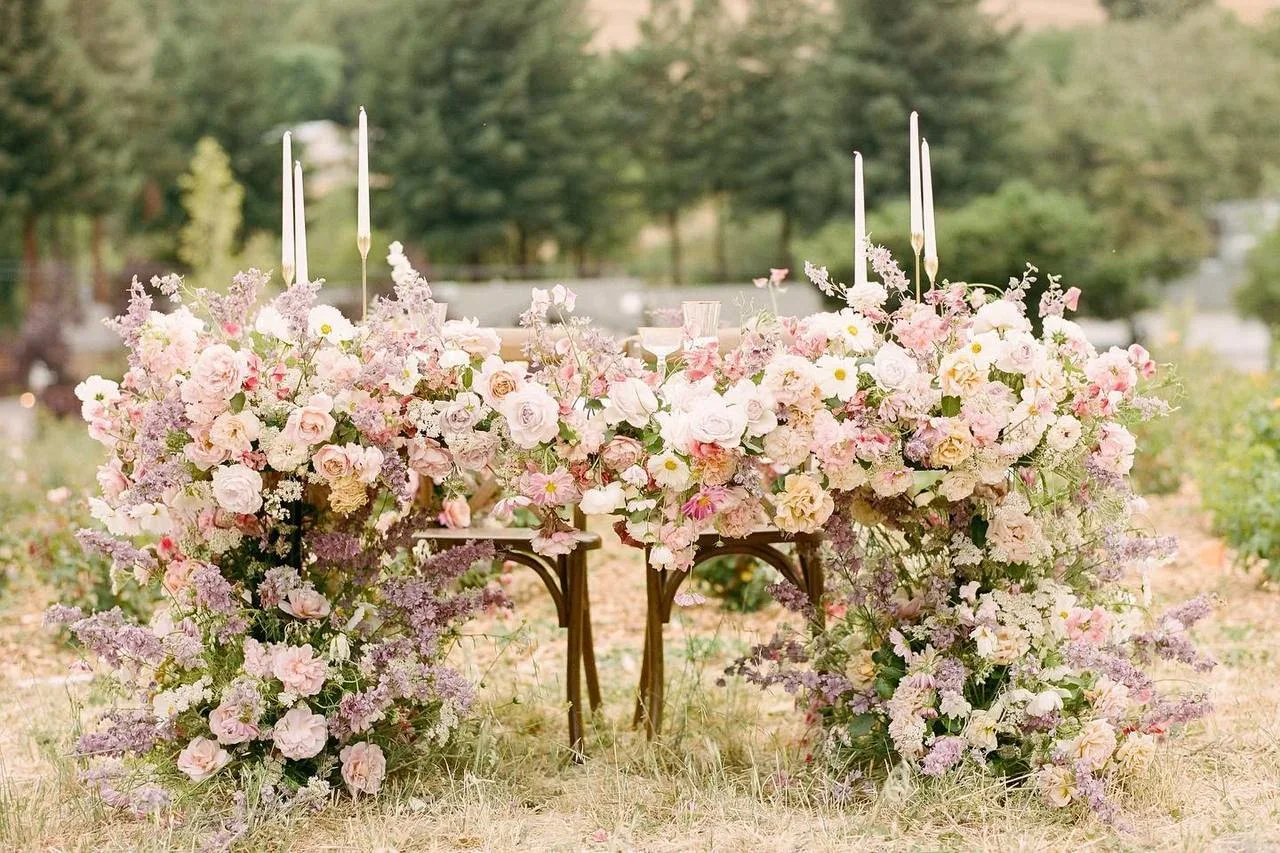
Wedding florist in Marbella: a sweetheart table framed by abundant meadow-style arrangements of blush roses, cosmos and lilac with tall white taper candles, in a garden

Wedding Florists in Marbella

Floral designers on the Costa del Sol, across Spain and in Gibraltar

Wedding flowers in Spain

Wedding flowers in Spain

Typical spend, 80–100 guests
€2,000–€6,000
Bridal bouquet
€120–€300
Book
12–18 months ahead for peak Saturdays
Peony season
Roughly April to June

A wedding florist designs, sources, conditions, delivers and installs your flowers, from the bouquet and buttonholes to the ceremony arch, table centrepieces and any large installation, and then clears it all away afterwards. Flowers are the biggest visual decision of the day and the one couples usually know least about when they start.

Two things are worth knowing about Spain first. Most wedding flowers here are imported: peonies, hydrangeas and garden roses largely arrive from Holland, Ecuador and Kenya, which is why “local seasonal flowers” is often a line rather than a fact, and why a bouquet in Marbella can cost more than the same one at home. The second is heat. A hydrangea can wilt within an hour on an August afternoon, so a florist who works this coast chooses varieties that hold, keeps arrangements out of direct sun until the last moment and hydrates everything properly.

Good floral design gives the day coherence: three or four colours repeated from the ceremony to the tables, one substantial piece rather than a dozen small ones, and a meadow along the aisle instead of arrangements where nobody looks. It is about placement and restraint rather than volume, and most of it can be moved from the ceremony to the reception.

This page is our full guide to wedding flowers in Spain: styles, prices, what survives the heat, a planning timeline from booking to clear-up, regional differences and the Spanish terms you’ll meet, plus the florists we work with.

Our suppliers

Our wedding florists

Florists and floral stylists we work with on the Costa del Sol. Each profile has their style, services and answers to common questions.

Getting married elsewhere in Spain or in Gibraltar? We work with florists in Mallorca, Ibiza, Barcelona, Madrid and beyond, and would rather use someone who knows your venue than send a team from Marbella. Ask us for recommendations.

Real weddings

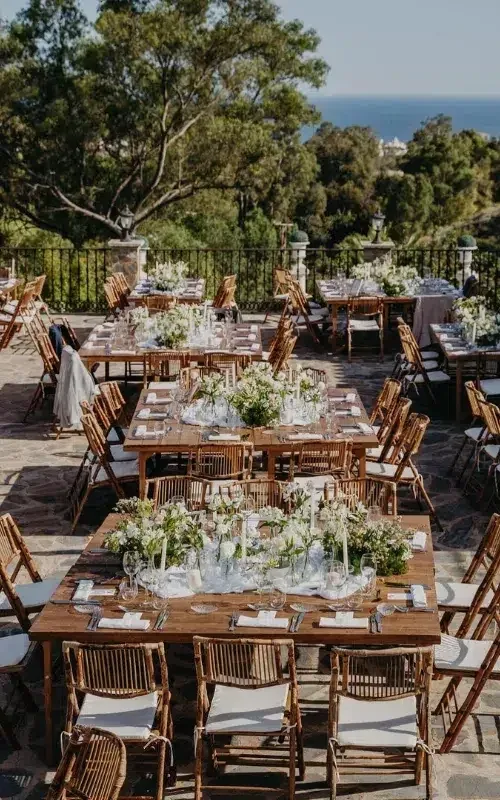
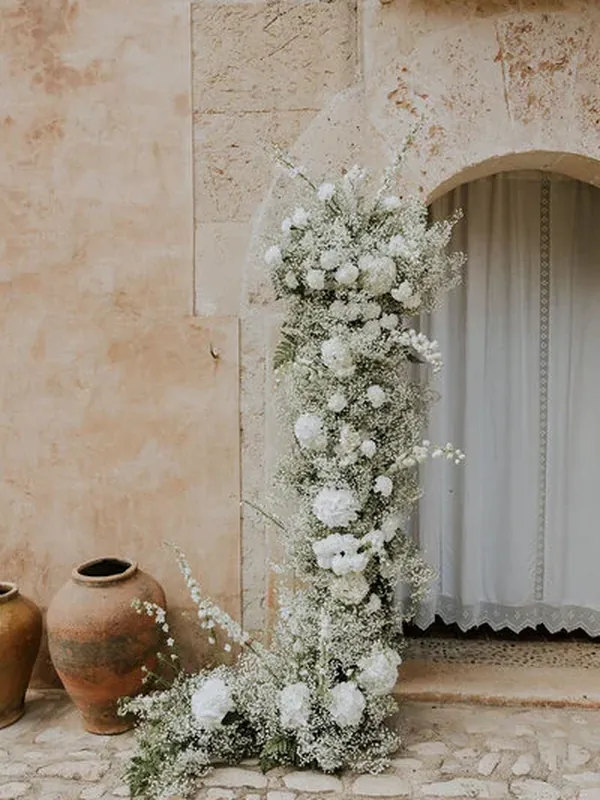
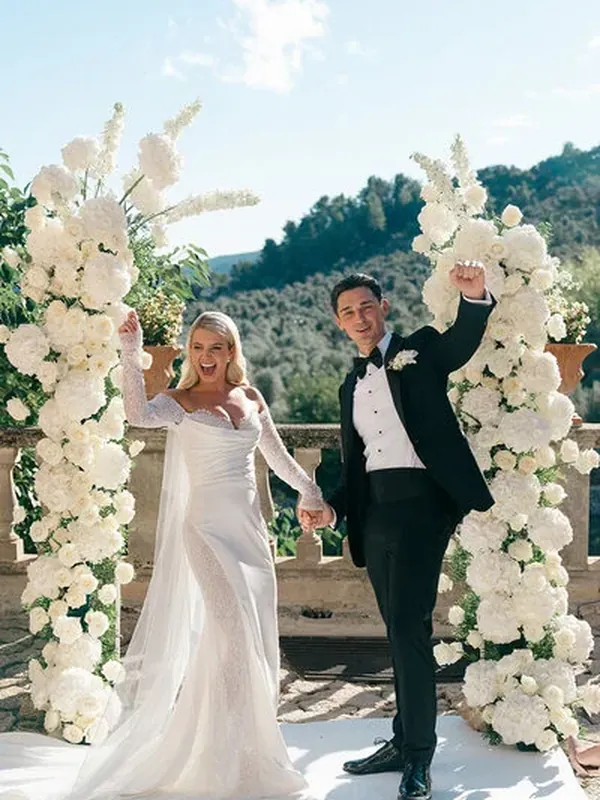
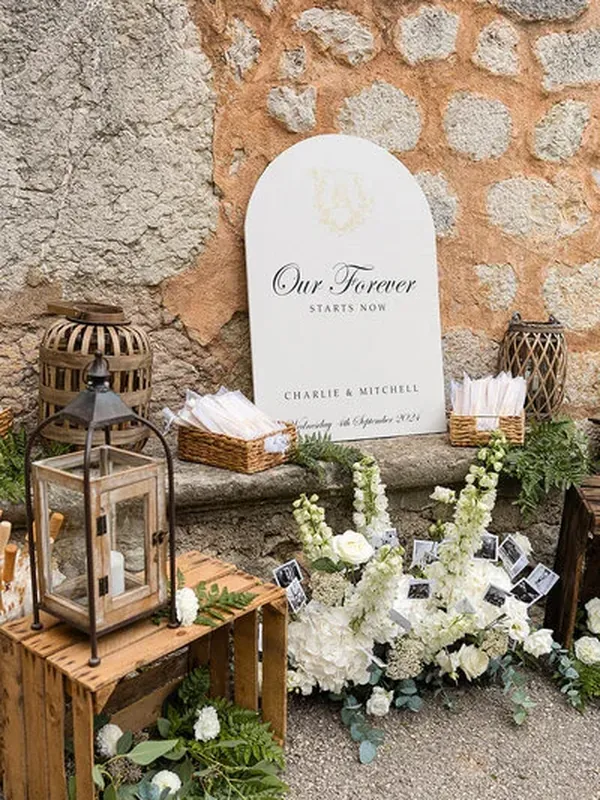
Some of our florists’ work

Ceremony flowers, tables, bouquets and installations from weddings in Spain. Tap a name to see the florist’s profile.

Choosing a style

Floral styles that work in Spain

The setting decides more than the theme does, so choose the venue first and let the flowers follow. These are the four looks we see most, and where each one suits.

Romantic: roses and peonies

Roses, peonies, ranunculus and soft greenery in ivory, blush and dusty pink. Pale palettes wash out under hard midday light and against pale stone, so adding depth with dusty rose, terracotta or darker foliage keeps the look soft without disappearing in photographs.

  • Suits whitewashed cortijos, gardens and historic estates
  • Garden roses and ranunculus stand in for peonies out of season
  • Eucalyptus and olive bulk out arrangements cheaply
  • Less suited to sleek modern venues

Modern: orchids and structured blooms

Orchids, anthuriums, calla lilies and single-variety arrangements in structured vessels. They hold their shape against hard light and stark architecture, and waxy varieties are the most heat-resistant fresh option for a July or August wedding.

  • Suits modern villas, city venues and rooftops
  • A single stem repeated down a table looks deliberate
  • Orchids are imported, so the saving comes from using fewer
  • Can look underdressed at rustic fincas

Mediterranean: olive and citrus

Olive, eucalyptus, wild grasses and citrus in sage, cream, terracotta and ochre. The foliage is grown locally rather than flown in, costs a fraction of imported blooms and holds up in heat, so arrangements can be built mostly from foliage with flowers as accents.

  • Suits fincas, cortijos, olive groves and the outdoors
  • Lemons and oranges look unmistakably Spanish and cost little
  • Use substantial pieces consistently, not scattered sprigs
  • Often comes in below a romantic palette for the same impact

Boho: dried elements

Pampas grass, dried palm, bleached foliage and preserved textures in sand, rust, bone and caramel. Dried flowers don’t wilt, can be installed the day before and move easily to the reception, though good pampas and preserved stems cost more than many couples expect.

  • Suits beach venues, rustic fincas and relaxed weddings
  • Saves on labour and logistics rather than materials
  • Some venues ban pampas indoors as it sheds and is a fire risk near candles
  • Looks out of place at formal or historic venues

Your venue

Flowers that suit the setting

Choose the venue first and let it lead the flowers, rather than falling for a Pinterest board and trying to make it fit.

Cortijos and fincas

Whitewashed and rustic venues hold colour well. Olive, eucalyptus, terracotta and ochre look native, and dried textures and pampas work better against stone than anywhere else.

Castles, palacios and formal gardens

Historic venues already have visual weight, so they need less, not more. Structured, restrained arrangements and sculptural styles read best.

Beach and coastal venues

Bright sand and hard light wash out pale flowers, and white looks grey in photographs. Stronger colour holds up far better, which surprises most couples.

City and modern venues

Clean lines suit orchids, anthuriums, single-variety arrangements and structured foliage rather than loose garden styles.

Wedding flowers and styles

What your flower budget buys

Flowers do three jobs at a wedding. They mark the ceremony, where everyone looks at one point for twenty minutes. They dress the tables, where people spend the longest. And they create the evening atmosphere, where lighting usually matters more than the flowers themselves.

Two things before you brief anyone: scale reads differently in a Spanish venue, because courtyards and open gardens swallow arrangements that would fill a marquee at home, and almost everything can be moved from the ceremony to the reception, which is the easiest way to get more from the same spend.

Typical prices in Spain. Ask whether IVA at 21% is included, and whether setup and collection are in the quote.

Prices

How much do wedding flowers cost in Spain?

Most couples spend €2,000–€6,000 on flowers for 80 to 100 guests, though it stretches considerably in both directions. Out-of-season stems typically cost two to three times the in-season price.

ElementTypical priceNotes
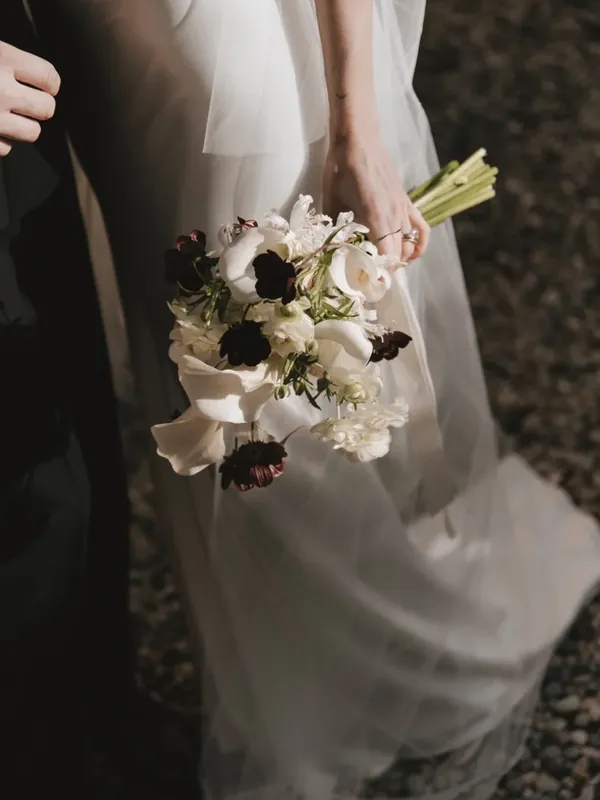
Bridal bouquet€120–€300More for cascades or out-of-season blooms
Bridesmaids’ bouquets€50–€90 each
Buttonholes€12–€25 each
Chair and aisle-end arrangements€15–€40 eachCan look sparse on a wide aisle; fewer, larger pieces read better
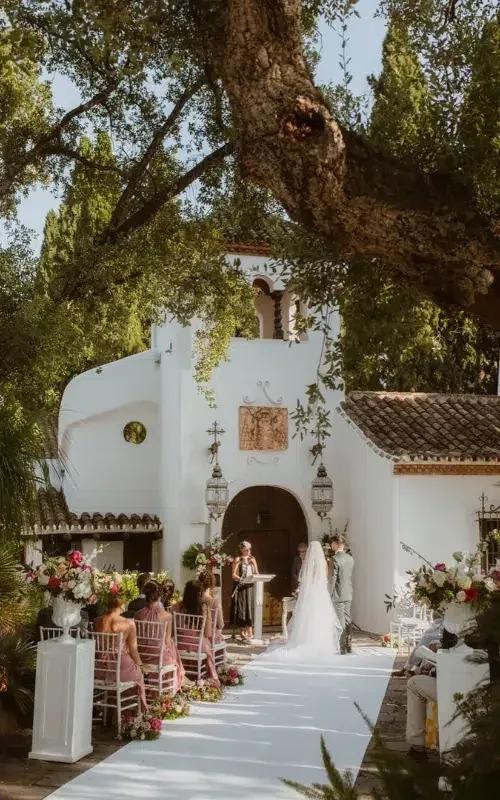
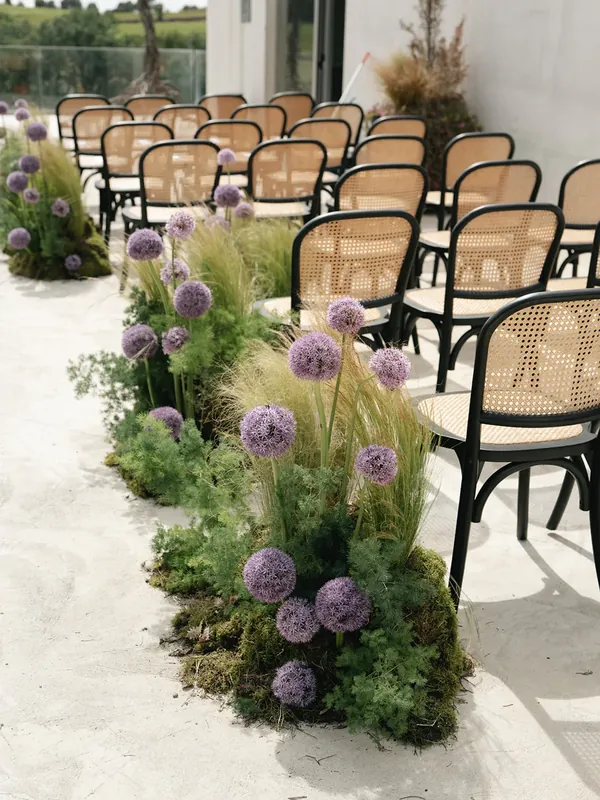
Aisle meadow€600–€1,500Depends on length
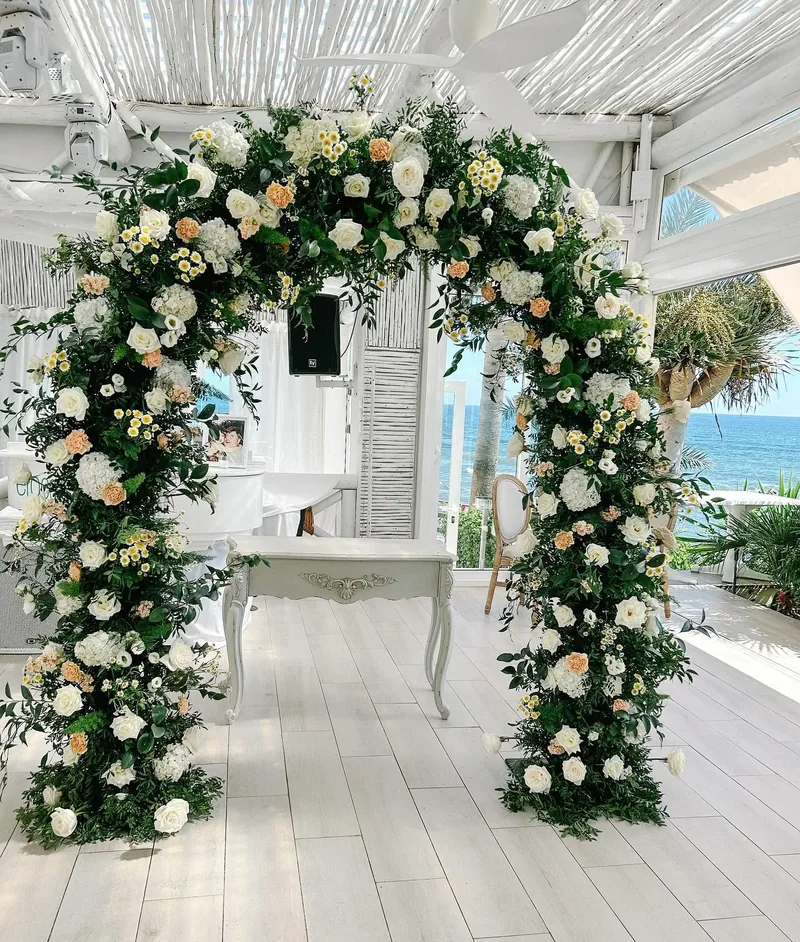
Ceremony arch€800–€2,500Depends on density; a partial arch costs considerably less
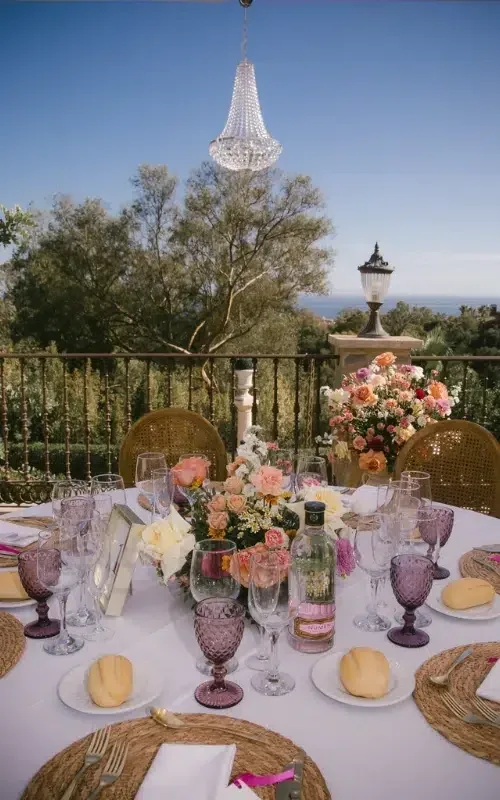
Round-table centrepiece€50–€150 per tableKeep it low and generous
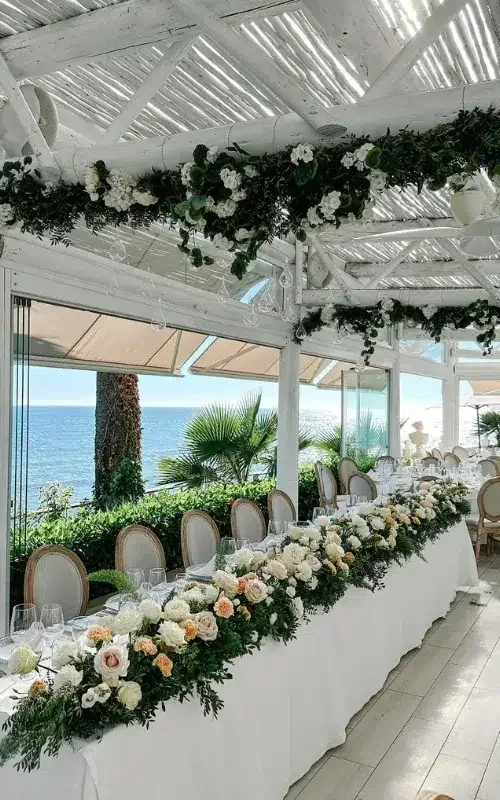
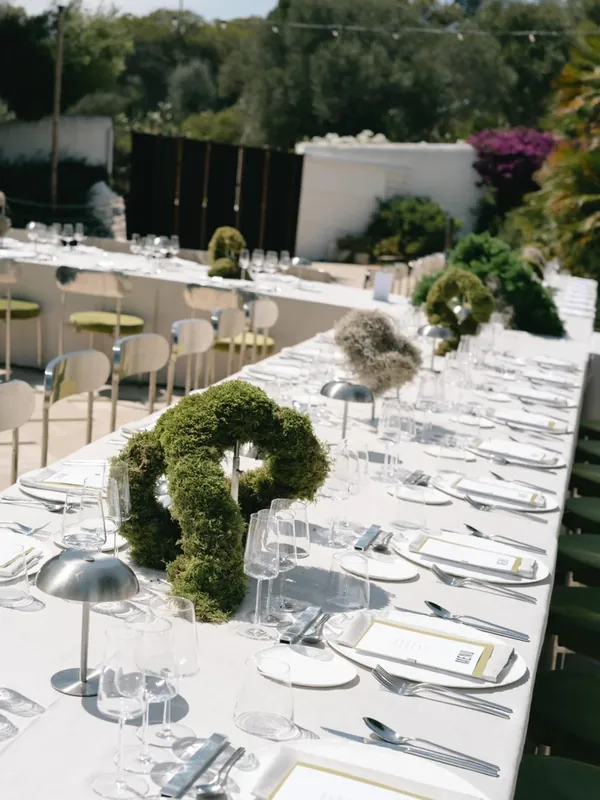
Long-table runner€40–€120 per metreDepends on density
Entrance or staircase piece€400–€1,500Good value; first thing guests see
Suspended installation€1,500–€5,000Including rigging; needs a fixing point at the venue
Gibraltar registry ceremony flowers€200–€500Bouquet, buttonholes and perhaps a small arrangement

Ask whether IVA (VAT, 21%) is included and whether setup and collection are in the quote. Islands carry a premium because imported stems arrive by boat or plane.

Seasons and prices

Flowers in and out of season

Out-of-season stems typically cost two to three times the in-season price, and sometimes much more. Peonies are the clearest example: roughly €4 to €6 a stem in May, and €15 or more in September if they can be sourced at all. On a bouquet that’s the difference between about €150 and €400.

“Seasonal” in Spain usually means the Dutch auction calendar rather than what’s growing locally, because most wedding flowers are imported. What genuinely is local and available all year is the foliage: olive, eucalyptus, rosemary, wild grasses and citrus. Build arrangements around foliage with flowers as accents, and give your florist your palette and date rather than a list of flowers.

FlowerIn seasonOut of season
PeoniesApril to JuneVery expensive, often unavailable
Ranunculus and anemonesWinter to springLimited and costly
DahliasLate summer to autumnNot available
Garden rosesLate spring to autumnPriced up sharply
Standard roses, orchids, lisianthusAll yearStable pricing
Olive, eucalyptus, rosemary, citrusAll year, grown locallyAlways good value

Planning timeline

From first meeting to the last vase

Most of a florist’s work happens in the last week, but the decisions that shape it are made months earlier. This is the usual sequence.

  1. 12–18 months out

    Book your florist

    After the venue and photographer, for a peak Saturday. Share your date, palette, venue and an honest budget rather than a list of flowers.

  2. After booking

    Design proposal

    Varieties, quantities and prices, with a set number of revisions. Ask whether the price is fixed or indicative, since imported flowers are bought at market prices.

  3. 4–6 weeks out

    Final numbers and sign-off

    Final guest and table numbers, confirmed designs and the plan for moving ceremony pieces to the reception. The balance is usually due two to four weeks before.

  4. Week of the wedding

    Sourcing and conditioning

    Stems arrive, mostly imported, and are cut, hydrated and held at the right temperature for a day or two. It is most of the job.

  5. The wedding day

    Delivery and installation

    Bouquets and buttonholes to the preparation rooms; arches and installations fixed and weighted, and kept out of direct sun until the last moment.

  6. That night or next morning

    Strike and collection

    Moving pieces during drinks, then clearing vases, stands and structures. Confirm in writing who does it and when.

What’s included

What a wedding florist takes care of

Beyond the design, most of a florist’s work happens between the cold store and eight o’clock in the evening. Check exactly what your quote covers.

Sourcing

Buying the stems, mostly imported, and advising which varieties suit your palette, date and budget rather than your mood board.

Conditioning

Cutting, hydrating and holding flowers at the right temperature for a day or two beforehand. It is most of the job, and why a professional bouquet still looks alive at the speeches.

Design for the space

Judging scale for your venue: courtyards and open gardens swallow arrangements, and tall centrepieces block the view across the table.

Delivery and installation

Transport and setup, with freestanding and suspended pieces weighted or fixed properly against wind at coastal and clifftop venues.

Moving pieces on the day

Repurposing the arch behind the top table and the aisle arrangements onto the dining tables during drinks. Not every florist stays on site, so ask.

Collection

Clearing vases, stands and structures afterwards, often late at night or the next morning. It is frequently not in the quote, so confirm it in writing.

Why use a professional

What a good florist actually does

The obvious answer is that they know flowers. The useful one is that they know what happens to flowers between the shop and eight o’clock in the evening.

Conditioning

Stems cut, hydrated and held at the right temperature for a day or two before the wedding. It’s why a professional bouquet still looks alive at the speeches.

Planning for heat

They steer you towards varieties that hold in a Spanish July, keep everything out of direct sun until the last moment and build arrangements accordingly.

Scale

Arrangements that look generous on a kitchen table disappear in a high-walled courtyard, and tall centrepieces block the view. Knowing how a design reads in a space is experience.

Reuse

The arch behind the top table, aisle arrangements on the dining tables during drinks: done properly it cuts the budget substantially with no visible difference.

Logistics

Sourcing, conditioning, transport, installation and collection. Someone has to clear the venue at one in the morning, and it shouldn’t be your family.

Honest advice

The florist worth booking tells you what you didn’t want to hear: that the arch won’t fit the budget, or that hydrangeas won’t survive August.

Across Spain

Wedding flowers by region

Climate, access and what grows locally change the brief from one part of Spain to the next. A florist who knows your area will design for it.

Marbella and the Costa del Sol

We’re based in Marbella, so this is home ground. The light is bright and hard from June to September and flattens pale palettes, and hydrangeas wilt within hours on a July afternoon. Beach clubs bring wind as well as heat; villas in Nueva Andalucía and on the Golden Mile give a free hand for installations; the Old Town and inland estates offer stone and shade. Good florists here book up 12–18 months ahead for peak Saturdays.

Málaga

City venues in Málaga’s old town and on rooftops sit against warm stone and hard shadows, where colour and structure hold up. Coastal venues wash out pale flowers and bring wind. Inland fincas towards Coín and Álora are where Mediterranean styling with local olive, eucalyptus and citrus belongs.

Sotogrande, Cádiz and Jerez

Florists often travel from the Costa del Sol to Sotogrande and Jerez, so check delivery, setup and collection are priced in. The Levante wind can be strong on this coast, so arches and freestanding pieces need proper weighting.

Seville, Granada and inland Andalucía

Courtyards, patios and cortijos across Andalucía, where citrus trees and climbing plants are often part of the setting already. Inland summer heat is fierce, so lean on foliage and on waxy or dried elements.

Barcelona and the Costa Brava

Barcelona has an adventurous, design-led floral scene, but many masies in El Vallès and the Penedès use an exclusive or approved supplier for styling, so check before you fall for a venue. City venues need restraint against strong architecture. Catalonia is greener and slightly cooler than the south, but September brings heavy rain, so plan an indoor alternative. See Barcelona and the Costa Brava.

Madrid and central Spain

Palace and historic venues have ceilings of five or six metres and swallow arrangements, so florists work with height, structure and repetition: tall centrepieces on stands and vertical pieces. Gilded rooms reward restraint. Summers are hotter and drier than the coast and winters bring frost; most weddings fall in May, June, September and October. Indoors, candlelight matters more than flowers.

Valencia

Orange blossom (azahar) is a traditional bridal flower in Spain and blooms in spring; at other times of year, orange and lemon branches bring the same feel to tables.

Ibiza

Salt, sun and wind make Ibiza hard on fresh flowers, which is partly why the boho look took hold: dried pampas and palm don’t wilt and can be installed the day before. Choose waxy varieties for endurance, secure clifftop arches structurally, and check fixing points before planning anything suspended. Imported stems carry an island premium, and florists book from winter for the May to October season.

Mallorca and Menorca

Let the setting lead: long finca tables under olive trees, loose arrangements and a palette from what’s growing outside. Olive, almond, wild fennel and citrus are local and cheap, while imported stems cost more on the islands. Tramuntana venues are cooler and shadier than the coast, and the tramuntana wind on the north and east coasts means proper fixings. The florist market is small, so book early.

The Canary Islands

Weddings all year in a subtropical climate. Tropical flowers such as strelitzia suit the setting, while classic European stems are shipped in. See the Canary Islands.

Gibraltar

Most couples marry at the Registry Office and celebrate in Spain, so ceremony flowers are usually a bouquet, buttonholes and perhaps one arrangement, about €200–€500. Gibraltar has few florists, so most couples bring flowers from Sotogrande or Marbella, where choice and prices are better; the florist must allow for queues at the border. Venues are mostly compact and indoors, and the levante can blow hard on the eastern side.

The north of Spain

The Basque Country, Galicia and Asturias are cooler and greener, so hydrangeas and garden roses that struggle in an Andalusian summer behave far better, and hydrangeas grow well in Galicia and Asturias. Rain is the risk, so plan a covered alternative for the ceremony arch and any outdoor installation.

Inspiration

Where to find flower ideas

Most couples arrive at their first meeting with forty saved images, which is fine. What works less well is asking for one photo to be recreated: you’d be copying a specific venue, in specific light, in a specific month, at a budget you can’t see.

Look for the pattern instead. Usually it’s a palette, a density or a shape rather than a flower, and “loose, low arrangements in warm neutrals” is something a florist can work with. Bear in mind that much online inspiration comes from styled shoots, built for the camera with unlimited flowers, no guests and no wind.

Pinterest

Best for range. Search by detail, such as “summer garden wedding flowers” or “rustic floral arch”, and keep separate boards for ceremony, tables and bouquets.

Instagram

Real weddings from florists, planners and photographers working now, and tagged venues that show scale.

Florists’ websites

Complete wedding galleries show whether a designer keeps a look together from the ceremony to the reception.

Wedding blogs

Real-wedding features with supplier credits, plus our own wedding flower ideas for Spanish venues.

Spanish flower terms

The words you’ll see in a quote

Spanish florists often quote in Spanish, or mix the terms into English. These are the ones that come up most.

Ramo de novia

The bridal bouquet.

Ramos de damas de honor

The bridesmaids’ bouquets.

Prendido or boutonnière

The buttonhole worn by the groom and close family.

Centro de mesa

A table centrepiece.

Arco floral

A floral arch, usually framing the ceremony.

Azahar

Orange blossom, traditionally associated with brides in Spain.

Flor de temporada

Seasonal flowers; out-of-season stems typically cost two to three times as much.

Flor preservada or flor seca

Preserved or dried flowers, which don’t wilt in the heat.

Montaje y desmontaje

Setup and strike; check both are in the quote.

IVA

Spanish VAT at 21%; check whether each quote includes it.

Free shortlist

Let us find the right florists

Tell us your date, venue and style, and we will shortlist florists who are available and right for your wedding, at no charge.

Choosing a florist

10 tips to find the right floral designer

Flowers are usually the third or fourth largest line in a wedding budget. Most of what is worth checking before you commit has nothing to do with taste.

  1. Review a complete wedding, not a portfolio

    Every portfolio shows the best twenty frames from a hundred weddings. Ask for one full wedding, ceremony to evening, to see whether the styling held together and what it looked like at eight in the evening, not just at four.

  2. Ask what survives the heat

    Seasonality in Spain is less about what grows locally and more about what holds up. A florist who works this coast will steer you away from hydrangeas in August without being asked. Out-of-season stems also cost two to three times more.

    Tip Give them your colours and your date, not a list of flowers. You’ll pay considerably less for the same result.

  3. Share an actual budget

    Florists can design to almost any figure, but only if they know it. A good one will tell you honestly what it buys, and most will advise concentrating it in one substantial piece and reusing ceremony flowers at the reception.

    Tip Ask what your budget realistically covers before you show them your inspiration board.

  4. Check setup and collection

    Delivery, setup and styling are usually included; collection often isn’t, and most venues charge if it isn’t done. Ask too whether they stay on site to move pieces, top up water and fix wind damage.

    Tip Get setup and collection confirmed in writing. It’s the most common gap between a quote and a final invoice.

  5. Ask what your venue allows

    Large installations are a structural problem as much as a design one. Suspended pieces need a fixing point many Spanish venues lack, historic properties restrict fixings, some ban naked flames outdoors, and anything freestanding needs proper weighting.

    Tip Ask whether they’ve worked your venue before. If not, ask whether they’ll do a site visit and whether it’s chargeable.

  6. Understand the planning process

    Ask how many design revisions are included, when final numbers are due, what happens if your guest count changes, and the deposit, balance and cancellation terms. Because flowers are bought at auction, quotes can be subject to market pricing.

    Tip Ask whether the quoted price is fixed or indicative. With imported flowers it’s often the latter.

  7. Look for venue experience

    A florist who has worked your venue will have opinions about it, such as where the sun sits during the ceremony or why the courtyard needs fewer, larger pieces. Not having worked it isn’t disqualifying, but they should visit before quoting.

    Tip A florist who can tell you a venue’s limitations already knows it.

  8. Read reviews for how problems were handled

    Everyone has five-star reviews for the flowers. Look for mentions of weather, late changes or a moving guest count. Independent reviews and real couples’ photos say more than testimonials on a florist’s own site.

    Tip Ask directly what has gone wrong at a wedding and how they dealt with it.

  9. Know the timelines

    Good florists are booked 12–18 months ahead for peak Saturdays from May to September; midweek and off-season dates open up. Final numbers and design sign-off are usually due four to six weeks out, and the balance two to four weeks before.

    Tip Book the florist after the venue and the photographer. Your venue determines half the design decisions.

  10. Choose someone who tells you the truth

    The florist worth booking tells you what you don’t want to hear: that the budget won’t cover the arch, or that your palette will vanish against pale stone at midday. You are buying judgement as much as flowers.

    Tip If a florist agrees with every idea you have, that’s not a good sign.

Got a question?

Common questions about florists

How much do wedding flowers cost in Spain?

Most couples spend €2,000–€6,000 on flowers for 80 to 100 guests. As a guide, a bridal bouquet is €120–€300, bridesmaids’ bouquets €50–€90 each, buttonholes €12–€25, centrepieces €50–€150, a ceremony arch €800–€2,500 and a suspended installation €1,500–€5,000. Ask whether 21% IVA, setup and collection are included.

What pushes the price up most?

Flowers out of season, by some distance: expect two to three times the in-season price. Peonies cost roughly €4–€6 a stem in May and €15 or more in September, if they can be sourced at all. Give your florist your palette and date rather than a list of flowers and let them choose the varieties.

Are flowers cheaper in Spain than at home?

No. Most wedding flowers are imported from Holland, Ecuador and Kenya, so you pay roughly European prices, with a further premium on the islands. Local foliage such as olive, eucalyptus and rosemary is the exception, and building around it is the easiest way to save.

Will the flowers survive the heat?

It depends what you choose. Hydrangeas wilt within hours on a July afternoon and pale roses brown at the edges, while orchids, anthuriums and other waxy varieties hold far better and dried elements don’t wilt at all. A florist who works here should raise this before you do.

What can we reuse from the ceremony?

Almost everything. The arch can become the backdrop behind the top table, aisle arrangements can move onto the dining tables during drinks, and pedestals can go to the entrance or bar. Agree it at the quote stage, because pieces need building with the move in mind and someone has to be there to do it.

How far ahead should we book a florist?

Twelve to eighteen months for a peak Saturday between May and September, and earlier on Ibiza and Mallorca, where the florist market is smaller. Six to nine months is usually fine midweek or off-season. Book your venue and photographer first, as the venue decides half the design.

Are delivery and collection included?

Delivery and setup usually are; collection frequently isn’t, and it is the most common gap between a quote and the final invoice. Someone has to clear vases, stands and structures, often the morning after, and most venues charge if it isn’t done. Ask whether it’s in the price, when it happens and who is responsible for returning hired vessels.

Can we supply our own flowers?

You can, but it usually costs more than couples expect. Buying, conditioning, transporting and storing flowers takes a day you won’t have, and conditioning is what makes a professional bouquet last. Some venues don’t allow it, and a florist doing your other pieces may decline to work with stems they haven’t prepared.

Can we plan our wedding flowers from abroad?

Yes. Most of the couples we work with plan from the UK, Ireland, the US and elsewhere in Europe. Consultations happen on video calls, you share a mood board and photos of your dress and venue, and the florist sends a written proposal to approve. If you are visiting Spain, it is worth meeting at the venue so the florist can see the space and the light.

Will the florist work with our planner?

Yes. Florists work alongside planners and coordinators all the time, agreeing the timings, access, installation and any move of ceremony flowers to the reception. If you book through us, we brief the florist and keep everyone working to the same plan.

Is a wedding florist the same as a flower shop?

Not usually. A wedding florist or floral design studio designs, sources, conditions, delivers, installs and clears the flowers for an event, often with a team on the day. A high-street flower shop is set up for bouquets and arrangements to collect or deliver, and may not offer large installations, on-site styling or collection after the party.

Can our florist also do décor, lighting and candles?

Often, yes. Many wedding florists in Spain also offer décor hire such as candles, lanterns, signage, welcome stations, vessels and soft furnishings, and some can arrange lighting. Ask what is included in their quote and what they hire in, so you know who is responsible for setting it up and collecting it.

Where do you offer floral design services?

We’re based in Marbella, so the Costa del Sol is home ground, and we work with florists across Spain, from Andalucía and the Balearics to Barcelona, Madrid, Valencia and the Canary Islands, as well as Gibraltar. Away from the Costa del Sol we prefer a local florist who knows the light, access and what survives at your venue, which also keeps travel off your quote.

With thanks

Thank you for the images

Our thanks go to the venues and the talented wedding photographers whose work brings these pages to life. All images remain the copyright of the venues and their photographers.

Is this one of your images?

If you took any of the photographs on this website, please send us your details. We would be delighted to credit you by name and feature you as a vendor on weddingvenues.es.

Send us your details

Register your wedding services with us

Wedding photographer, videographer or supplier? Join our directory of wedding vendors in Spain and reach couples who are planning their wedding in Spain.

Register your services