Discover your perfect wedding venue in Spain

Wedding Venues Canary Islands
Where Love Meets Style. Canary Islands Best Wedding Venues.
The Canaries are the one part of Spain where “year-round” isn’t marketing. The islands sit off the coast of Africa rather than in the Mediterranean, and they hold around 21°C in January. If your date is fixed by something other than the weather, that removes the compromise entirely.
There are seven main islands and they’re genuinely different from each other. Tenerife is the largest and has the widest choice of wedding venues, from resort hotels in the sunny south to historic Canarian estates in the green north beneath Mount Teide. Gran Canaria is often called a continent in miniature, with dunes at Maspalomas, mountain villages inland and a proper city at Las Palmas. Lanzarote is the volcanic one, all black lava fields and whitewashed architecture, and looks like nowhere else in Europe. Fuerteventura has the best beaches of the group, long pale stretches at Corralejo backed by dunes. La Palma is the greenest, a UNESCO biosphere reserve with some of the clearest night skies in the world.
Wedding Venues in the Canary Islands
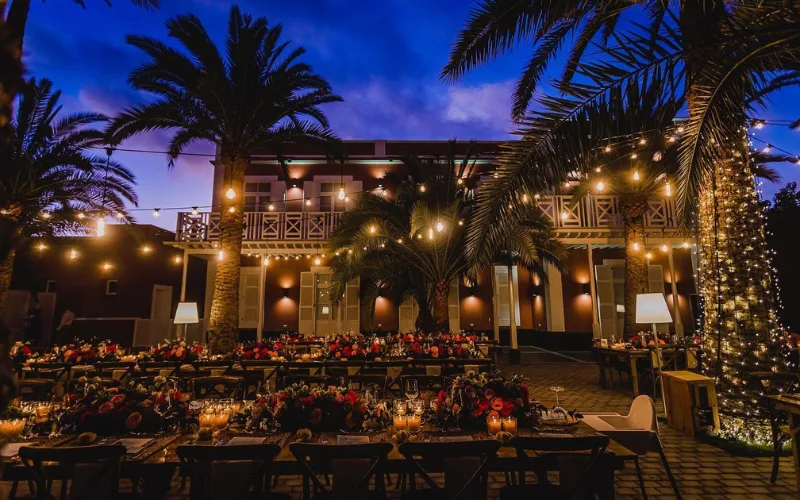
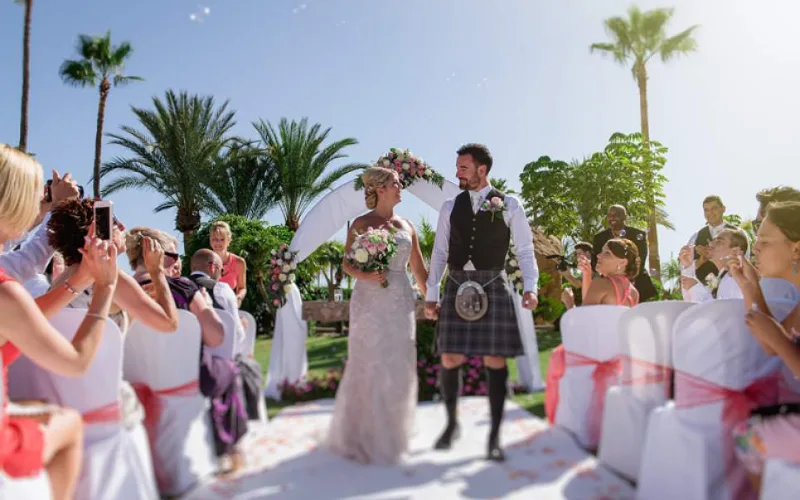
Beachfront resorts and hotels. Concentrated in the sunny south of Tenerife around Costa Adeje, plus Maspalomas on Gran Canaria and Corralejo on Fuerteventura. Everything in one place with rooms for your whole guest list, run by teams who do this every week. The easiest option by far when you’re planning from four hours away. Worth checking: whether you have exclusive use or share the property with holidaymakers.
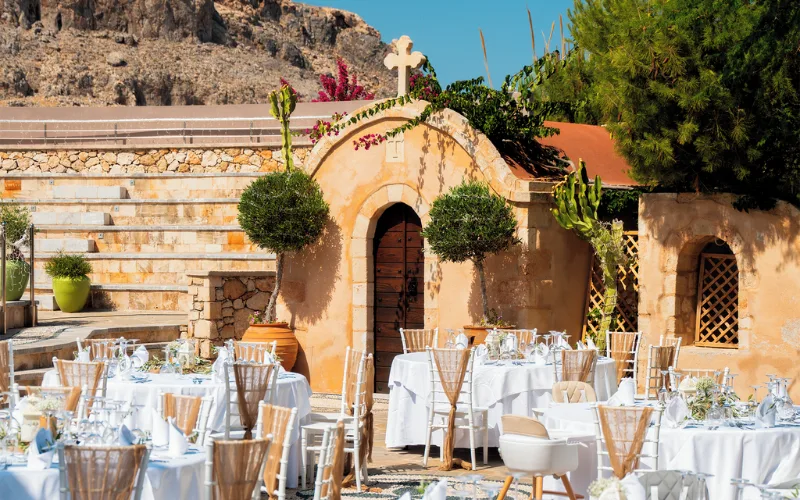
Historic Canarian estates and haciendas. Mostly in the green north of Tenerife around La Orotava and Los Realejos, and inland on Gran Canaria and La Palma. Colonial architecture, timber balconies, subtropical gardens and banana plantations. This is where the islands look least like a package holiday and most like somewhere with history. El Castillo de Los Realejos is the one we work with, a 19th-century castle taking up to 250. Worth checking: the access road, since northern estates sit on terraced hillsides.
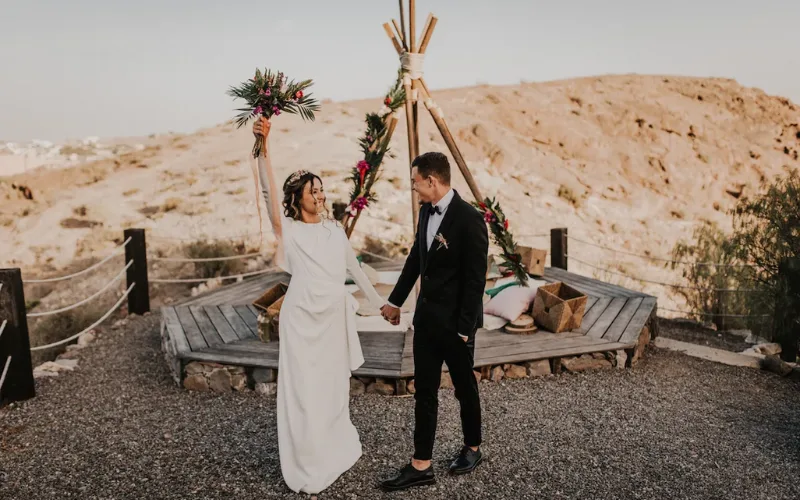
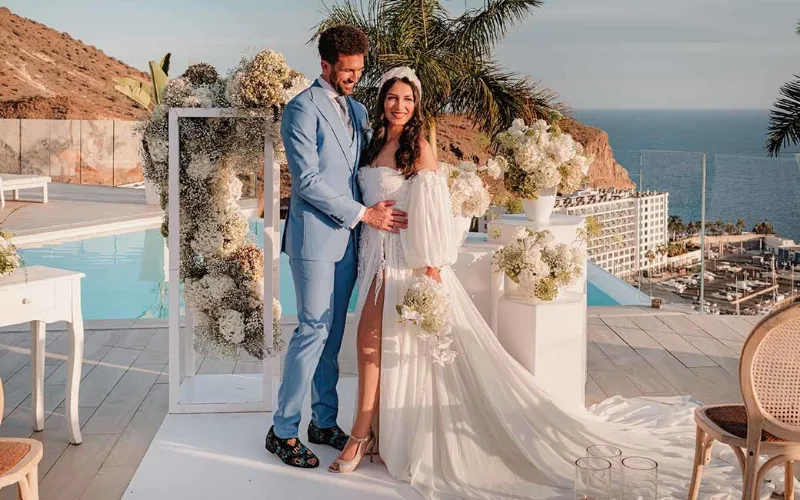
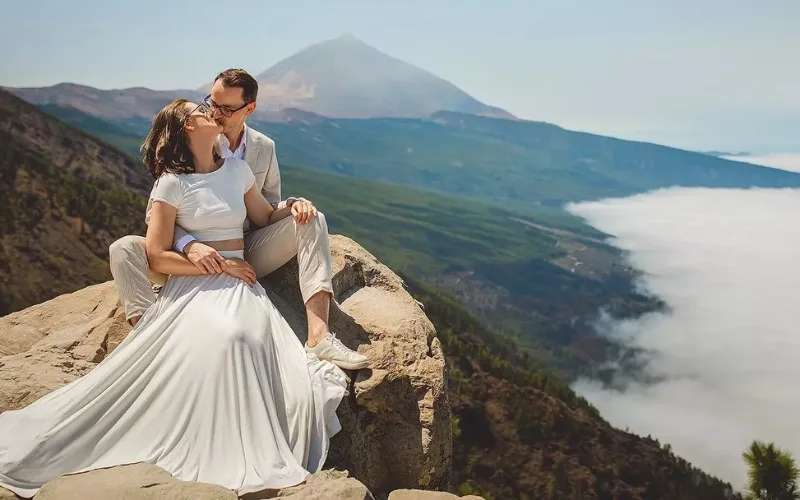
Clifftop and volcanic venues. The category that exists nowhere else. Terraces above the Atlantic, black lava landscapes on Lanzarote, and views to Teide from almost anywhere on Tenerife. Dramatic in a way no Mediterranean venue can match. Worth checking: exposure, because the trade winds are reliable rather than gentle.
Private villas. Exclusive use, usually with a pool and rooms for your closest family. Mostly dry hire, so catering, staff, furniture and often the kitchen come separately, and the headline price tells you very little. Worth checking: the noise curfew, and whether the property holds an alcohol licence.
Golf and spa resorts. Tenerife has more golf than any other Canary island, concentrated in the south around Costa Adeje and Golf del Sur. Worth the money if a decent number of your guests play, and worth nothing if they don’t.
What a Wedding in the Canary Islands Cost
For 100 guests, expect €30,000 to €50,000 all in, covering venue, catering, drinks, flowers and styling, music, photography and staffing.
That sits below the Balearics and roughly level with the mainland coast, and there’s a specific reason it works out cheaper than the headline figures suggest.
Timing. Almost any month works here, which is the point of the Canaries. The south stays reliably warm year-round; the greener north is cooler and wetter from November to February.
Suppliers. The Canaries have their own supplier market, separate from the mainland’s and smaller. Find people who work the island regularly, and book earlier than you would on the coast, because there are fewer alternatives if someone falls through.
The legal side. Decide before you book a date. Tenerife is the only Canary Island where non-residents can hold a legally binding Catholic ceremony, and that needs about a year. Everywhere else you’ll marry legally at home and hold a symbolic ceremony here.
Our services include:


Weddings in The Canary Islands
Best Time of The Year to Get Married
When to Marry in the Canary Islands
Almost any month, which is the point of the Canaries and the thing no other Spanish region can claim.
The islands sit off the coast of Africa rather than in the Mediterranean, so the temperature barely moves across the year. Between 21 and 29°C by day, and never below 17 at night.
| Month | Daytime | After dark |
|---|---|---|
| January | 21°C | 17°C |
| February | 22°C | 17°C |
| March | 22°C | 17°C |
| April | 23°C | 17°C |
| May | 24°C | 18°C |
| June | 26°C | 20°C |
| July | 28°C | 21°C |
| August | 29°C | 22°C |
| September | 28°C | 22°C |
| October | 27°C | 21°C |
| November | 25°C | 20°C |
| December | 23°C | 18°C |
Southern Tenerife and the eastern islands. The northern side of Tenerife and La Palma run two or three degrees cooler and considerably wetter.
Compare that with the mainland, where the Costa del Sol drops to 11°C after dark in April and only June to September let you eat outside all evening. Here, every month does.
Wedding Locations
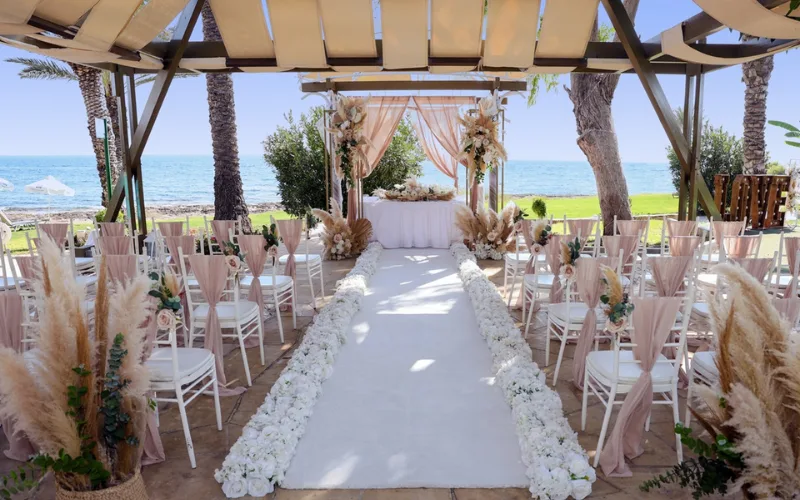
Tenerife
Tenerife is the largest island and the practical choice, with the widest venue selection and the best flight connections from the UK and Ireland.
It splits in two, and the difference is greater than couples expect. The south around Costa Adeje and Los Cristianos is dry, sunny and resort-led, with the main airport and the most reliable weather on the island. The north around La Orotava, Los Realejos and Puerto de la Cruz is green, tropical and considerably more beautiful: banana plantations, laurel forest, colonial towns and historic Canarian estates beneath Mount Teide. It rains more and it’s cooler, and it looks like nowhere else in Spain.
Most people who’ve holidayed in Tenerife know the south. The north is the one worth looking at if the setting matters more than the convenience.
It’s also the only Canary Island where non-residents can hold a legally binding Catholic ceremony, which makes it the only island where the whole thing can happen without marrying legally elsewhere first.
See our: Wedding venues in Tenerife
Gran Canaria
Gran Canaria is often described as a continent in miniature, and for once the phrase earns itself. You can be on dunes at Maspalomas in the morning and in pine forest at 1,500 metres by lunchtime.
The south has the beaches and the resorts, with the Maspalomas dunes running for six kilometres and looking genuinely Saharan. Inland, the island climbs into mountain villages, ravines and the volcanic caldera at Tejeda, which is UNESCO-listed. And Las Palmas in the north is a proper city with a colonial old quarter at Vegueta, a city beach at Las Canteras, and a restaurant scene that owes nothing to tourism.
Second only to Tenerife for venue choice, and arguably ahead of it for variety within a short drive.
Lanzarote
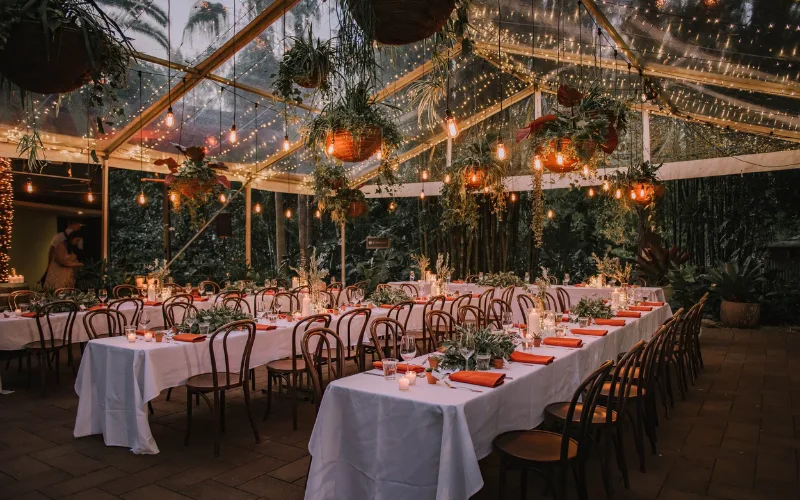
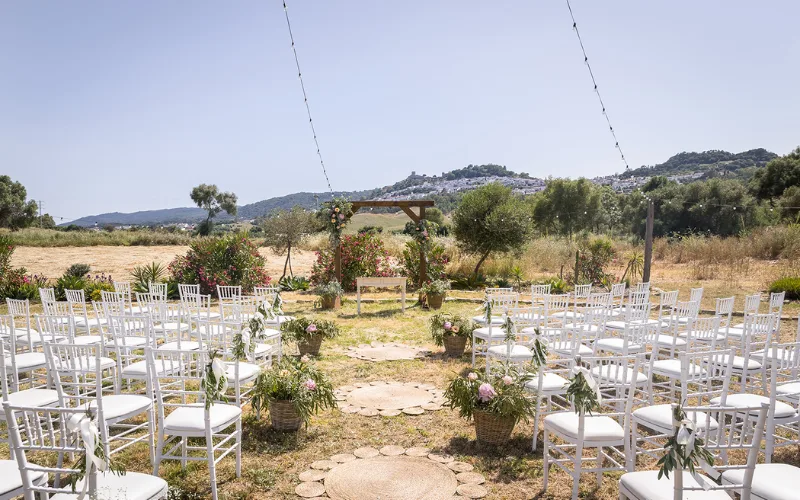
Lanzarote looks like nowhere else in Europe. Black lava fields, whitewashed cubic architecture, vines grown in volcanic pits at La Geria, and the Timanfaya national park where the ground is still hot enough to cook on.
Much of that is down to César Manrique, the artist who spent his life ensuring the island wasn’t developed the way the others were. There are no high-rise hotels, no billboards, and building regulations that have kept the whole island visually coherent. His own house, built into five volcanic bubbles, is worth seeing.
For couples who want something genuinely unusual rather than another sunny island, this is it. The photographs look like a different planet.
La Palma
La Palma is the greenest and quietest of the islands, a UNESCO biosphere reserve with laurel forest, volcanic ridges and the Caldera de Taburiente at its centre.
It’s also a UNESCO Starlight Reserve, with some of the clearest night skies in the world and one of the largest telescopes on earth at the Roque de los Muchachos. An evening wedding here means a night sky most guests will never have seen properly.
Small, remote and lovely. The trade-off is practical: limited venues, limited accommodation, and flights that usually connect through Tenerife or Madrid, which turns a day of travel into two.
La Gomera and El Hierro
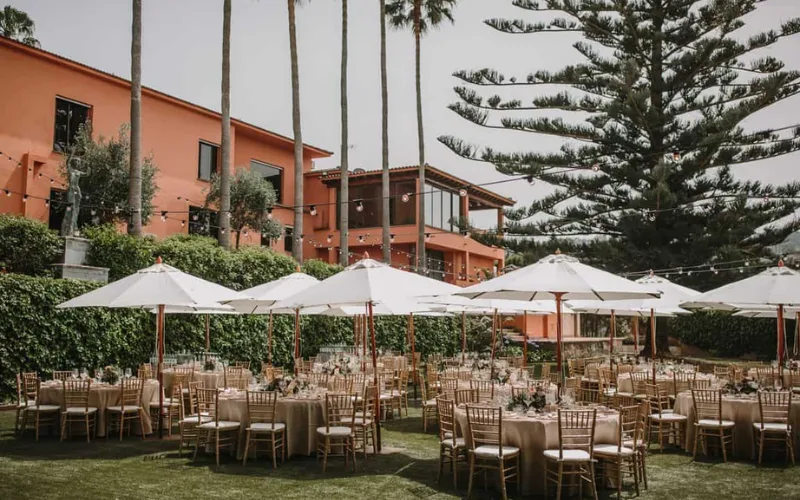
La Gomera and El Hierro are the remote ones, and they’re remote in a way that shapes everything.
La Gomera is reached by ferry from Tenerife in about fifty minutes, and its Garajonay national park is prehistoric laurel forest, permanently misted, unlike anywhere in Europe. It’s also home to silbo gomero, a whistled language used to communicate across the ravines, which UNESCO recognises as cultural heritage.
El Hierro is the smallest and westernmost, a biosphere reserve running largely on renewable energy, with almost no tourism at all.
Both are extraordinary, and both suit elopements and very small weddings rather than anything with a guest list. Getting forty people there is a logistical exercise; getting six is a lovely idea.
See all our Spanish Wedding Locations
Contact Us
Make Your Day Special with Us
Start Your Wedding Journey and discover our exceptional services, designed to make your day extraordinary and unforgettable. We look forward to creating wonderful memories with you.
Types of Wedding Venue in The Canary Islands
Beachfront resorts and hotels
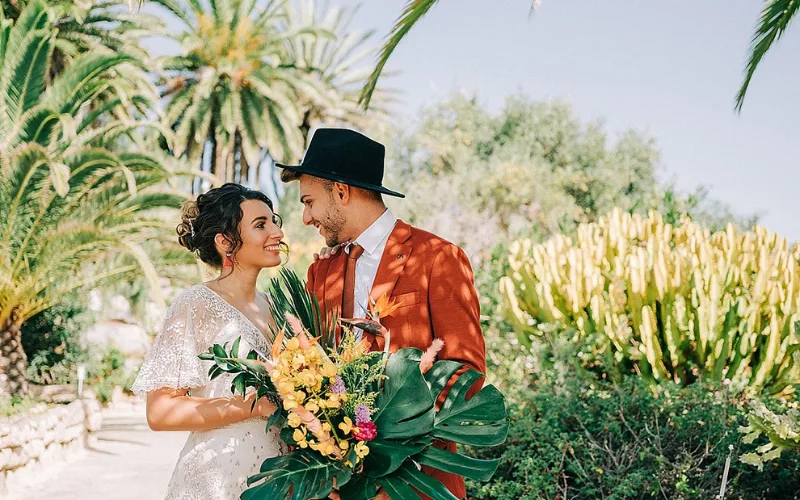
Beachfront resorts and hotels. Concentrated in southern Tenerife around Costa Adeje, plus Maspalomas on Gran Canaria and Corralejo on Fuerteventura. Everything under one roof with rooms for your whole guest list, run by teams who do this weekly. Genuinely the easiest option when you’re planning from four hours away, and the one that removes most of what can go wrong. Worth checking: whether you have exclusive use or share the property with holidaymakers, and whether a minimum spend applies.
Historic Canarian estates and haciendas
Historic Canarian estates and haciendas. Mostly in the green north of Tenerife around La Orotava and Los Realejos, and inland on Gran Canaria and La Palma. Colonial architecture, carved timber balconies, subtropical gardens and banana plantations. This is where the islands look least like a package holiday and most like somewhere with several centuries behind it. El Castillo de Los Realejos is the estate we work with, a 19th-century castle with sea views taking up to 250. Worth checking: the access road, since northern estates sit on terraced hillsides where a full-size coach frequently can’t turn.
Private villas
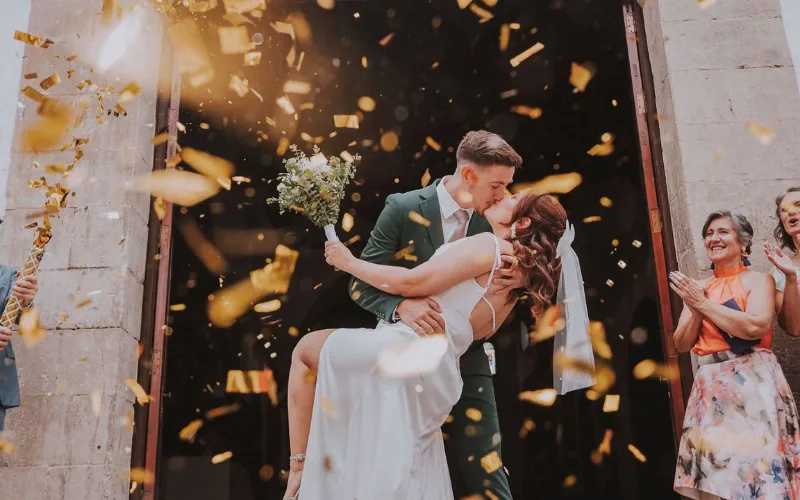
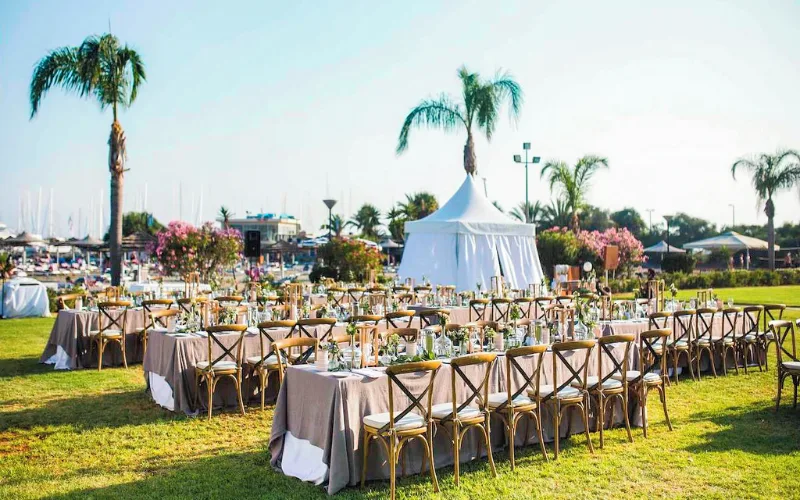
Private villas. Exclusive use, usually with a pool and rooms for your closest family, which turns the wedding into a weekend almost by itself. Most are dry hire, so catering, staff, furniture, glassware and often the kitchen come separately, and the headline figure tells you very little. Worth checking: the noise curfew, whether the property holds an alcohol licence, and what the covered space genuinely holds if the weather turns.
Golf and spa resorts
Golf and spa resorts. Tenerife has more golf than any other Canary island, concentrated in the south around Costa Adeje, Golf del Sur and Amarilla. Worth the money if a decent number of your guests play, and worth very little if they don’t. The spas are the underrated part: a morning treatment before the ceremony does more for the day than most things you could spend the same on.
Weddings Canary Islands
Planning a wedding here raises questions that don’t come up at home, and a few that don’t come up on the mainland either: which island suits your guest list, why the tax rate is different, and whether the north or the south is the right side of Tenerife.
Our FAQs cover the practical ground: what things cost, when to marry, the legal routes open to non-residents, and what to ask a venue before you pay a deposit.
If your question isn’t there, ask us directly
Contact Us For More Information
Common Questions
Can we get married on a beach in the Canary Islands?
Yes, and it’s more straightforward than on much of the Spanish mainland. The Canary Islands began accepting beach weddings relatively recently, following the example set by Barcelona.
The process runs through three offices. First the Demarcación Provincial de Costas, for a permit stating how much beach space you need, your guest numbers and what you plan to do in terms of decoration. Then, because all Spanish beaches are public, the authorities check your ceremony won’t disturb other people using it that day. The third step is the Consejería de Política Territorial del Gobierno de Canarias.
The costs are surprisingly small. At Playa de las Teresitas, the only golden-sand beach in northern Tenerife, the permit runs around €40 to €50 for 100 guests occupying roughly 200 square metres, plus a €300 deposit returned if the beach is left undamaged.
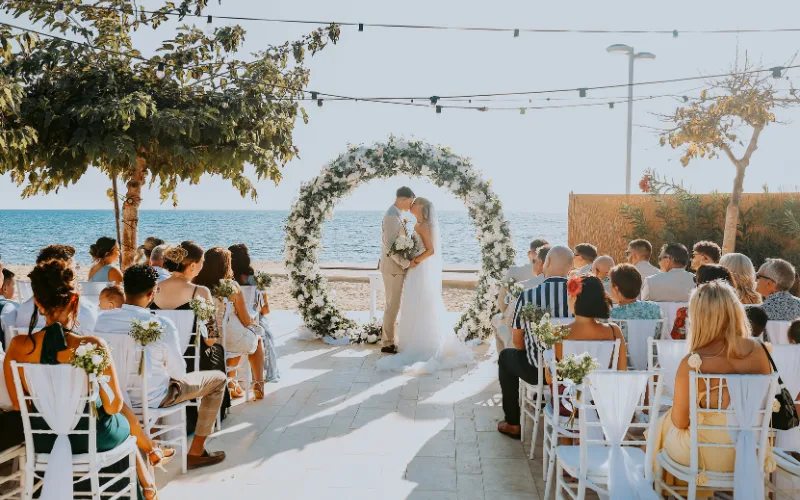
Two practical points. Ceremonies are usually scheduled for late afternoon, since summer temperatures can pass 35°C. And a beach has no power, no shade and no facilities, so the reception happens elsewhere regardless.
Fuerteventura is the easiest island for it, with the best beaches in the archipelago at Corralejo and Sotavento.
What is average cost of a wedding in the Canary Islands?
€30,000 to €50,000 for 100 guests, all in, covering venue, catering, drinks, flowers and styling, music, photography and staffing.
By guest count, the picture looks like this:
| Guests | Typical total |
|---|---|
| 20 to 30 | €20,000 – €40,000 |
| 50 to 60 | €30,000 – €50,000 |
| 80 to 100 | €45,000 – €75,000 |
| 120+ | €60,000+ |
The smallest weddings offer the best value per head, because venues that would be impractical at scale become available: private villa terraces above Costa Adeje, boutique restaurants with sea views, garden spaces at independent fincas near La Orotava.
Which airport will our guests fly to?
Five of the seven islands take international flights. Two don’t.
| Island | Airport | From the UK | Notes |
|---|---|---|---|
| Tenerife | Tenerife South (TFS) | 4h 15m | The main one. Direct from nearly every UK airport, year-round |
| Tenerife | Tenerife North (TFN) | Limited | Mostly domestic and inter-island, but far closer to the northern venues |
| Gran Canaria | Las Palmas (LPA) | 4h 20m | Second best connected, direct from most UK cities |
| Lanzarote | Arrecife (ACE) | 4h | Good direct service, particularly in winter |
| Fuerteventura | Puerto del Rosario (FUE) | 4h 10m | Direct from major UK airports |
| La Palma | Santa Cruz (SPC) | Limited | Usually a connection through Tenerife or Madrid |
| La Gomera | Small airfield | None | Ferry from Tenerife, about 50 minutes |
| El Hierro | Small airfield | None | Connecting flight or ferry |
Do you offer wedding planning in the Canary Islands?
Yes, at three levels depending on how much you want to hand over.
Full wedding planning takes it from the beginning: shortlisting and touring venues, building a realistic budget, sourcing and booking every supplier, checking the contracts, and holding the timeline so nothing slips. You make the decisions; we do the chasing, the translating and the paperwork.
On-the-day coordination is for couples who’ve planned it themselves and want someone running it. We take over four to six weeks out, confirm timings with every supplier, build a schedule everyone works from, and are on site from set-up to the last dance.
Venue sourcing and tours if you’re still deciding where. We shortlist properly, contact venues in Spanish, and tour on your behalf so you’re not flying four hours to see places that were never going to work.
What is there for our guests to do?
More than almost any wedding destination in Spain, and genuinely different from island to island.
On Tenerife: Teide National Park and the cable car, which is the thing everyone remembers. Whale and dolphin watching off the south coast, where resident pilot whales are visible year-round rather than seasonally. Loro Parque in Puerto de la Cruz, and Siam Park in the south, which is the one children will talk about. La Laguna, a UNESCO-listed colonial old town. And the Anaga mountains in the far north-east: laurel forest, mist, and roads that feel prehistoric.
On Gran Canaria: the Maspalomas dunes, which run for six kilometres and look genuinely Saharan. The volcanic caldera at Tejeda, also UNESCO-listed. And Las Palmas, a proper city with a colonial old quarter at Vegueta and a city beach at Las Canteras.
On Lanzarote: Timanfaya national park, where the ground is still hot enough to cook on. The Jameos del Agua, a volcanic cave system turned into a concert hall and gardens by César Manrique. And the vineyards at La Geria, where vines grow in individual pits scooped out of black ash.
On Fuerteventura: the beaches, and specifically Sotavento, where a lagoon fills and empties with the tide across a kilometre of sand.
On La Palma: the Caldera de Taburiente, and the night sky. It’s a UNESCO Starlight Reserve with one of the largest telescopes on earth, and most of your guests will never have seen stars like it.
Across all the islands, wine tasting is the easiest thing to arrange for a group. The volcanic soil produces wines that are genuinely distinctive and that nobody will have tried at home.
Which island is best for a winter wedding?
The south of Tenerife, followed closely by Lanzarote and Fuerteventura.
The Canaries are the only part of Spain where a winter wedding works outdoors without qualification. January sits at around 21°C by day and 17°C at night, which is warmer than a British June evening. That’s the whole argument for these islands.
The eastern islands are the driest. Lanzarote and Fuerteventura sit closest to Africa and get very little rain at any time of year.
Southern Tenerife and southern Gran Canaria are reliably dry too, and have the most venues and the best flight connections.
Avoid the north in winter. Northern Tenerife, La Palma and La Gomera are genuinely wet from November to February. That’s the trade-off for them being green, and it’s why the banana plantations are there.
Two things worth knowing. Christmas and February half-term are as busy and expensive as August, because the islands are a British winter-sun destination. And the days are shorter: sunset is around 6.15pm in December against 8.55pm in June, so an early afternoon ceremony works better than a late one.
Is it windy in the Canaries?
Yes, consistently, and it’s worth planning around rather than hoping about.
The islands sit in the path of the trade winds, which blow more or less constantly from the north-east. They’re the reason the climate is as mild as it is, and they’re also the reason Fuerteventura hosts the kite and windsurfing world championships every summer.
It varies by island and by coast. The northern and eastern coasts catch the most. Fuerteventura is the windiest overall, Lanzarote close behind. Southern Tenerife and southern Gran Canaria are the most sheltered.
What it means practically. Anything freestanding outdoors needs proper fixing rather than weighting. A marquee needs anchoring. Flowers, hair and table settings all need thinking about, and a florist who works the islands regularly will build differently for it.
Ask any venue how exposed the ceremony space is, and what they do when it picks up. A venue that has an immediate answer has dealt with it many times.
The wind usually drops in the evening, which is a genuine argument for a later ceremony here rather than just a lighting one.
And there’s the calima, an occasional Saharan dust haze that turns the sky orange and pushes temperatures up sharply for a day or two. Unpredictable, short-lived, and worth knowing exists.
Can we access wedding suppliers in the Canary Islands?
Yes, and the standard is high. What’s different is the structure.
Each island runs its own supplier market. They’re separate from the mainland and separate from each other. A Marbella florist isn’t flying over, and a Gran Canaria caterer isn’t coming to Tenerife. That has three consequences worth planning around.
Choice is narrower. Tenerife has the deepest pool by some way, followed by Gran Canaria. Lanzarote and Fuerteventura are thinner. La Palma, La Gomera and El Hierro have very few wedding suppliers at all.
Booking early matters more. If a photographer falls through in Marbella you have forty alternatives. On La Palma you may have two.
And bringing someone from home costs more than it does on the mainland. Four hours of flights plus accommodation, and they won’t know the venue, the light or the wind. Occasionally worth it for a photographer you love. Rarely worth it for anything else.
What wedding suppliers can you help with?
Everything except the venue itself, which we source separately. Below is what we arrange, and the thing worth knowing about each one in the Canaries specifically
Catering and private chefs – The largest line in your budget, typically 35 to 45% of the total. Worth building the menu around what the islands actually produce: Atlantic fish, papas arrugadas with mojo, Canarian goat’s cheese. Most of your guests won’t have eaten any of it, which is a reason to serve it rather than default to international. We also arrange private chefs for welcome dinners and day-after lunches at villas.
Photographers and videographers – Documentary, editorial, fine art and cinematic, plus drone footage. Teide and the volcanic landscapes give the islands something no mainland venue can offer, and a photographer who works here knows where to take you for it.
Florists and floral designers – Ceremony flowers, table arrangements and installations. Almost everything is imported by boat or plane, so building around local foliage saves meaningfully more here than on the mainland. And the trade winds mean a florist who works the islands builds differently: heavier bases, sturdier stems, nothing loose.
Bridal hair and makeup artists – Trials, bridal party and guests. The subtropical humidity is harder on hair and makeup than the dry heat of inland Spain, and an artist who works here uses different products for it. Book the trial for the same trip as your venue visit, since it’s the one thing that doesn’t work remotely.
DJs and entertainment – DJs, bands, and live saxophonists or percussionists playing over a DJ set, which is popular here and works well for the drinks reception. We’ll check the venue’s noise curfew and whether there’s a sound limiter before you book anyone.
Mobile bars and cocktail services – Licensed bar services, which matter at any venue without its own alcohol licence, and that includes a good number of private villas. A Canarian open bar built around local wines and island spirits costs considerably less than a premium international package and suits the setting better.
Content creators – Short-form video shot on a phone and delivered within 48 hours, while your photographs are still three months away. The cheapest of the visual suppliers and increasingly the one couples book first.
Wedding dresses and bridalwear77 – Gowns, bridesmaid dresses and alterations.
Plus celebrants, transport, furniture and styling hire.
Do you offer virtual venue tours in the Canary Islands?
Yes, and they matter more here than anywhere else we work.
The Canaries are four hours from the UK. Flying out to see three venues, discovering that two were never going to work, and flying home is an expensive way to shorten a shortlist. A virtual tour does the filtering before you commit to the trip.
How it works. We visit the venue in person on your behalf and walk it live on video, so you can direct us: show me the ceremony spot at six in the evening, show me where dinner would happen, show me the covered space if it rains. You ask questions in real time and we put them to the venue manager on the spot. If the timing doesn’t work across your schedules, we film the whole thing and send it with our notes.
What you get afterwards. Photographs and video that aren’t the marketing ones, the real seated and covered capacities, the noise curfew in writing, what’s included and what isn’t, and an honest view of what we thought. Including, where it applies, that we don’t think it’s right for you.