


Inquire Inquire
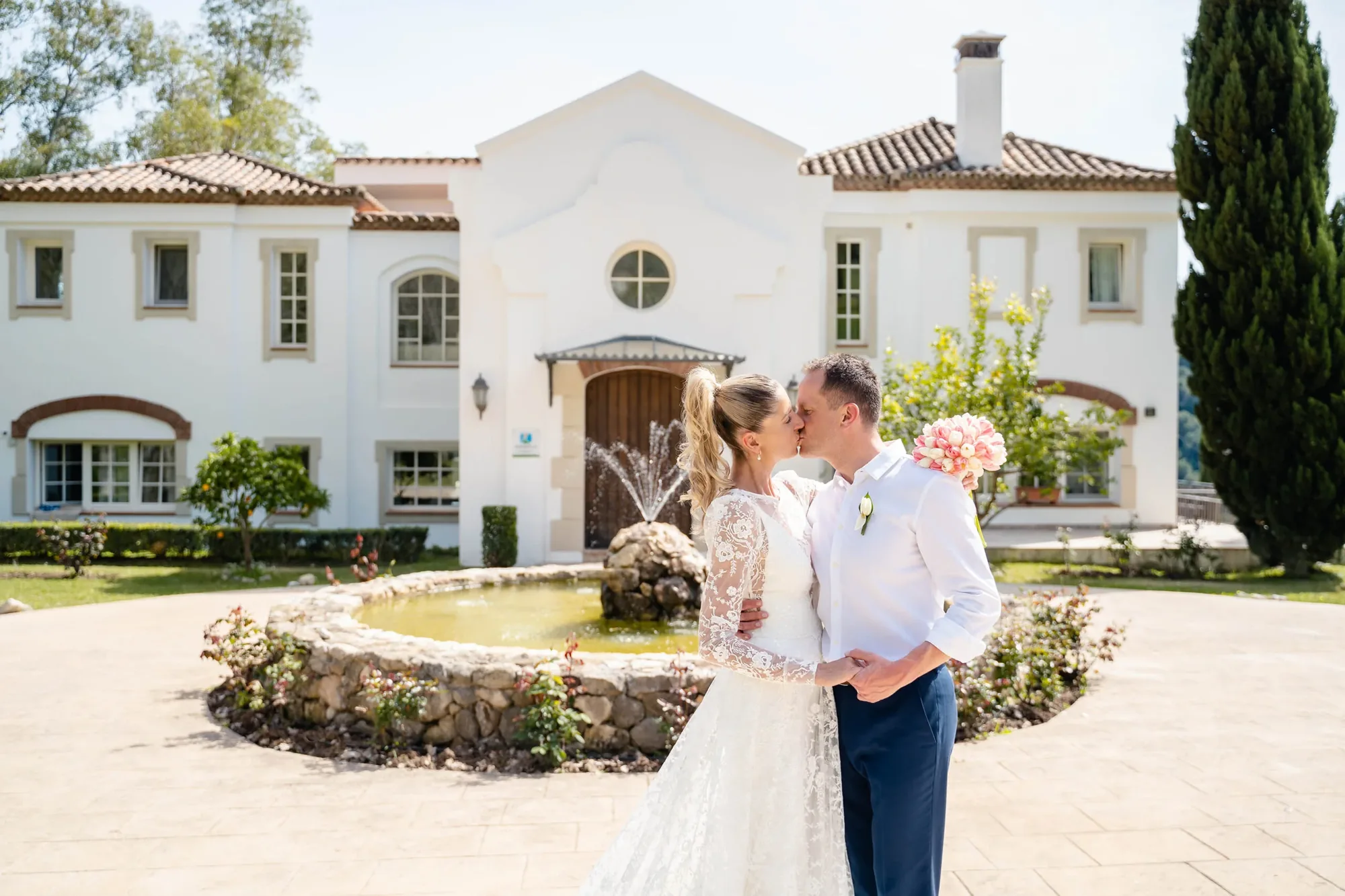
Wedding dresses in Spain: a bride in a long-sleeved floral lace gown with a high ponytail kisses her groom, who holds her pink tulip bouquet, in front of a white villa with a stone fountain and a cypress tree

Wedding Dresses, Bridal Gowns & Bridesmaid Dresses

Choosing your wedding dress and your bridesmaids’ dresses for a wedding in Spain

Bridal fashion in Spain

Wedding dresses and bridesmaid dresses in Spain

Wedding dress
From about €500 to €5,000+
Start shopping
9–12 months ahead
Bridesmaid dresses
Typically €100–€300 each
Final alterations
4–6 weeks before the day

Choosing your wedding dress means settling on a silhouette, fabric and level of detail that suit you, your venue and the Spanish climate, then allowing time for fittings and alterations. Most brides start shopping 9–12 months before the wedding, and the same planning applies to your bridesmaids’ dresses, which should complement your gown rather than compete with it.

Spain has a strong bridal tradition, with established bridal houses in Barcelona and Madrid and dressmakers around the country who make bespoke gowns. Every bride has a different picture in mind: a flowing bohemian dress for a beach ceremony, a structured ball gown for a grand estate, or a sleek slip dress for a city wedding.

This guide covers the main dress styles, fabrics and details, typical prices, and how to choose bridesmaid styles and colours that work with your setting and season.

This page is our full guide to wedding dresses in Spain: dress, gown or bridesmaid dress, prices, a timeline from first appointment to the wedding morning, silhouettes, what to wear across Spain’s regions and climates and the Spanish terms you’ll meet in a bridal shop.

Our suppliers

Bridal shops and dressmakers

Wedding dress boutiques, dressmakers and bridesmaid dress suppliers for weddings in Spain.

We are adding bridal shops and dressmakers to the directory. In the meantime, tell us your date and location and we can recommend ones we know.

Ask us for recommendations →

Know the difference

Wedding dress, bridal gown or bridesmaid dress?

The terms overlap, but they are worth separating when you start shopping.

Wedding dress

The catch-all term for what the bride wears: modern, minimal or unconventional. It works for a coastal elopement, a city hall ceremony or a relaxed finca wedding.

  • Any style, length or fabric
  • Includes short, midi and slip dresses
  • Often simpler in construction
  • Suits informal and civil ceremonies

Bridal gown

A wedding dress at its most formal: sculpted bodices, dramatic silhouettes, rich fabrics and detailed finishing, often with a train. All gowns are wedding dresses, but not every wedding dress is a gown.

  • Structured bodices and full skirts
  • Rich fabrics such as satin and tulle
  • Trains from sweep to cathedral length
  • Suits churches, estates and grand hotels

Bridesmaid dresses

Dresses that tie the bridal party into the look of the wedding. They no longer have to match: mix-and-match styles in one colour palette let each bridesmaid wear a shape that suits her.

  • A-line, wrap, boho, midi or jumpsuits
  • Coordinated colour palette
  • Should complement, not compete with, your gown
  • Order 4–6 months ahead

Dress timeline

From first appointment to the aisle

A destination wedding adds one step most brides don’t think about until late: getting the dress to Spain in good condition. This is the usual sequence.

  1. 10–12 months out

    First appointments

    Two or three boutiques, by appointment, with a small group and a clear budget. Weekday mornings are usually quieter.

  2. 9–12 months out

    Order the dress

    Bespoke and made-to-order gowns can take several months, so order early enough to avoid rush fees.

  3. 4–6 months out

    Bridesmaid dresses

    Order with accurate measurements from everyone, as sizing varies between brands.

  4. 2–3 months out

    Fittings

    Bring the shoes you will wear so the hem is right, plus your veil and jewellery to see the whole look.

  5. Travel week

    Travelling with the dress

    Ask the boutique to pack it in a breathable garment bag, check your airline’s policy and carry it on rather than checking it in if you can.

  6. The wedding day

    Steaming and dressing

    Hang the dress as soon as you arrive and arrange professional steaming; your planner or hotel can usually help. Dress after hair and make-up, with time to spare before the photographer needs you.

Prices

How much does a wedding dress cost in Spain?

Typical price ranges in Spain. Budget for the extras as well as the dress itself.

ItemTypical priceNotes
Wedding dress€500–€5,000+From high-street options to designer and bespoke gowns
Wedding dress alterations€100–€500Depends on the dress and how much work is needed
Cleaning or preservation€100–€300After the wedding
Bridesmaid dress€100–€300 eachHigh-street at the lower end, bridal boutiques at the upper end
Bridesmaid alterations€50–€150 eachPlus shoes and accessories

Also allow for your veil, shoes and jewellery, any taxes, and shipping if you buy online.

Silhouettes

Wedding dress styles at a glance

Try several shapes, even if you already have a picture in mind: many brides choose a style they did not expect.

A-line

A fitted bodice cinched at the natural waist, flaring into a soft A-shaped skirt. Flattering on most figures, including pear-shaped, curvy and petite brides, and at home anywhere from a rustic finca to a city venue.

Empire waist

A waistline just beneath the bust, flowing into a long, relaxed skirt. It elongates petite frames, is comfortable for pregnant brides and suits beach and garden ceremonies.

Ball gown

A fitted bodice with a full, voluminous skirt from the waist. It suits most figures and taller brides especially, and belongs in grand settings such as cathedrals, castles and luxury hotels.

Mermaid, trumpet and fit-and-flare

Fitted through the body, flaring at the knee (mermaid), mid-thigh (trumpet) or gradually towards the hem (fit-and-flare). They highlight curves, with trumpet and fit-and-flare allowing more movement.

Sheath, column and slip

Slim, straight or body-skimming shapes with no full skirt. Clean and modern for city and intimate weddings; a silk or satin slip dress is a natural choice for a relaxed beach or island wedding.

Tea-length, midi, high-low and mini

Shorter hemlines for daytime, civil or informal weddings, elopements and after-parties. Midi and tea-length suit taller brides; minis and high-low hems show off your shoes.

Across Spain

What to wear by region

Spain’s climate varies far more than most brides expect, from Andalusian heat to Atlantic drizzle. Choose fabric and detail for your setting and season.

Marbella and the Costa del Sol

Summer afternoons are hot, so chiffon, organza and soft tulle are the practical choice for beach clubs and garden venues around Marbella. A long train picks up sand at a beach ceremony; a bustle for the evening helps.

Sotogrande, Cádiz and Jerez

The Levante wind can be strong on this coast. A long veil looks wonderful in photographs and becomes unmanageable in a gust, so have extra pins or a shorter veil for outdoor moments around Sotogrande and Jerez.

Seville, Granada and inland Andalucía

Church weddings in Andalucía are often traditional, and some churches expect covered shoulders, so consider sleeves, a bolero or a mantilla for the ceremony. Inland summer heat makes breathable fabrics essential.

Barcelona and the Costa Brava

Spain has established bridal houses in Barcelona, so a shopping trip can double as a venue visit. Cove and masía weddings on the Costa Brava suit lighter, relaxed styles.

Madrid and central Spain

Bridal houses and dressmakers in the capital. Palaces and grand hotels suit structured gowns, and evenings inland can turn cool after a hot day, so plan a wrap.

Valencia

Coastal humidity in summer favours breathable fabrics, and orange-grove and beach venues suit relaxed silhouettes.

Ibiza

Boho, lace and slip dresses suit the island’s style. Flying in means planning how the dress travels and having it steamed on arrival. See the Balearic Islands.

Mallorca and Menorca

Finca weddings on gravel and stone paths favour a shorter train or a bustle for the evening. Carry the dress on the plane or ferry if you can.

The Canary Islands

Mild all year, so sleeves and heavier fabrics work for a winter wedding in a way they wouldn’t in a mainland summer. Trade winds on the coast can catch a veil. See the Canary Islands.

Basque Country and Navarre

Cooler and wetter, so long sleeves, heavier satins and a wrap or cape are practical. Plan shoes for damp grass.

Galicia and Asturias

Layers for cool evenings and a plan for rain, with an umbrella that suits the look.

Gibraltar

Registry ceremonies are often short and informal and suit a lighter or shorter dress. Some brides change for an evening reception across the border.

Spanish bridal terms

The words you’ll hear in a bridal shop

Many boutiques in Spain work in English, but these terms come up in fittings, price lists and conversations with dressmakers.

Vestido de novia

Wedding dress.

Traje de novia

Also wedding dress; traje often means the whole bridal outfit.

Arreglos

Alterations, typically €100–€500 for a wedding dress.

Prueba

A fitting.

Cola

The train.

Velo

The veil.

Mantilla

A traditional lace veil worn over the head and shoulders, often held by a tall comb called a peineta.

Tocado

A headpiece, such as a comb, flower or small hat.

Corpiño

The bodice.

A medida

Made to measure, or bespoke.

Modista

A dressmaker.

Damas de honor

Bridesmaids.

Free shortlist

Let us find your bridal boutique

Tell us your date, where you live and the style you love, and we will recommend boutiques and dressmakers to try, at no charge.

Shopping tips

10 tips for shopping for your wedding dress

How to find the dress, from setting a budget to knowing when to stop looking.

  1. Start early

    Begin shopping 9–12 months before the wedding. Bespoke and made-to-order gowns can take several months, and starting early avoids rush fees and gives you more choice.

    Tip Book first appointments 10–12 months out, fittings 2–3 months before the wedding and final alterations 4–6 weeks before.

  2. Set a realistic budget

    Dresses in Spain range from about €500 to €5,000 or more. Include alterations (€100–€500), veil, shoes and jewellery, and tell boutique staff your budget so they show you dresses within it.

    Tip Add taxes, shipping for online orders, and cleaning or preservation after the wedding.

  3. Research styles and silhouettes

    Knowing the main shapes, such as A-line, mermaid, ball gown and sheath, makes appointments more productive and helps you explain what you want.

    Tip Build a mood board of styles, fabrics and details such as lace or beading.

  4. Book appointments in advance

    Most bridal boutiques in Spain work by appointment, which gets you dedicated time with a consultant. Weekday mornings are usually quieter. Visiting two or three boutiques is enough to compare without feeling overwhelmed.

    Tip Check which designers each boutique stocks and bring your mood board.

  5. Bring a small, supportive group

    One to three people who know your style is plenty; large groups bring conflicting opinions and stress.

    Tip Brief them on your preferences and budget beforehand.

  6. Keep an open mind

    A dress that looks plain on the hanger can look completely different on you. Try different silhouettes, fabrics and necklines.

    Tip Try at least one “wild card” dress outside your comfort zone.

  7. Think about your venue and season

    A lightweight chiffon sheath or boho dress keeps you cool at a summer beach wedding; long sleeves or a train suit a winter church ceremony. Picture the dress in your setting.

    Tip Check the typical weather for your date and plan a shawl or mantilla veil if evenings may be cool.

  8. Prioritise comfort and movement

    You will wear the dress for hours, so check you can sit, walk and dance in it. Fitted styles may need supportive shapewear. Light fabrics suit hot Spanish summers; structured satins work better in cooler months.

    Tip Bring the shoes you will wear to fittings so the hem is the right length.

  9. Pay attention to the details

    Lace, beading, embroidery and a mantilla veil each change the feel of a dress. Make sure they match your wedding’s style and your own.

    Tip Try the dress with your veil, jewellery and shoes to see the complete look.

  10. Trust your instincts

    When a dress feels right, it is fine to stop looking, even if it happens sooner than expected or with a style you did not anticipate.

    Tip Take photos of your top choices if the boutique allows, but do not overanalyse.

Got a question?

Common questions about wedding dresses

What wedding dress styles are most popular in Spain?

A-line dresses are the most common choice because they flatter most figures and suit almost any venue. Mermaid gowns are popular for glamorous evening weddings, flowing boho dresses with lace for beach and rustic weddings, and ball gowns for church ceremonies. Spanish bridal houses offer collections that mix traditional and modern styles.

How do I choose a wedding dress that suits my body type?

Start with silhouettes known to flatter your shape, then try others. A-line dresses suit most figures, especially pear-shaped and curvy brides; mermaid and sheath dresses highlight an hourglass figure; sheath and A-line dresses elongate petite frames; ball gowns suit taller brides but can overwhelm a petite frame. A good bridal consultant will suggest shapes and fabrics, but comfort and confidence matter most.

How far in advance should I start shopping for my wedding dress?

Start 9–12 months before the wedding. Bespoke and made-to-order gowns can take several months, and you need time for fittings and alterations. Starting early also avoids rush fees and gives you the widest choice.

What is the average cost of a wedding dress in Spain?

Wedding dresses in Spain typically range from about €500 for high-street options to €5,000 or more for designer gowns. On top of that, budget around €100–€500 for alterations, plus your veil, shoes and jewellery, and €100–€300 for cleaning or preservation afterwards. Tell boutique consultants your budget so they can show you suitable options.

Can I customise my wedding dress with a Spanish dressmaker?

Yes. Many Spanish dressmakers offer bespoke services, so you can add personal touches such as lace, embroidery inspired by regional designs, or a traditional mantilla veil. Discuss design, fabrics and budget at your first consultation and expect several fittings.

What fabrics are best for a summer wedding in Spain?

Lightweight, breathable fabrics such as chiffon, organza and soft tulle are best for summer heat. Airy lace and light cotton blends also work well. Heavy fabrics such as thick satin or velvet can feel uncomfortable in high temperatures, so test how a fabric feels during your fittings.

How do I choose bridesmaid dresses that complement my wedding gown?

Choose colours and shapes that work with your dress without drawing attention from it. Neutrals such as blush or taupe sit well beside an ivory gown, and simpler colours keep the focus on a gown with bold detailing. Mix-and-match styles in one palette let each bridesmaid choose a flattering fit while the group still looks coordinated.

What are the most flattering bridesmaid dress styles?

A-line and wrap dresses flatter the widest range of figures, and wrap dresses adjust to fit. Fit-and-flare dresses show curves with less restriction, slip dresses suit most body types, and midi dresses work well on taller bridesmaids. Flowing boho styles in chiffon suit rustic and outdoor weddings.

How much do bridesmaid dresses typically cost in Spain?

Usually €100–€300 per dress, from high-street brands at the lower end to bridal boutiques at the upper end. Add about €50–€150 for alterations, plus shoes and accessories. Agree the budget with your bridesmaids early, especially if they are paying, and consider rental or second-hand dresses to save money.

How do I make sure the bridesmaid dresses fit everyone?

Order 4–6 months before the wedding and ask everyone for accurate measurements, as sizing varies between brands. Schedule fittings 2–3 months before the day to leave time for alterations. Adjustable designs such as wrap dresses make fitting a varied group easier.

What should I consider when choosing a colour palette for bridesmaid dresses?

Think about your venue, season, gown and bridesmaids’ skin tones. Pastels and neutrals suit spring and summer and coastal venues; jewel tones such as emerald or sapphire suit autumn, winter and grand or urban settings; earthy tones such as sage and terracotta suit rustic fincas and vineyards. Test colours in your venue’s light, as that is how they will appear in photographs.

Where can you help me find wedding dresses and dressmakers in Spain?

We are building our directory of bridal shops and dressmakers, starting where we plan most weddings. Tell us your date, location and the style you have in mind and we will suggest boutiques or dressmakers we know. Contact us for recommendations.

Do you only recommend bridal shops in Marbella?

No. Although we’re based in Marbella, we work with bridal boutiques and dressmakers throughout Spain, including Málaga and the rest of the Costa del Sol, Sotogrande, Cádiz and Jerez, Seville and Granada, Barcelona and the Costa Brava, Madrid, Valencia, Ibiza, Mallorca and Menorca, and the Canary Islands, as well as Gibraltar. Many brides shop at home and bring the dress with them; we can also recommend a seamstress near your venue for final alterations and steaming.

With thanks

Thank you for the images

Our thanks go to the venues and the talented wedding photographers whose work brings these pages to life. All images remain the copyright of the venues and their photographers.

Is this one of your images?

If you took any of the photographs on this website, please send us your details. We would be delighted to credit you by name and feature you as a vendor on weddingvenues.es.

Send us your details

Register your wedding services with us

Wedding photographer, videographer or supplier? Join our directory of wedding vendors in Spain and reach couples who are planning their wedding in Spain.

Register your services