Discover your perfect wedding venue in Spain

Wedding Venues Tarifa
Where Love Meets Style. Tarifas Best Wedding Venues.
Tarifa sits at the southernmost point of mainland Europe, where the Atlantic meets the Mediterranean and Morocco is fourteen kilometres across the water. On a clear day you can see the Rif mountains from the beach.
It’s also the windiest place in Europe. The levante blows from the east and can run for days; the poniente from the west is gentler. Between them they made Tarifa the kite surfing capital of the continent, and they’re why where you hold your ceremony matters more here than anywhere else on this coast.
The beaches are the draw. Playa de los Lances runs seven kilometres of wide open sand backed by dunes and pine, with Valdevaqueros and Bolonia beyond. Atlantic beaches: big, empty and considerably wilder than anything on the Mediterranean side.
The town is small and unpretentious. A walled Moorish quarter, narrow streets, surf shops, and a young international crowd who came for the wind and stayed. Nothing polished about it, which is the appeal for some couples and the reason others should look at Vejer instead.
It suits a relaxed, outdoor, barefoot wedding for guests who’ll enjoy somewhere with character over somewhere with facilities. It doesn’t suit large formal weddings, or a guest list with people who’d struggle on sand and cobbles.
See all our Wedding Venues in Spain
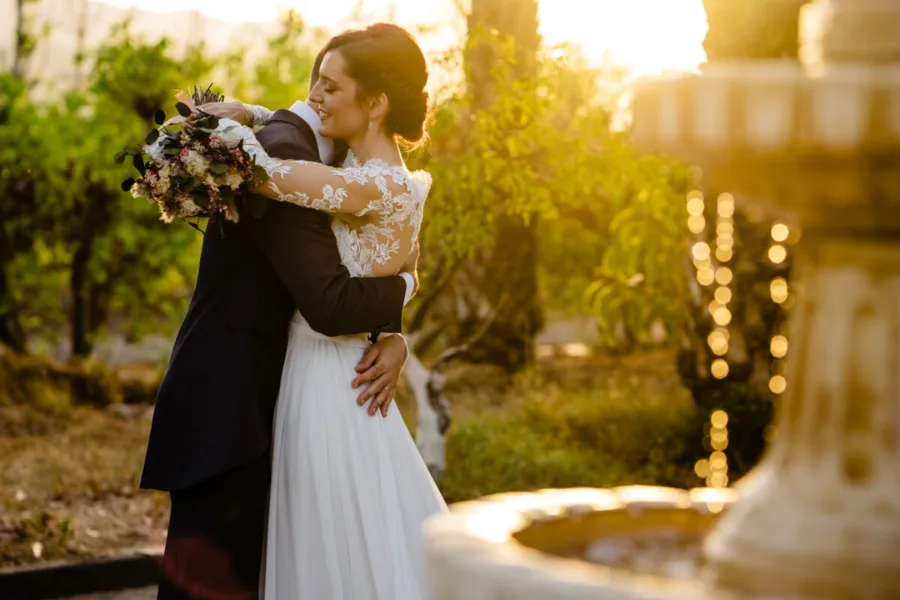
Wedding Venues in Tarifa
Four types, and the choice is shaped by the wind more than by anything else.
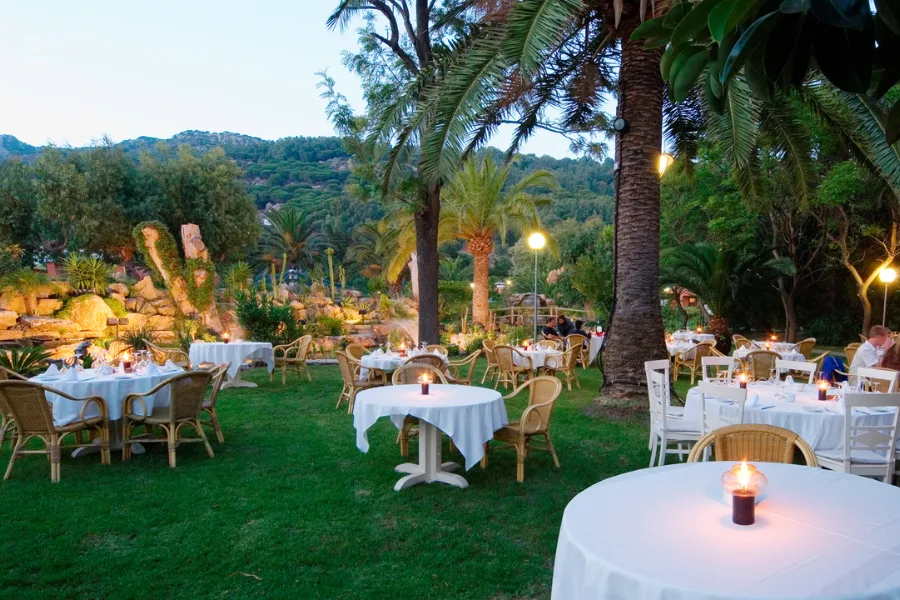
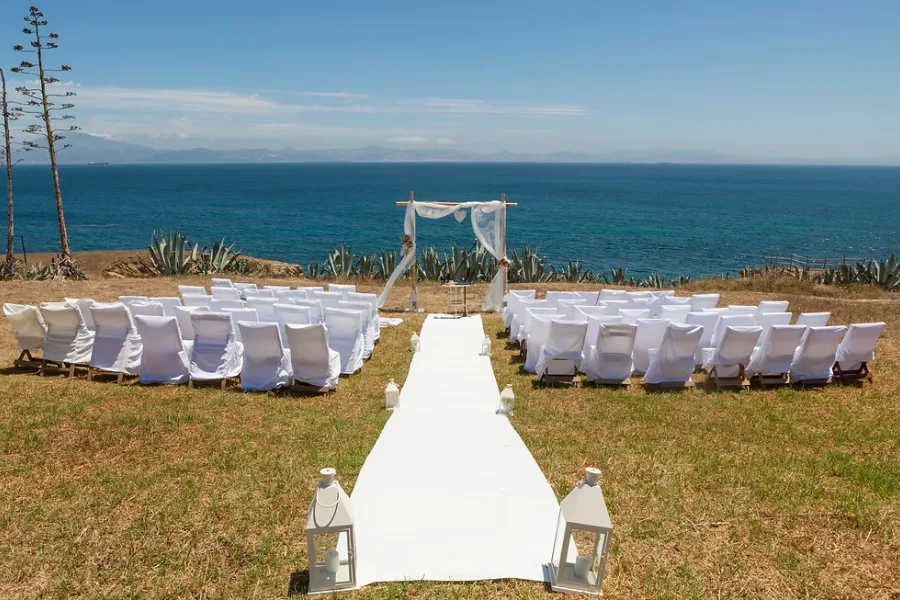
Beach clubs. The obvious choice, and the practical one. A club holds the space, the licence and the facilities, which a public beach doesn’t, and most sit slightly back from the water with some shelter built in. Los Lances and Valdevaqueros have several, most working to 80 to 150 guests. Ask specifically how the ceremony space performs in a levante, because the answer varies enormously between two clubs half a mile apart.
Beachfront hotels. A handful along the coast road towards Bolonia, generally smaller and more boutique than the resort hotels further east. They solve accommodation, which matters in a town where rooms are limited and fill from June.
Cortijos and country estates inland. Ten to twenty minutes back from the coast, in the hills towards Facinas and the Parque Natural del Estrecho. Sheltered, considerably cheaper, and with relaxed curfews. If the wind worries you, this is the answer, and you’re still fifteen minutes from the beach for photographs.
The old town.
What a Wedding in Tarifa Costs
For 100 guests, expect €24,000 to €40,000 all in, covering venue, catering, drinks, flowers and styling, music, photography and staffing.
That puts Tarifa at the upper end of Cádiz province and still comfortably below the Costa del Sol. The same wedding near Marbella would typically run €8,000 to €10,000 higher.
Why it sits above the rest of Cádiz. Tarifa is the busiest town in the province from June to September. The kite and surf season fills every room, accommodation prices set the tone for everything else, and venue availability tightens accordingly. Vejer, twenty minutes north, is noticeably cheaper for the same month.
Venue hire runs from around €3,000 for an inland cortijo to €9,000 or more for a beach club on a peak Saturday.
Catering is the largest line after that, typically €70 to €120 per person. Tarifa’s Atlantic fish is genuinely good and worth building the menu around: the tuna, in particular, is the reason Zahara up the coast has a festival for it.
Drinks are usually separate. Wine and beer through dinner adds €20 to €35 a head. An open bar running late can double it.
The wind. More important than the month here, and the thing that decides everything else. Ask any venue how exposed the ceremony space is, what they do when a levante blows, and whether the covered option is somewhere you’d actually want to be. A venue that answers those three questions without hesitating has done this before.
Accommodation. Tarifa is a small town with a short, intense season, and a hundred guests won’t fit in one place. Block-book early, spread people across two or three properties, and consider Vejer or Conil for the overflow. June to September fills six months out.
The legal side. Decide before you book a date. A Spanish civil wedding needs one of you registered on the local padrón, which non-residents can’t easily satisfy. Most couples marry legally at home, or in Gibraltar, which is 45 minutes from Tarifa and the easiest option on this stretch of coast, then hold the real ceremony here with a celebrant.
Our services include:


Weddings in Tarifa
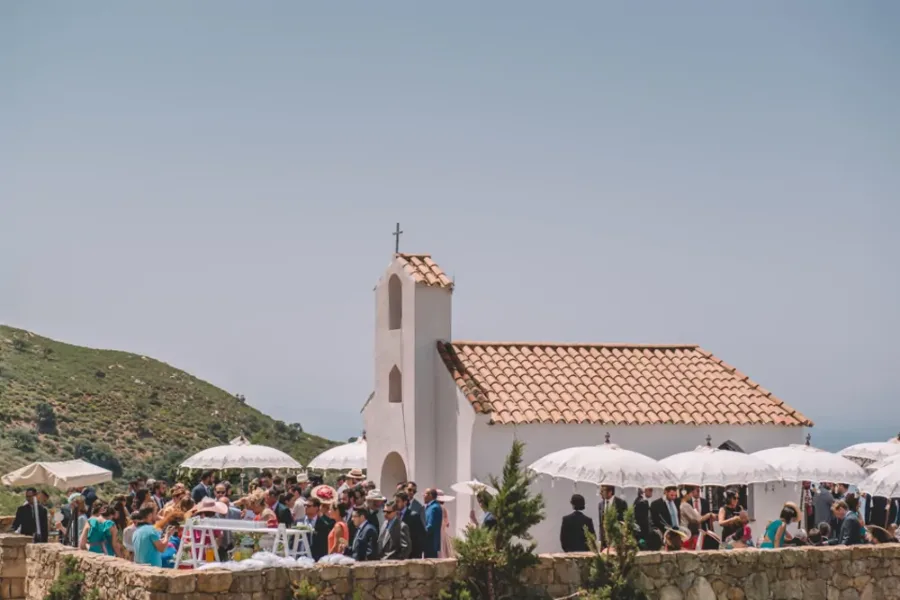
When to Marry in Tarifa
The temperatures are gentler here than almost anywhere in Andalucía, because the Atlantic and the strait between two seas keep the air moving. Where Seville passes 40°C in August, Tarifa rarely goes above 28.
| Month | Daytime | After dark | Sunset |
|---|---|---|---|
| April | 19°C | 13°C | 21:15 |
| May | 21°C | 15°C | 21:40 |
| June | 24°C | 18°C | 21:55 |
| July | 27°C | 20°C | 21:50 |
| August | 27°C | 21°C | 21:20 |
| September | 25°C | 19°C | 20:35 |
| October | 22°C | 16°C | 19:40 |
Which makes Tarifa the most comfortable summer wedding on this coast. July and August are genuinely pleasant here rather than endured. The trade-off is that it’s peak season for the kite crowd, so accommodation is at its tightest and most expensive.
April and May are quiet, green and lovely, with the countryside in bloom and empty beaches. Evenings need heaters.
September is the pick. Warm, the crowds gone after the third week of August, the sea at its warmest, and the light at its best.
November to March is mild and often sunny, considerably wetter than the Mediterranean side, and windier. Best prices and best availability, with a proper indoor plan.
Contact Us
Make Your Day Special with Us
Start Your Wedding Journey and discover our exceptional services, designed to make your day extraordinary and unforgettable. We look forward to creating wonderful memories with you.
Weddings in Tarifa
Planning a wedding here raises questions that don’t come up at home, and a few that don’t come up anywhere else in Spain: how the wind shapes your venue choice, where a hundred guests actually sleep, and which of four airports to point people at.
Our FAQs cover the practical ground: what things cost, when to marry, the legal routes open to non-residents, and what to ask a venue before you pay a deposit.
If your question isn’t there, ask us directly. We’re ninety minutes up the coast in Marbella, we know this stretch, and we’d rather tell you Tarifa isn’t right for you than sell you a wedding somewhere that doesn’t suit.
Contact Us For More Information
Common Questions
Can we get married on the beach in Tarifa?
A public beach ceremony needs a permit from the ayuntamiento, and the rules vary by beach and season. Bolonia sits inside the Parque Natural del Estrecho, so restrictions there are tighter again. Even where it’s allowed, you’re working with no power, no shade, no facilities, and everything carried in and out by hand across sand.
A beach club solves all of it. They hold the space, the licence and the kitchen, most sit slightly back from the water with shelter built in, and you get the same photographs without the logistics.
Is the wind really that bad?
Yes, and it’s the defining feature of the place rather than a caveat at the bottom of the page.
The levante blows from the east, arrives with little warning and can run for three or four days at a stretch. It’s most frequent from May to September, which is wedding season. The poniente comes off the Atlantic and is milder, damper and generally more workable.
No month is reliably calm, and anyone telling you otherwise hasn’t spent a summer here. But it’s planned around rather than gambled on: a venue with shelter, a ceremony in the evening when the wind usually drops, and a covered option that doesn’t feel like second best.
The couples who choose Tarifa knowing this are fine. The ones who assume their day will be the still one are the ones who struggle.
Whats the Levante?
If you marry in Tarifa, you’ll hear this word constantly. Worth knowing what it means.
The levante is an easterly wind that funnels through the Strait of Gibraltar, compressed between the mountains of Spain and Morocco. That compression is what makes it strong: the same air moving over open ground would be a breeze, and squeezed through a fourteen-kilometre gap it becomes something else.
It can blow for three or four days. It arrives with little warning, though the forecast usually catches it two or three days out. Most common from May to September, which is exactly when weddings happen.
The poniente is the other one, blowing from the west off the Atlantic. Milder, damper, often bringing cloud, and generally far easier to work around.
What it actually does to a wedding. Flowers won’t stay where you put them. Table settings need weighting, and paper anything is out. Veils become unmanageable. An unamplified ceremony on open sand becomes inaudible past the third row. And a marquee needs proper anchoring rather than weights.
What it doesn’t do. Cancel your wedding. Every venue in Tarifa has worked in a levante, and the good ones have a plan they can implement in an hour.
How to plan around it. Choose a venue with genuine shelter rather than a nominal indoor option. Hold the ceremony in the evening, when the wind typically drops. Talk to your florist about it, since they’ll build differently. And ask your venue what they do when it blows, because the answer tells you how experienced they are.
And accept it as part of the place. The wind is why the beaches are empty, why the kite surfers came, and why Tarifa looks the way it does rather than like the Costa del Sol. It comes with the setting.
How do our guests get here?
Gibraltar is closest at 45 minutes, with direct flights from London, Manchester and Bristol. Jerez is an hour and a quarter, small and easy, though the routes are seasonal. Málaga and Seville are both around two hours, and Málaga is where most people will find the flight they want.
Arrange coaches for the wedding day regardless.
Where will our guests stay?
Sort this first, before the venue if necessary.
Tarifa is a small town with a short, intense season, and the kite crowd competes for exactly the rooms your guests need at exactly the same time of year. A hundred people will not fit in one place, and June to September fills roughly six months out.
Plan to spread guests across several properties in town, with Vejer and Conil as overflow, both 30 to 40 minutes away. If your venue has rooms, use them for immediate family and place everyone else nearby. And block-book earlier than feels necessary, because the alternative is people staying an hour away and a coach schedule that shapes your whole evening.
Can we legally get married in Tarifa?
Not realistically as non-residents. A Spanish civil wedding runs through the Registro Civil, which expects at least one of you registered on the local padrón, and that rules most international couples out.
Gibraltar is 45 minutes away, which makes Tarifa one of the easiest places in Spain to handle this. No residency requirement, English as the official language, UK documents accepted without translation. Plenty of couples marry there on the Friday and celebrate here on the Saturday.
The alternative is a ten-minute registry appointment at home before you travel. Either way the ceremony here is symbolic, led by a celebrant, and can happen anywhere at any hour in any language. Nobody attending will know the difference.
What's there for our guests to do?
More than almost any Spanish wedding destination, and genuinely different from the rest of them.
Morocco is 35 minutes by ferry. Tangier as a day trip is something no other Spanish wedding location can offer, and it’s the thing guests remember.
Whale and dolphin watching in the strait is among the best in Europe: orcas in summer, pilot whales year-round.
Bolonia for the dune and the Roman town at Baelo Claudia. Kitesurfing lessons at Valdevaqueros, which people will talk about whether or not they manage to stand up. And the old town, walkable in an afternoon.
Do you offer wedding planning and on-the-day coordination?
Yes, at three levels depending on how much you want to hand over.
Full wedding planning takes it from the beginning: shortlisting and touring venues, building a realistic budget, sourcing and booking every supplier, reading the contracts, and holding the timeline so nothing slips. You make the decisions; we do the chasing, the translating and the paperwork.
On-the-day coordination is for couples who’ve planned it themselves and want someone running it. We take over four to six weeks out, confirm timings with every supplier, build a schedule everyone works from, and are on site from set-up to the last dance.
Venue sourcing and tours if you’re still deciding where. We shortlist properly, contact venues in Spanish, and tour on your behalf.
Coordination earns its money here more than most places. Tarifa weddings have a plan A and a plan B, and someone has to decide by mid-morning which one you’re running. That’s a call you shouldn’t be making on your wedding day, and it’s the reason venues here take coordination more seriously than they might elsewhere.
What wedding vendors can you help with?
Everything except the venue, which we source separately.
Catering and private chefs · Photographers and videographers · Florists · DJs and entertainment · Mobile bars · Content creators
Plus hair and makeup, celebrants, transport, and furniture and styling hire.
Two things specific to Tarifa.
Most suppliers travel in. The local pool is small, so specialists come from Jerez, Seville or Málaga, with travel time and occasionally an overnight for anyone working a late finish. We price that in from the start rather than letting it appear later, and we book earlier here than we would on the Costa del Sol because there are fewer alternatives if someone falls through.
And the wind changes who you want. A florist who works Tarifa regularly builds differently: heavier bases, sturdier stems, nothing loose. Hair and makeup the same. It’s not a matter of skill, it’s a matter of having done it before, and it’s the main reason bringing a supplier from home can go wrong here.
You don’t have to take all of it. Plenty of couples bring a photographer they love and use us for the rest.