Discover your perfect wedding venue in Spain

Wedding Venues Vejer de la Frontera
Handpicked Wedding Venues in Vejer de la Frontera
Vejer sits on a hilltop ten kilometres inland from the Atlantic, and it’s the village most couples fall for once they’ve seen Cádiz province properly.
It’s a Moorish town, walled, with cobbled lanes climbing between whitewashed houses and views running across the countryside to the sea. On a clear day you can make out the Rif mountains in Morocco from the top. Thirteen thousand residents, a food scene that punches considerably above that, and none of the resort feeling of the coast below.
And crucially, it’s sheltered. Ten kilometres inland and enclosed by its own walls, Vejer is largely out of the levante that shapes everything at Tarifa forty minutes south. That single fact is why a good number of couples who arrive wanting a beach wedding end up here instead, with the beach twenty minutes away for photographs.
Wedding Venues in Vejer de la Frontera
Four, and the choice comes down to whether you want the town or the countryside around it.
Palacios and courtyard venues. Vejer’s signature. Restored townhouses built around interior courtyards, which is the traditional Andalusian answer to heat and, conveniently, to wind. Thick walls, tiled floors, orange trees, and no marquee required. Typically 60 to 120 guests. Worth checking: vehicle access, since much of the old town is pedestrian and lanes are narrow.
Boutique hotels. Several small properties in and around the walls, most taking 40 to 100. They solve the accommodation problem in a town where rooms are genuinely limited, which matters more here than the venue choice itself. Worth checking: whether you have exclusive use or share with other guests.
Cortijos in the surrounding countryside. Five to fifteen minutes out among farmland and cork oak. More space, relaxed curfews because there are no neighbours, and lower prices again. This is where the larger weddings happen. Worth checking: the access road and coach turning space, and whether the covered option genuinely holds your numbers.
Rooftop and terrace venues. Vejer’s position on the hill means several venues look out across the plain to the Atlantic. That view is the reason to be here rather than anywhere else in the province. Worth checking:
Average cost of a wedding in Vejer de la Frontera
For 100 guests, expect €20,000 to €34,000 all in, covering venue, catering, drinks, flowers and styling, music, photography and staffing.
That makes Vejer one of the better-value places to marry in Cádiz province, and roughly €12,000 below the equivalent wedding near Marbella.
Why it’s cheaper than the coast. Ten kilometres inland puts Vejer outside the beach premium entirely. Venues here charge for courtyards and views rather than for sand access, and the town doesn’t have the summer accommodation squeeze that pushes prices up at Tarifa and Zahara from June.
IVA at 21% sits on top of all of it. Some suppliers quote inclusive and some don’t, and the quote rarely makes it obvious which. Ask every time, in writing, and ask before you start comparing, because two quotes several thousand apart can turn out to be the same price.
Access. Much of the old town is pedestrian, the lanes are narrow and steep, and a full-size coach won’t reach most venues inside the walls. Work out early how a hundred guests actually arrive: minibuses, coaches to the edge with a walk, or a cortijo outside town instead. It’s the practical constraint nobody mentions and the one that shapes your whole evening.
Accommodation. Vejer’s hotels are boutique rather than plentiful, so a hundred guests will spread across several properties and some will pay more than they’d expect. Block-book early, and use Conil or El Palmar on the coast, fifteen to twenty minutes away, for the overflow.
The legal side. Decide before you book a date. A Spanish civil wedding needs one of you registered on the local padrón, which non-residents can’t easily satisfy. Most couples marry legally at home, or in Gibraltar about an hour away, then hold the real ceremony here with a celebrant.
Our services include:


Weddings in Vejer de la Frontera
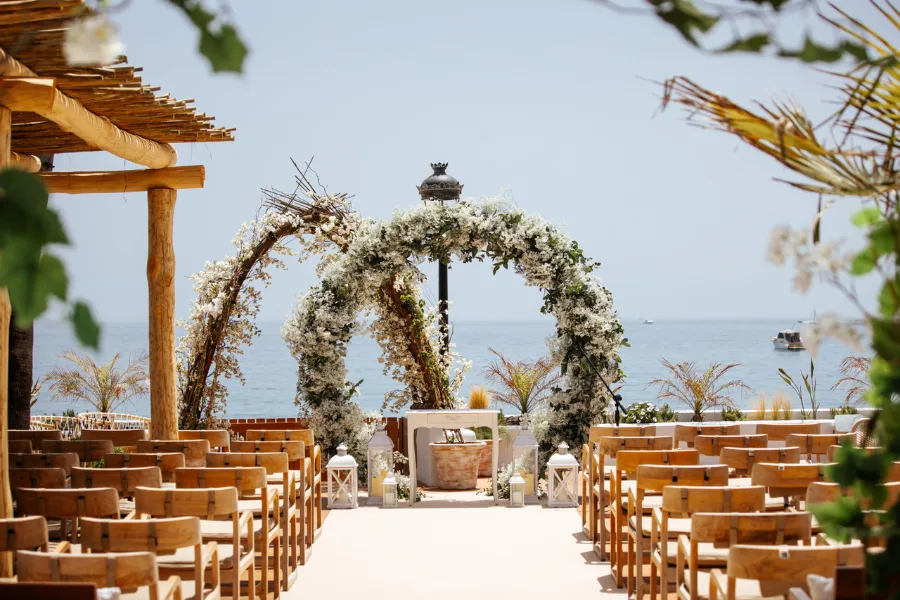
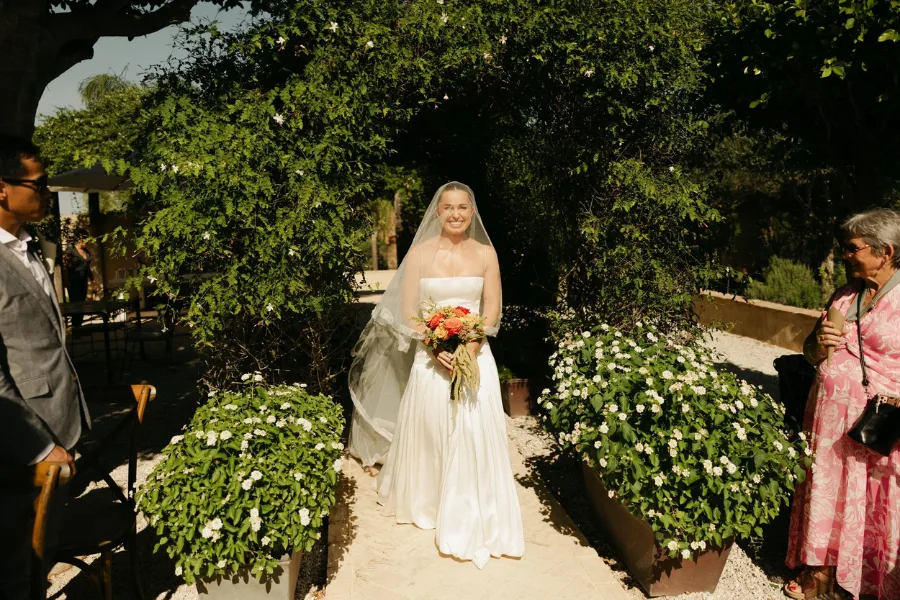
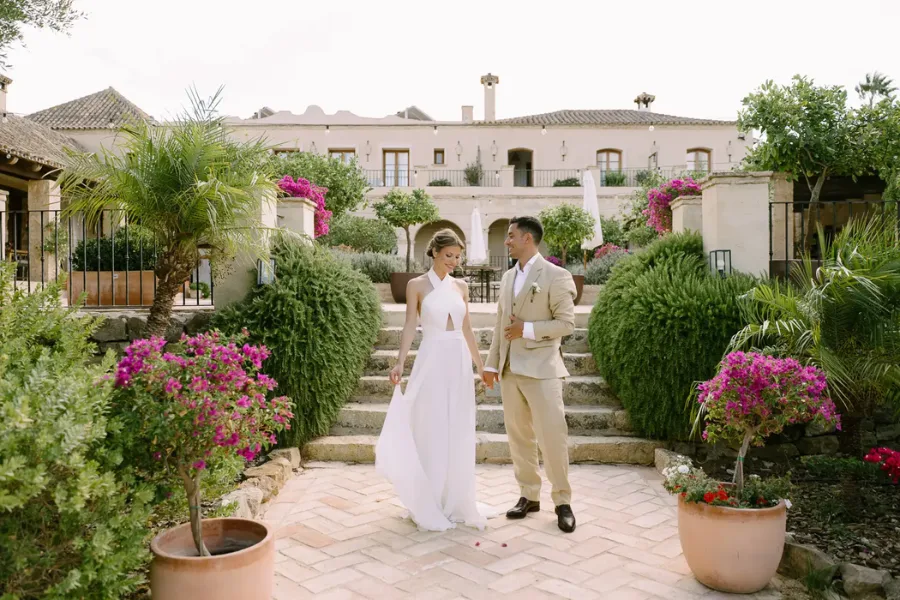
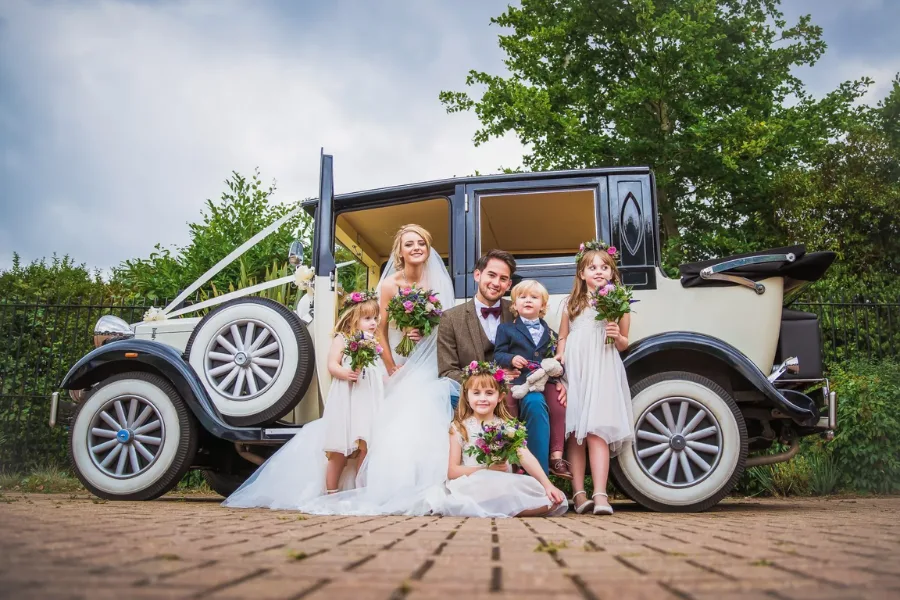
When to Marry in Vejer de la Frontera
May, June and September, with early October close behind.
Being ten kilometres inland and slightly elevated, Vejer runs a degree or two warmer than the coast by day and cooler at night. The sea breeze still reaches this far, which keeps July and August considerably kinder than Seville an hour and a half north.
| Month | Daytime | After dark | Sunset |
|---|---|---|---|
| April | 21°C | 12°C | 21:15 |
| May | 23°C | 14°C | 21:40 |
| June | 27°C | 17°C | 21:55 |
| July | 30°C | 19°C | 21:50 |
| August | 30°C | 20°C | 21:20 |
| September | 27°C | 18°C | 20:35 |
| October | 23°C | 15°C | 19:40 |
The second column is what your guests are sitting in during the speeches, and it’s the figure nobody publishes. June to September are the only months you can comfortably eat outside all evening.
April and May are green and quiet, with the countryside in bloom and the coast still empty. Beautiful by day, and cold enough after dark to want heaters.
July and August are hot but manageable, helped by the elevation. The town is busier and the coast below is full, so accommodation tightens.
September is the pick. Warm, the crowds gone after the third week of August, and the light at its best.
November to March is mild and often sunny, wetter than the Mediterranean side because Atlantic systems arrive here first. Best availability and prices, and workable with a proper indoor plan. Vejer’s courtyard venues handle this better than most.
And the wind, or rather the lack of it. This is Vejer’s practical advantage over the coast. The levante that can make a beach ceremony at Tarifa unworkable is largely blocked here by the hill and the walls. It isn’t still, and an exposed rooftop terrace will still catch something, but it’s manageable in a way the coast frequently isn’t.
Contact Us
Make Your Day Special with Us
Start Your Wedding Journey and discover our exceptional services, designed to make your day extraordinary and unforgettable. We look forward to creating wonderful memories with you.
Weddings in Vejer de la Frontera
Planning a wedding here raises questions that don’t come up at home, and a few specific to a hilltop town: how a hundred guests get up narrow lanes, where they sleep when the hotels are boutique, and which of four airports to point them at.
Our FAQs cover the practical ground: what things cost, when to marry, the legal routes open to non-residents, and what to ask a venue before you pay a deposit.
If your question isn’t there, ask us directly. We’re two hours east in Marbella, we know this province, and we’d rather tell you Vejer isn’t right for you than sell you a wedding somewhere that doesn’t suit.
Contact Us For More Information
Common Questions
Can we legally get married in Vejer?
Not realistically as non-residents, and that’s true across Spain rather than specific to here. A Spanish civil wedding runs through the Registro Civil, which expects at least one of you registered on the local padrón.
Most couples marry legally at home first, or in Gibraltar about an hour away, then hold the ceremony they’ve actually been planning here with a celebrant. Nothing about the day changes and nobody attending can tell.
A Catholic ceremony is the exception. Vejer has the Iglesia del Divino Salvador, built on the site of the town’s mosque and worth seeing regardless. Both of you generally need to be baptised and confirmed, your home parish handles the paperwork, and you should allow a year.
How do our guests get here?
Jerez is closest at about 50 minutes, small and easy, though the routes are seasonal.
Seville is an hour and a half with far better connections, and it’s a good city for guests to spend a night either side.
Gibraltar is around an hour and useful if a good part of your list is British.
Málaga is two hours and where most people will find the flight they want.
Point people at Seville unless they find something better.
Is Vejer better than the coast for a wedding?
Different, and it depends what you’re weighing.
Vejer gives you shelter from the wind that shapes everything at Tarifa. Courtyard venues that need almost no styling, because the walls, tiles and orange trees have done it for you. Prices meaningfully below the beach towns. And a food scene that genuinely matters when you’re feeding guests across three days rather than one evening.
The coast gives you the beach itself, considerably more accommodation, and easier access for guests and suppliers alike.
The honest version. Most couples arrive wanting a beach wedding. Once they understand the levante, and once they’ve seen what a Vejer courtyard looks like at eight in the evening, a good number end up here with the beach twenty minutes away for photographs. That isn’t a compromise. It’s what works, and it’s what we’d suggest for most guest lists.
Where the coast wins is a large group who want three days on the sand, or anyone whose mobility makes a hilltop town difficult.
When should we get married?
May, June and September, with early October close behind.
Being inland and elevated, Vejer runs warmer by day and cooler at night than the coast. April and October evenings drop to around 12°C, so plan for heaters if you’re eating outside, or use a venue where you can move indoors without it feeling like a downgrade.
July and August are hot but manageable, helped by the elevation and the sea breeze that still reaches this far inland. Considerably kinder than Seville, ninety minutes north, where August regularly passes 40°C. The stone courtyards hold heat into the evening though, so start the ceremony later than you might on the coast.
September is the pick. Warm, the crowds gone after the third week of August once the Spanish holidays end, accommodation cheaper, and the best light of the year across the plain towards the Atlantic.
Winter is quiet and workable, and Vejer’s courtyard venues handle rain better than most, since the buildings were designed around weather rather than views.
What is there for our guests to do?
Vejer itself fills an afternoon properly: the Moorish walls and gateways, the old Jewish quarter, the viewpoints out towards Africa, and a food scene that draws people from Cádiz and Seville. It’s small enough to walk and interesting enough that nobody gets bored.
Twenty minutes away, El Palmar and Conil for wide Atlantic beaches, with El Palmar the surfier of the two and Conil the more traditional Spanish resort.
Forty minutes, Tarifa for whale and dolphin watching in the strait, and the ferry to Tangier, which is thirty-five minutes and the day trip guests will still be talking about at Christmas.
Forty-five minutes, Cádiz city for the old town, the cathedral and genuinely good seafood.
An hour, Jerez for the sherry bodegas and the Royal Andalusian School of Equestrian Art, where the horses perform to music. Worth booking ahead.
And further north, the Doñana wetlands, for anyone who’d rather see flamingos than another white village.
For a wedding weekend, the boat trip from Tarifa and a bodega tour in Jerez are the two most couples arrange for guests.
What wedding suppliers do you work with?
We handle the planning and coordination ourselves, and source everything else: catering, photographers and videographers, florists, DJs, mobile bars and content creators, plus hair and makeup, celebrants and transport.
Most travel in from Jerez or Seville, which means travel time and occasionally an overnight for anyone working a late finish. We price that in from the start rather than letting it appear later, and we book earlier here than we would on the Costa del Sol because there are fewer alternatives if someone falls through.
One thing specific to Vejer: ask any supplier whether they’ve worked in the old town before. Getting equipment up narrow lanes with no vehicle access is a different job from unloading at a beach club, and it’s the sort of thing that turns a smooth setup into a difficult one.
Our own services are wedding planning, on-day coordination and venue sourcing and tours.
Do you offer wedding planning and on-the-day coordination?
Yes, at three levels depending on how much you want to hand over.
Full wedding planning takes it from the beginning: shortlisting and touring venues, building a realistic budget, sourcing and booking every supplier, reading the contracts, and holding the timeline so nothing slips. You make the decisions; we do the chasing, the translating and the paperwork.
On-the-day coordination is for couples who’ve planned it themselves and want someone running it. We take over four to six weeks out, confirm timings with every supplier, build a schedule everyone works from, and are on site from set-up to the last dance.
Venue sourcing and tours if you’re still deciding where. We shortlist properly, contact venues in Spanish, and tour on your behalf so you’re not flying out to see places that were never going to work.
Coordination earns its money in Vejer specifically, and it’s the access that does it. Suppliers arriving at different times to a venue with no vehicle access, guests needing shuttles up and down the hill, and a setup that has to be carried the last hundred metres. That’s a lot of small logistics happening in a narrow window, and someone needs to be standing there making it work.
Plenty of couples take one service and not the others. Tell us where you are in the process and we’ll tell you what you actually need.