Where Love Meets Style. The Balearics' Best Wedding Venues.
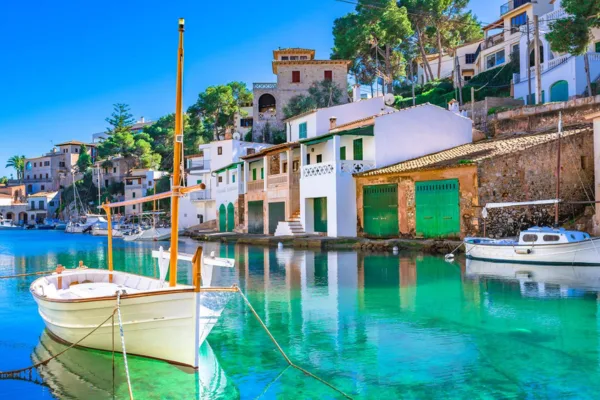
The obvious appeal is the water, the pine woods running down to the coves, and light that photographers get misty about. The less obvious one is better: an island holds a wedding together. Your guests aren’t spread across a region, they’re all in the same place for three days, so it stops being a Saturday and becomes a holiday. That’s why so many Balearic weddings turn into a welcome dinner, the wedding itself, and a beach day for the survivors.
The catch is logistics. Everything comes in by boat or plane, so suppliers cost more than on the mainland. Accommodation is finite and it fills, which means July and August book a year ahead and charge accordingly. And because the islands are small, being on the wrong side of one costs you twenty minutes rather than two hours.
One thing that catches couples out: like Catalonia, the islands are bilingual. Catalan and Spanish are both official, and each island has its own dialect. Everyone speaks Spanish and the wedding trade speaks good English, so it’s rarely an obstacle, but contracts can arrive in Catalan.
We’re based in Marbella and work across all fof the islands. The honest summary: Ibiza for style, Mallorca for range, Menorca for calm. Where you land depends on temperament more than anything else.
This is the part couples underestimate, and it quietly determines how many people actually come.
Palma (PMI) is one of Spain’s busiest airports, with direct flights from across the UK and Europe year round, at roughly two and a quarter hours from most UK cities.
Ibiza (IBZ) is well served in summer, but routes thin considerably out of season, so check before assuming guests can fly direct in May.
Menorca (MAH) is smaller and far more seasonal. Some guests may need to connect via Barcelona or Palma.
Book flights early for July and August, because they sell out rather than simply getting expensive. And arrange hire cars months ahead on Mallorca and Ibiza, since availability collapses in high summer.
What a Balearic Wedding Costs
As a guide, most Balearic weddings we work on come in between €25,000 and €35,000 for 100 guests, all in. That’s a real range rather than a headline: Ibiza sits at the top of it, Menorca at the bottom, and Mallorca somewhere in the middle with the most choice at every level.
Expect to pay more here than on the mainland, and the reason is straightforward: everything arrives by boat. Suppliers, produce, hire equipment and staff all carry that cost.
Three things move the number more than couples expect. Season, as peak summer is not a small step up. Accommodation, which is finite, so book blocks early or your guests pay resort rates. And the ecotasa, the Balearic sustainable tourism tax charged per guest per night on top of their accommodation. It’s modest per person, but across sixty guests for three nights it adds up, and it’s better to warn people than have them find out at checkout. IVA is 21% as on the mainland, so always ask whether a quote includes it.
Balearics Weather, Month by Month
Warm, dry summers and mild winters, but the season matters more here than anywhere else in Spain.
May and June — warm, dry and green, with comfortable evenings and the islands not yet at capacity. The sweet spot.
July and August — hot, and busy in every sense. The islands are full, prices peak, and everything books a year out.
September — arguably the pick of it. Still reliably warm, the sea at its warmest, crowds thinning, and beautiful light.
October and April — pleasant and better value, with a real chance of rain, so you’ll want a proper indoor option.
November to March — the islands genuinely close. Many hotels, restaurants and venues shut entirely, particularly on Ibiza, and MenorcaMallorca is the exception and functions year round. Check what’s actually open before committing.
With expert guidance, arranging your Balearic wedding becomes an effortless joy. Consider these key recommendations to ensure everything runs smoothly:
Ideal season: Plan for May, June or September for warm, dry weather without the peak-summer crowds and prices.
Book early: Flights, accommodation and hire cars sell out rather than simply getting expensive. Twelve to eighteen months ahead is sensible for a summer date.
Embrace local talent: Partner with island florists, photographers and musicians who know the venues and the light, and can lend genuine character to your day.
Complete legal formalities: Gather and submit all required paperwork well ahead of time. Specialists such as Wedding Venues ES are on hand to steer you through every administrative step.
Start Your Wedding Journey and discover our exceptional services, designed to make your day extraordinary and unforgettable. We look forward to creating wonderful memories with you.
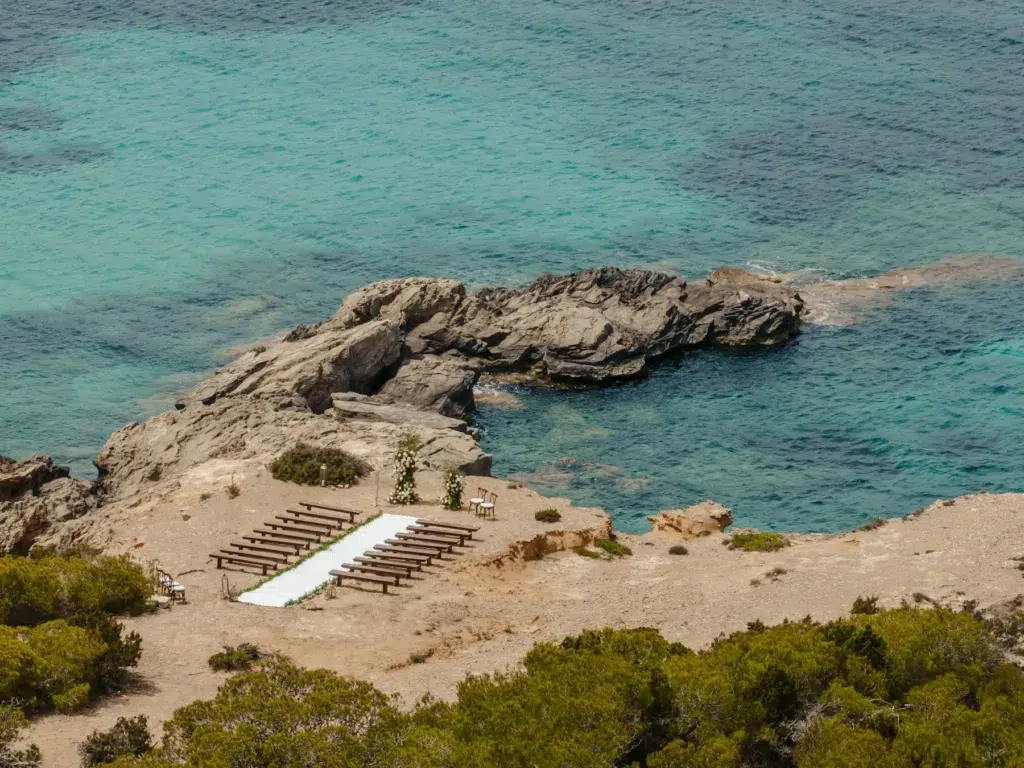
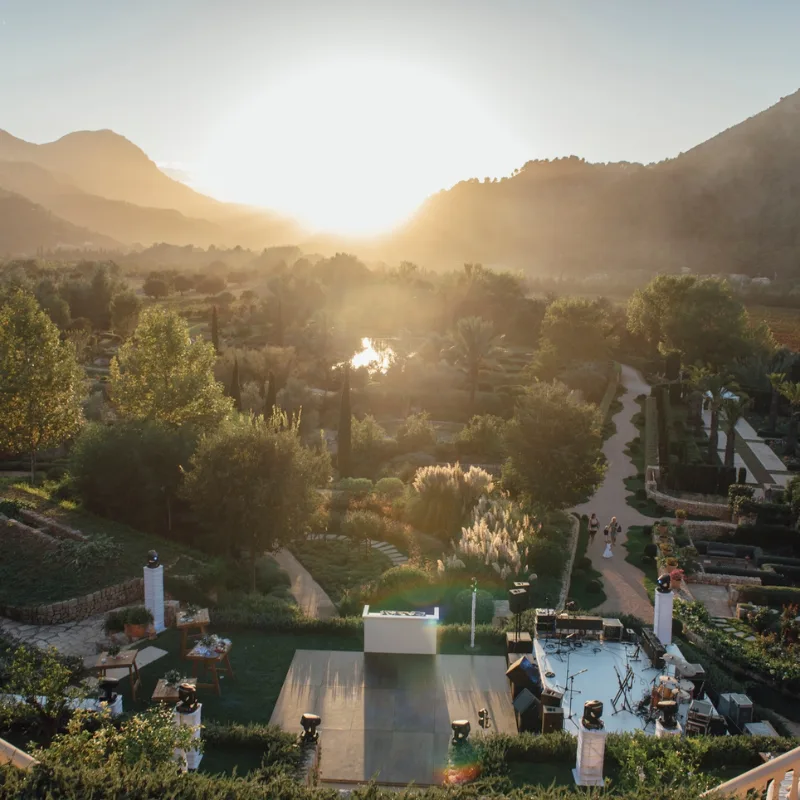
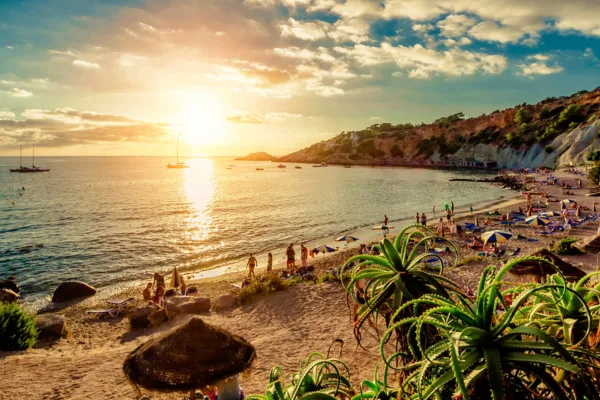
Better than its reputation. Away from the clubs, the island is all almond groves, whitewashed fincas and sunsets that genuinely do stop conversation. It runs the full range, from a barefoot ceremony at a beach club to a private villa in the hills, and the supplier scene is excellent because the island has been doing this for decades. Prices are the highest in the Balearics, and August is busy in every sense.
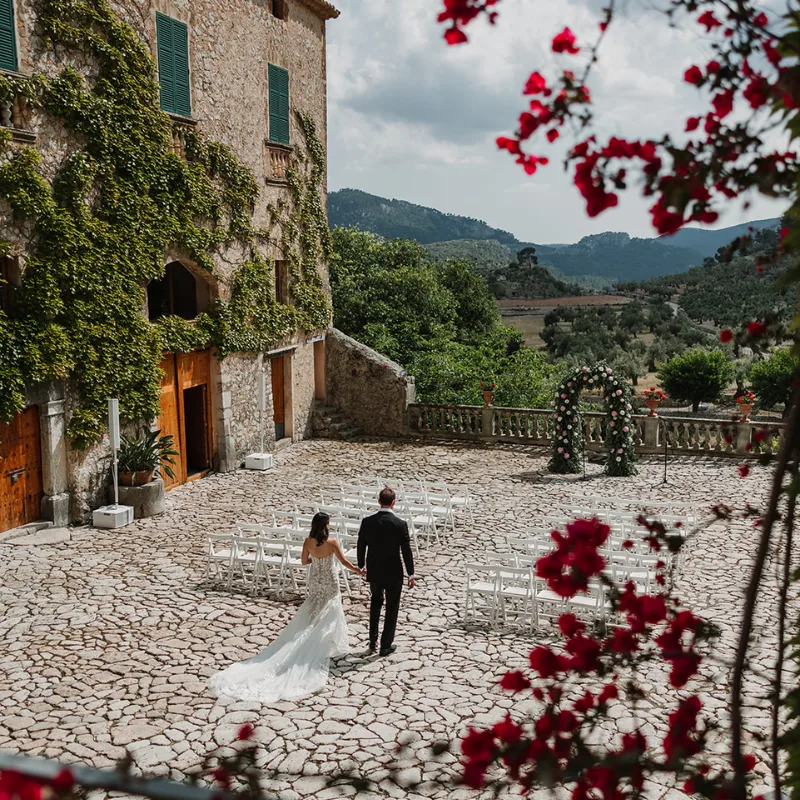
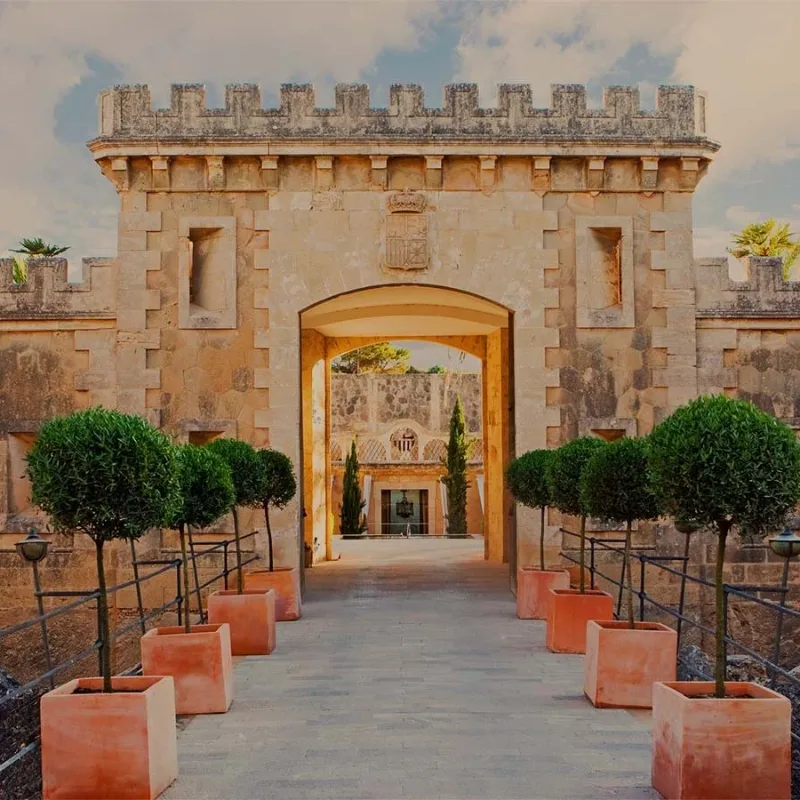
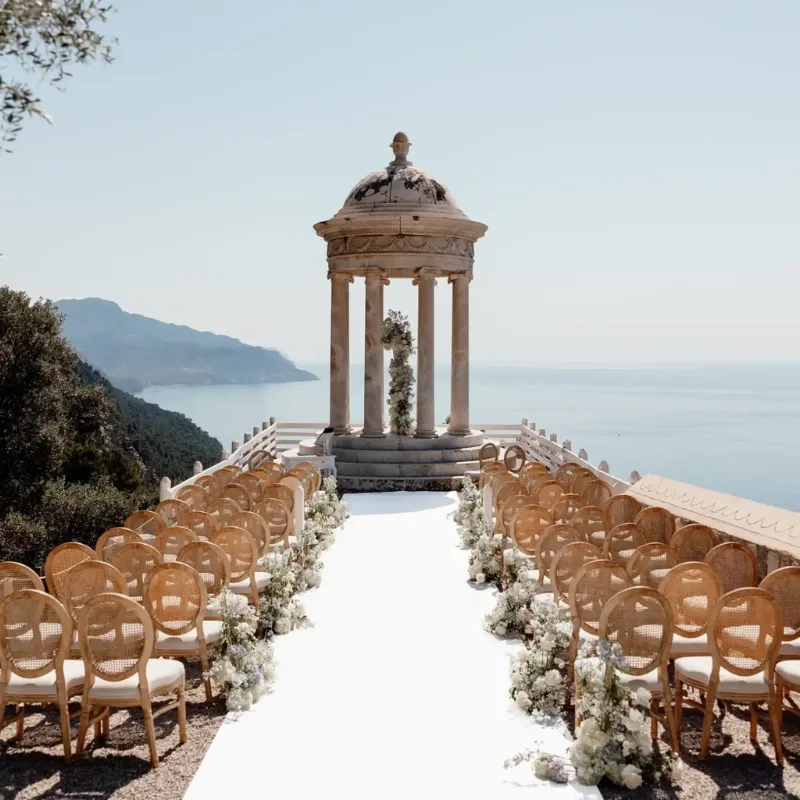
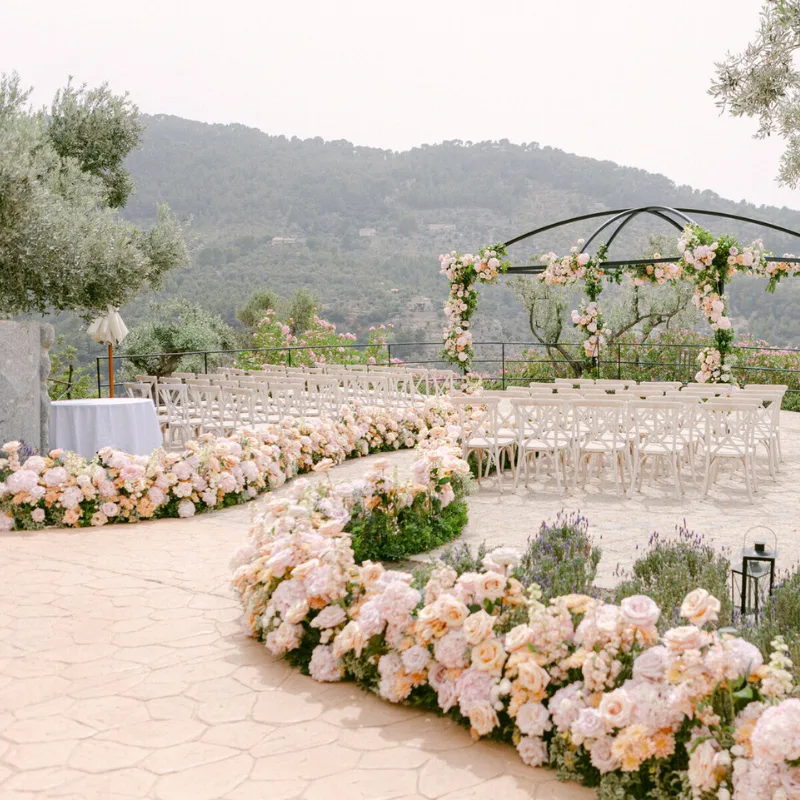
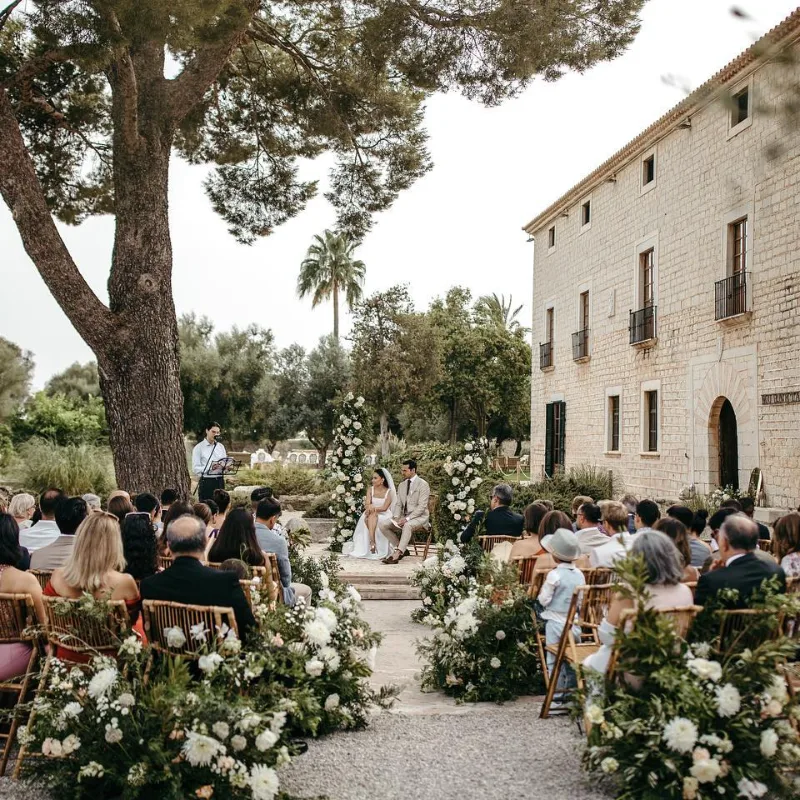
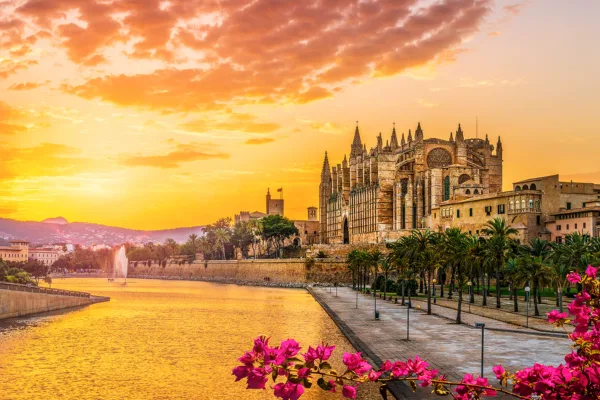
The most versatile of the islands. Palma airport is superbly connected, so guests arrive easily, and within forty minutes you can be at a seaside resort, a private villa, or a centuries-old stone finca in the Tramuntana mountains, which are World Heritage site and noticeably cooler than the coast in August. It’s the sensible choice that happens to also be beautiful, and the one island that functions properly year round.
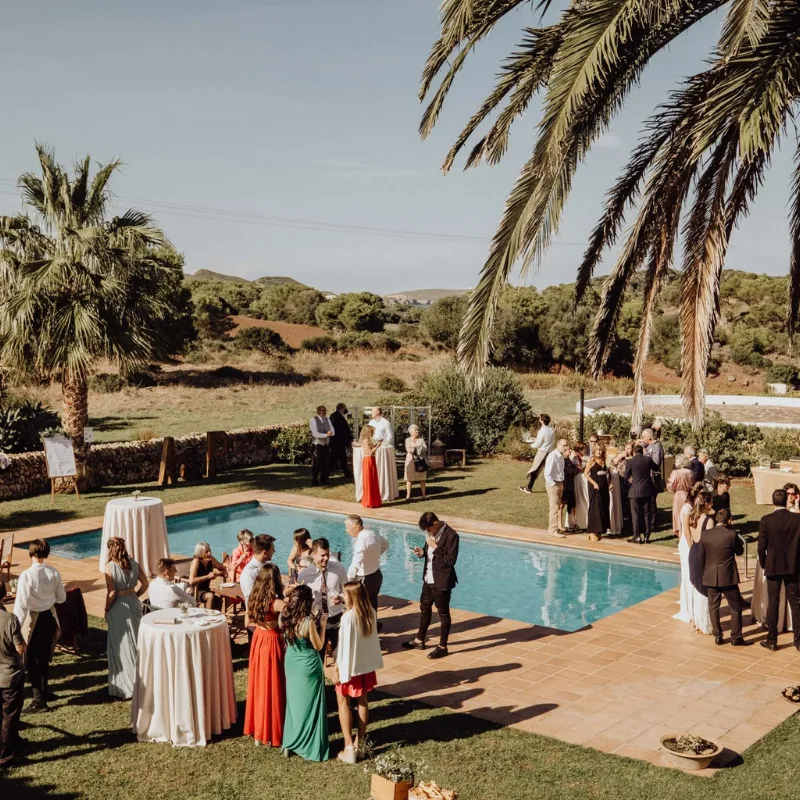
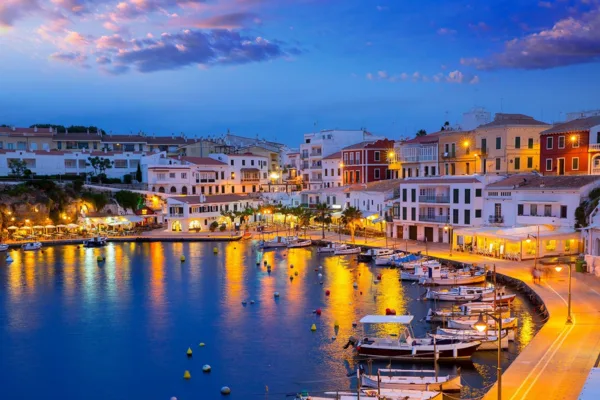
The island couples pick when they want the Balearics without the noise. It’s a biosphere reserve, which has kept development down and the coastline intact, so the coves are quieter and emptier than anywhere on Ibiza. Ciutadella’s old town is genuinely lovely. Fewer venues, fewer flights, and generally the best value of the three main islands. That’s rather the point.
Wedding Venues in Menorca →
Weddings Balearics
Planning an island wedding from another country throws up questions the mainland doesn’t, so it’s worth a look at our FAQs before you get too far in.
We’ve pulled together the practical stuff couples actually ask us: how flights and ferries work across the islands, what a Balearic wedding really costs once the ecotasa and island supplier prices are in, which months are worth avoiding, and how the legal side works for non-residents.
Our Frequently Asked Questions are there to save you the guesswork, so you can get on with the enjoyable part.
It comes down to temperament. Ibiza is effortless and stylish, and handles a barefoot beach ceremony and a polished villa party equally well. Mallorca has the most range and the best flight connections, from coastal resorts to stone fincas in the Tramuntana. Menorca is the quiet one, all coves and calm, picked by couples who find Ibiza a bit much.
Is a Balearic wedding more expensive than the mainland?
Yes, and the reason is simple: everything arrives by boat. Suppliers, produce, hire equipment and staff all carry that cost, so a like-for-like wedding runs above the Costa del Sol. Ibiza is the priciest of the the islands, Menorca the best value of the three main islands. Most Balearic weddings we work on land between €25,000 and €35,000 all in for 100 guests.
What is the ecotasa, and will our guests have to pay it?
Yes, and it’s worth warning them. The ecotasa is the Balearic sustainable tourism tax, charged per guest per night on top of their accommodation, with the rate varying by season and hotel type. It’s modest per person, but across sixty guests for three nights it adds up. Better they know in advance than discover it at checkout.
Can we get married in the Balearics in winter?
Only with care. The islands genuinely close from roughly November to April, and not partially: many hotels, restaurants and venues shut entirely, particularly on Ibiza, and Menorca. Mallorca is large enough to function year round and is the realistic option. Wherever you’re looking, check what’s actually open on your date, because guests need somewhere to sleep and eat as well as a venue.
How far ahead should we book for a summer island wedding?
Twelve to eighteen months for July or August, and that includes flights and accommodation, not just the venue. Island beds are finite, so they sell out rather than simply getting expensive. The same applies to hire cars, where availability collapses in high summer. If you’re flexible, May, June and September are easier on every front.
Will our guests manage the travel, and do they need a car?
Mostly yes. Palma is superbly connected year round; Ibiza is well served in summer but thins out of season; Menorca is smaller and more seasonal, so some guests may connect via Barcelona. On Mallorca and Ibiza a car helps, though if your venue and hotels are close together, taxis and transfers are simpler than sixty guests navigating unfamiliar roads.