




Wedding Venues

Wedding Venues Spain

Find Your Perfect Wedding Venue in Spain

Browse our handpicked wedding venues across Spain. Every one is chosen for its setting and character, and for the practical things that matter just as much: how it handles your guest numbers, where the light falls, and whether the day flows the way you'd want it to.

Accommodation
Exclusivity
Pool

Hand Picked Wedding Venues in Spain

Spain has hundreds of wedding venues, which is either wonderful or paralysing depending on the day you’re having. The quickest way through it is to narrow in this order: region first, then guest numbers, then style.

Start with the region. It shapes everything else, including how easily your guests can get there. The Costa del Sol and Andalusia give you beaches, glamour and rustic fincas inland. Ibiza and Mallorca offer island scenery and a more relaxed pace. Barcelona and Madrid suit couples who want a city wedding with real character.

Then your numbers. An intimate villa that’s perfect for 40 won’t work for 150, and a grand estate can feel empty with 30. Getting your guest count roughly right first saves you falling for somewhere that was never going to fit.

Then the style. Beach clubs for barefoot and relaxed. Fincas and cortijos for rustic country celebrations. Historic castles and haciendas for grandeur. Private villas for exclusivity and privacy. Hotels and resorts when you want everything in one place.

Use the filters below to browse by region, type and capacity. Every venue here is one we know, and if you’d like help shortlisting, we tour venues and can do the legwork for you.

Contact Us

Make Your Day Special with Us

Start Your Wedding Journey and discover our exceptional services, designed to make your day extraordinary and unforgettable. We look forward to creating wonderful memories with you.

Popular Wedding Locations in Spain

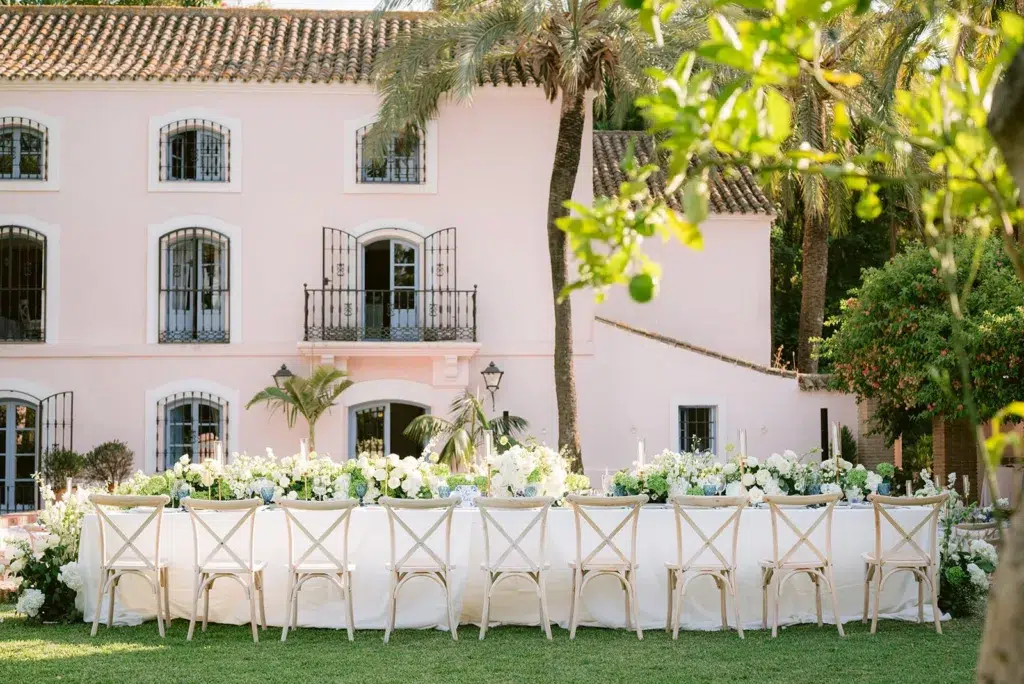
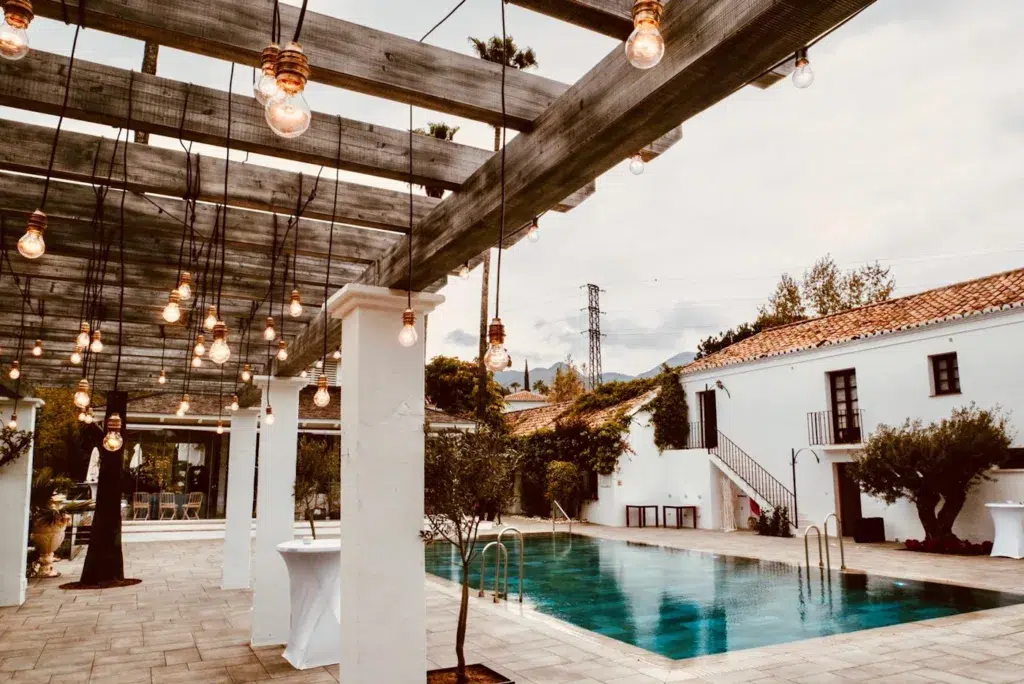
Elegant wedding reception at Casa de la Era in Marbella with stunning countryside views

Casa de la Era, Marbella

Casa de la Era is a beautifully restored country estate just 30 minutes from Málaga airport, and one of the most flexible venues on the Costa del Sol. Built around a traditional threshing floor, its Ceremonial Circle makes a striking spot to say your vows, with the terrace and barn carrying the celebration through to the early hours.

It runs on a dry hire basis, so you’re free to bring your own caterers, décor and suppliers and build the day exactly as you want it. There’s no fixed music curfew either, which is a genuine rarity on this coast and means the party can run as late as you like. The estate seats up to 250, has covered space for 100 if the weather turns, and there’s a villa on site.

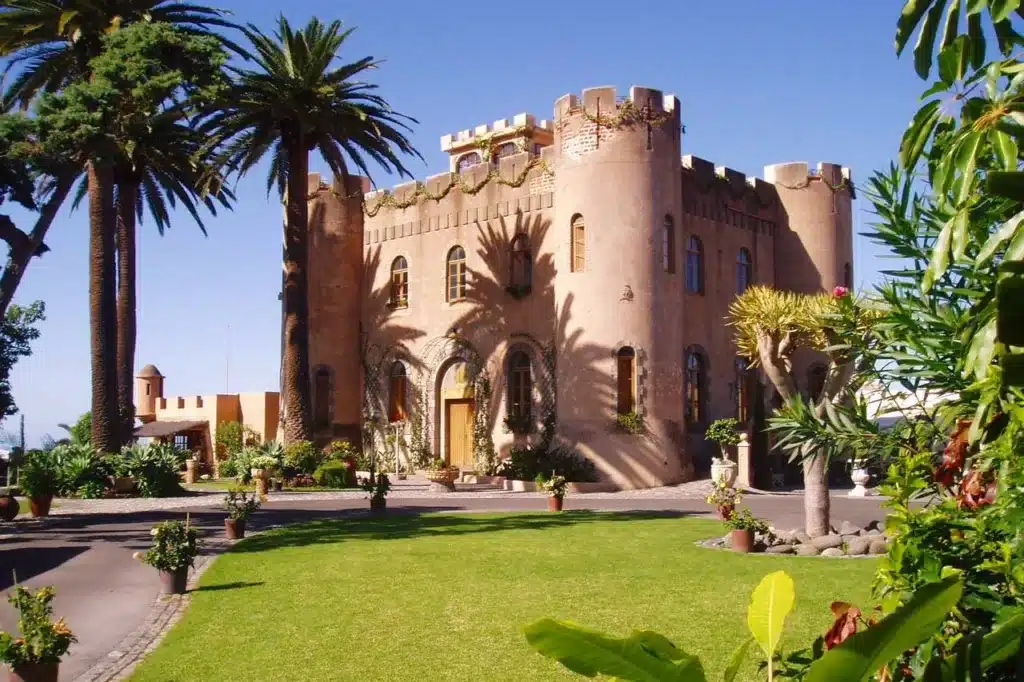
Castillo De Monda, Marbella

Castillo de Monda is a genuine 15th-century Moorish castle set in the hills above Marbella, 30 minutes from Málaga airport. Moorish arches, a rooftop terrace looking over the olive valley to the Mediterranean and rooftop ceremonies make it a natural fit for couples who want history and grandeur rather than a coastal hotel.

What sets it apart is that everyone stays put. Thirty-five bedrooms sleep up to 72 guests on site, so the day becomes a proper weekend rather than a taxi run back to Marbella at midnight. Exclusive use means the fortress, its salt-water pool and gardens are entirely yours, and there’s no music curfew, so the celebration can run as late as you like.

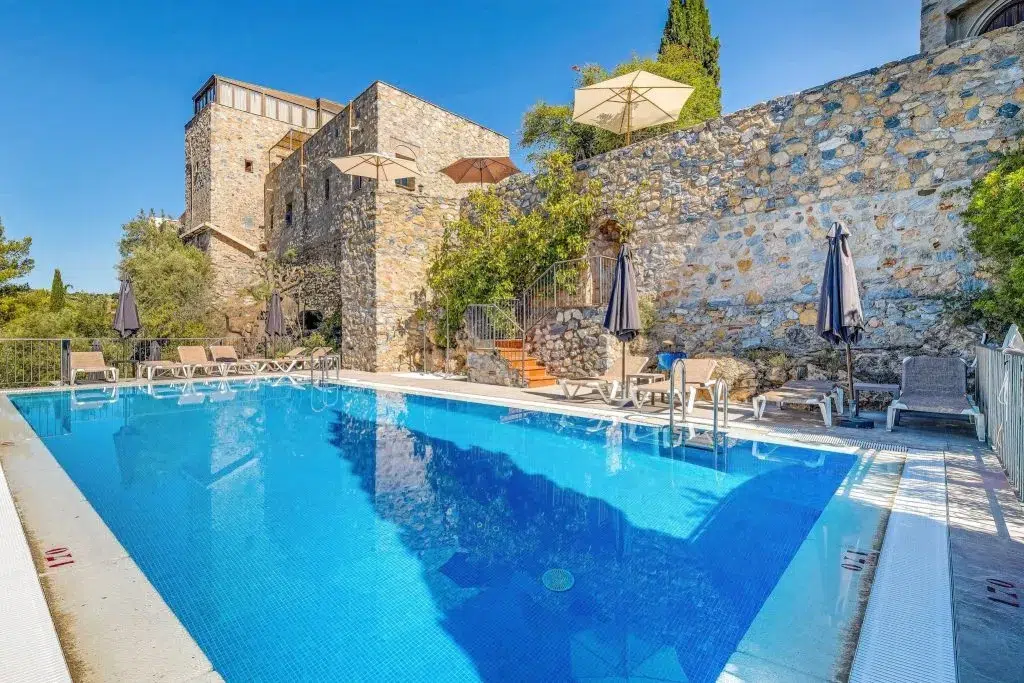
Castillo de monda outdoor swimming pool area
Luxury wedding venue in Spain with beautiful gardens and outdoor ceremony space

El Molino del Duque, Manilva

El Molino del Duque is an 18th-century flour mill on the western Costa del Sol, restored into a private estate set in three hectares of tropical gardens, with palms, fountains and a 20-metre pool as your backdrop. It takes exclusive-use weddings of up to 350 guests, one of the larger capacities on this coast, yet still feels secluded, three minutes off the AP-7 and 25 minutes from Gibraltar airport.

It’s built for a weekend rather than a single day. A six-bedroom villa on site sleeps 12, and music runs until 4am, so the celebration doesn’t have to end when the coach comes.

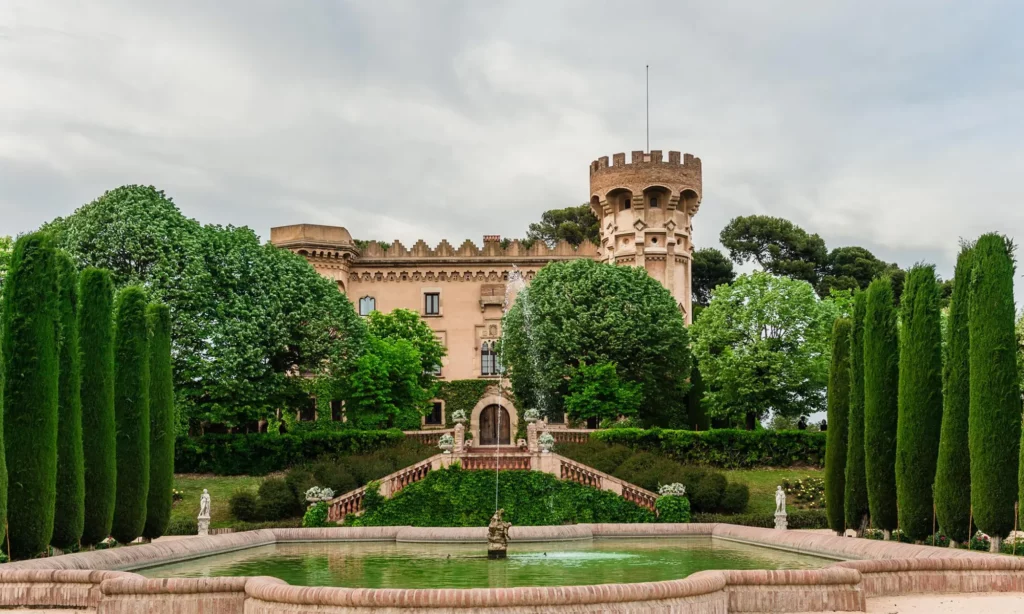
Castell de Sant Marçal, Barcelona

Castell de Sant Marçal is a 13th-century castle in Cerdanyola del Vallès, around 30 minutes from Barcelona and its airport, held by the same noble family for over 700 years. It’s an exclusive-use venue that hosts just one wedding a day, so the castle, its French-style glasshouse pavilion, historic wine cellar and manicured gardens are entirely yours.

It’s built for scale in a way few historic venues are: 500 seated or 800 for a standing reception, with music permitted until 5am. That combination of genuine heritage and real capacity is unusual, and it’s the reason couples with large guest lists end up here rather than at a hotel.

Castell de Sant Marcal beautiful gardens
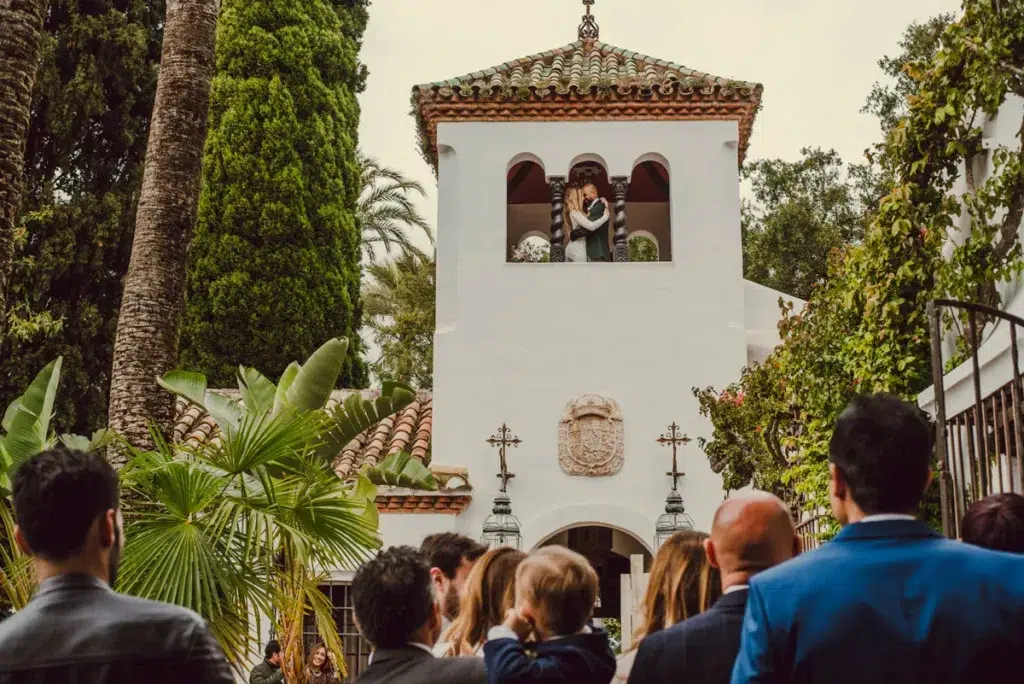
gardens at Las Sirenas during a wedding reception

Las Sirenas, Sotogrande

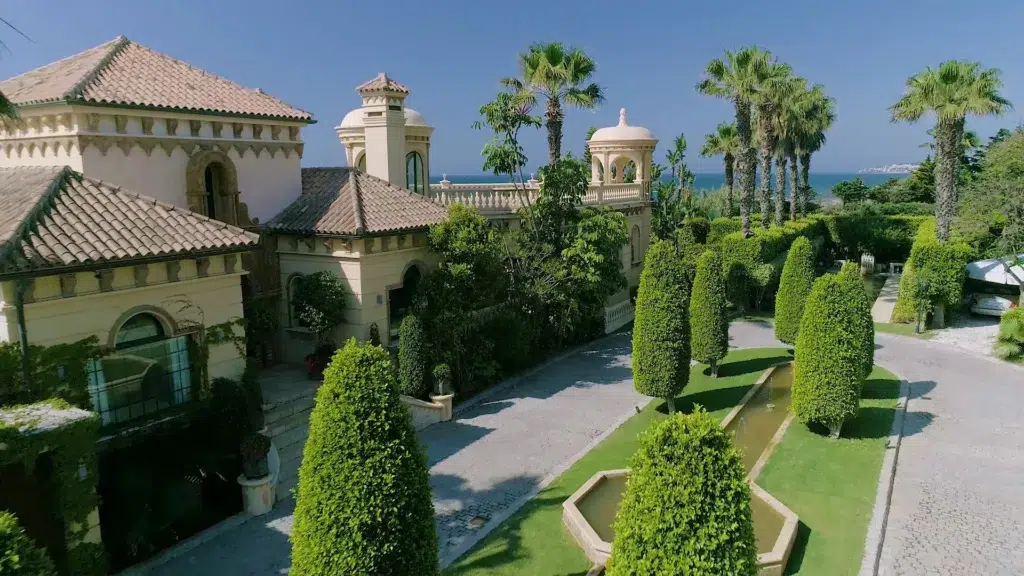
Las Sirenas is one of the most exclusive private estates on the coast, tucked away near Sotogrande Port in the gated, discreet world of Sotogrande. It blends Andalusian character with contemporary luxury, whitewashed walls, mature gardens, water features and elegant terraces, with a Grand Hall for dining and dancing. Exclusive use only, it takes up to 150 guests.

The gardens and terraces make a natural setting for the ceremony, and the Grand Hall gives you a proper indoor alternative rather than a compromise if the weather turns. Gibraltar is 25 minutes away, which is why a good number of couples here marry legally next door and hold the celebration at the estate. This is Sotogrande’s understated, high-end end of the market.

Popular Wedding Venue Styles

Luxury wedding venue surrounded by beautiful gardens in Spain

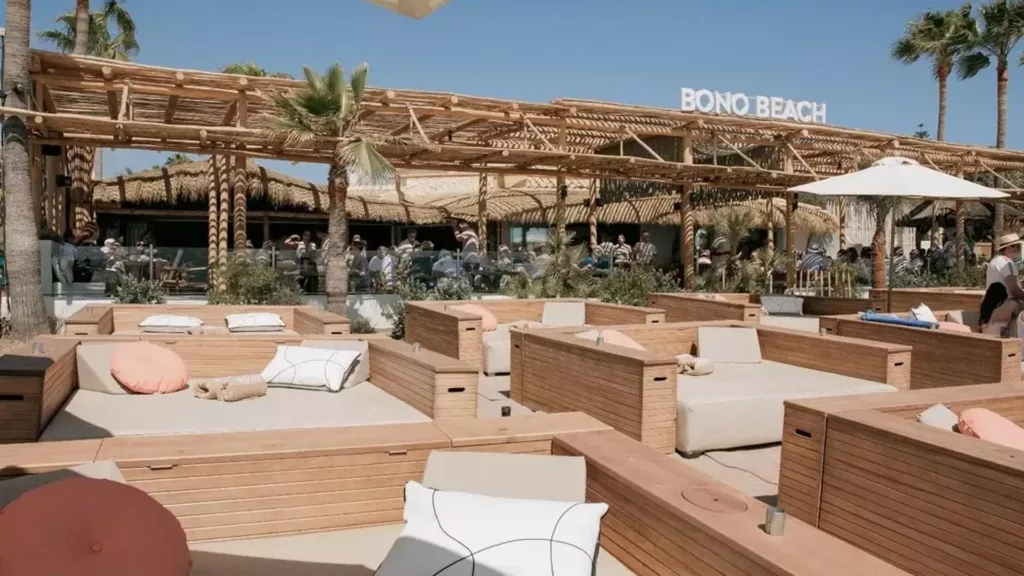
Beach & coastal venues

Barefoot ceremonies, sea views and sunset light. Spain’s coastline runs from the warm Mediterranean in the south and east to the wilder Atlantic in the north, with beachside hotels and private beach clubs that suit both intimate gatherings and big parties. Strongest along the Costa del Sol, the Balearics and the Canaries. Worth checking: wind, tide times, and whether the ceremony spot is genuinely private.

Guide price: hire from around €3,000 to €8,000, before catering and IVA. Guide only, fees vary by season and guest numbers.

Fincas & rustic countryside

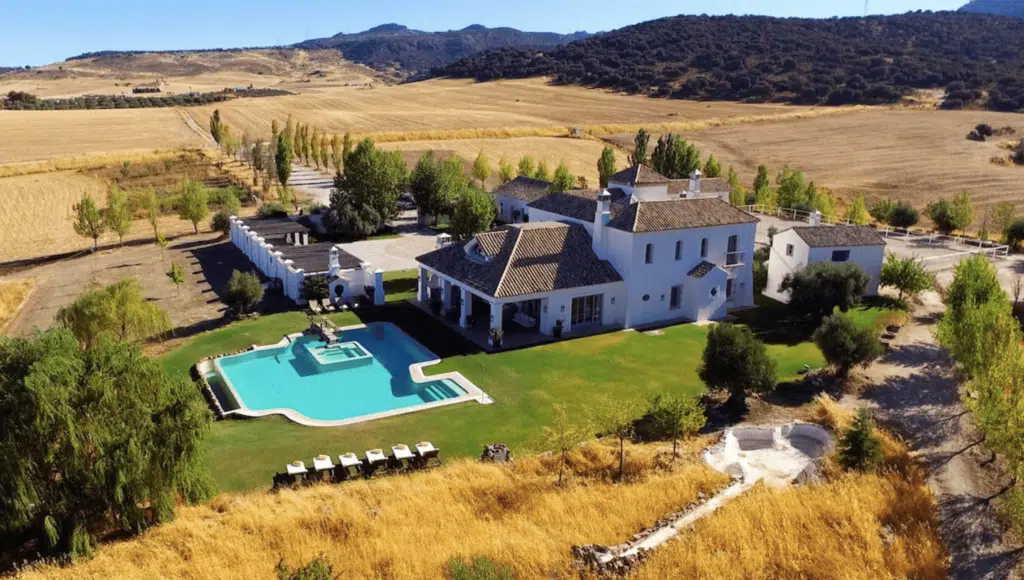
Stone architecture, olive groves and long tables under the trees. Andalusian cortijos, Mallorcan fincas and Catalan masías give you space, privacy and usually on-site accommodation, which makes them ideal if you want the celebration to run over a couple of days. Often better value than the coast, too.

Guide price: hire from around €3,000 to €7,000, before catering and IVA. Guide only, fees vary by season and guest numbers.

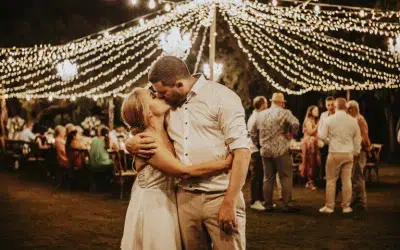
Couple dancing beneath a canopy of fairy lights at a rustic venue
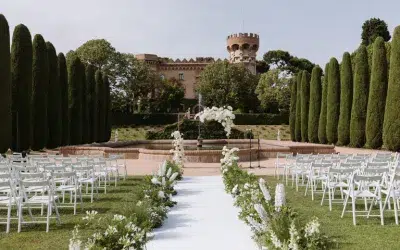
Ceremony aisle lined with cypress trees leading to a castle

Castles & historic estates

Grandeur you can’t fake. Medieval fortresses, former palaces and restored haciendas, with stone halls, formal gardens and ballrooms built for exactly this. The atmosphere and the photographs are the draw. Worth asking about: access, heating in winter, and whether the historic parts have restrictions on décor or candles.

Guide price: hire from around €6,000 to €15,000, before catering and IVA. Guide only, fees vary by season and guest numbers.

Vineyard venues

For couples who care about what’s in the glass. La Rioja, Penedès and Jerez offer working estates with cellars, tasting rooms and terraces over the vines, plus food and wine pairing that’s genuinely part of the day rather than an add-on. Harvest season (roughly September) is spectacular but books early.

Guide price: hire from around €4,000 to €9,000, before catering and IVA. Guide only, fees vary by season and guest numbers.

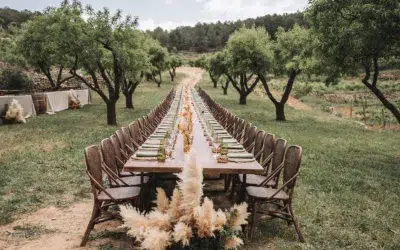
Long table set for dinner between rows of vines
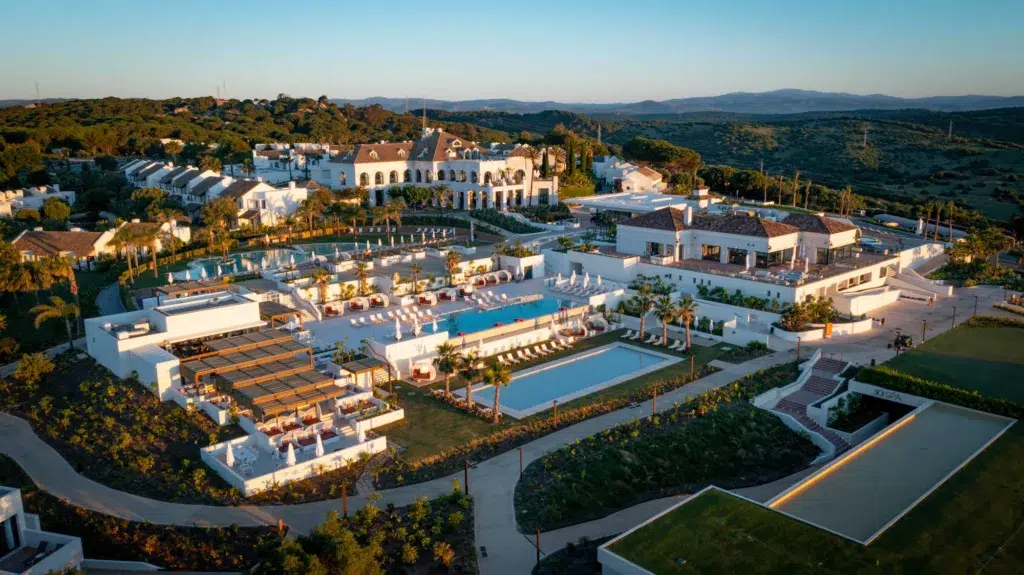
Grand hotel facade framed by tall palm trees

Luxury hotels & resorts

Everything in one place, handled to a five-star standard. Beachfront hotels, mountain retreats and city establishments with experienced event teams, rooms for your whole guest list, and spas and pools to turn the wedding into a weekend. The easiest option if you’d rather not juggle suppliers.

Guide price: often quoted per head, from around €150 to €300 a guest, rather than a hire fee. Guide only, fees vary by season and guest numbers.

Private villas

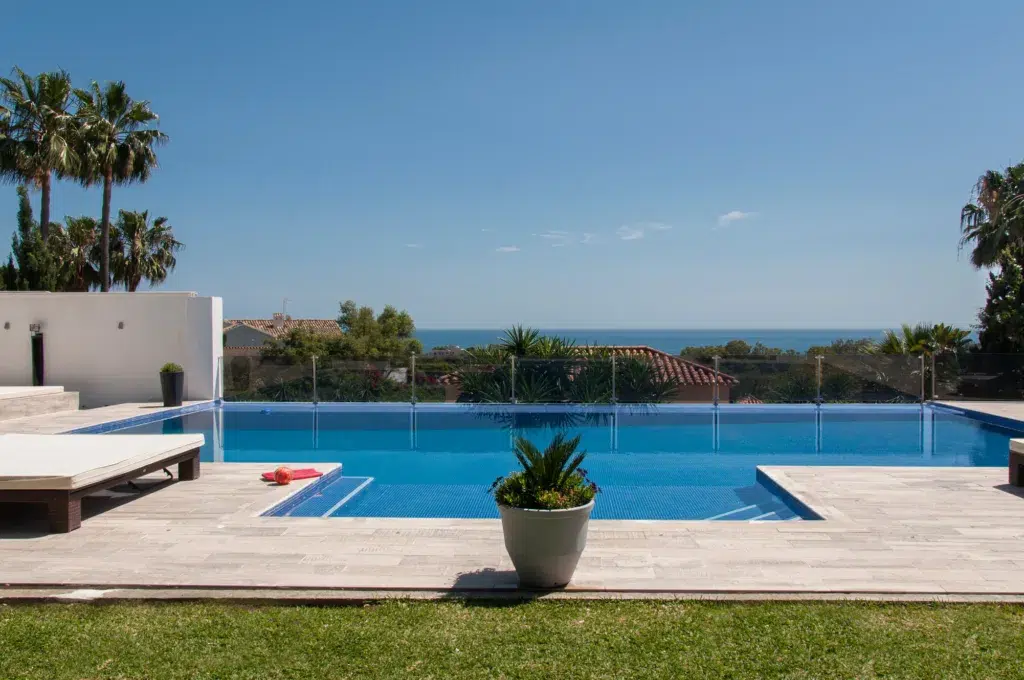
Exclusive use, total privacy and no other guests. Sleek modern properties with infinity pools and terraces, or traditional estates with more character. You get complete flexibility over the day, and with everyone staying on-site it naturally becomes a multi-day celebration. Check supplier restrictions and noise curfews early, villas often sit in residential areas.

Guide price: hire from around €5,000 to €15,000 for exclusive use, before catering and IVA. Guide only, fees vary by season and guest numbers.

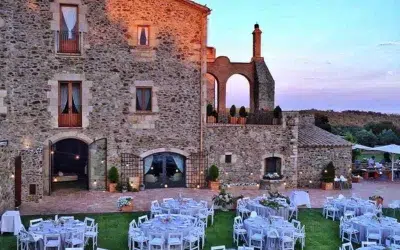
Tables set for dinner beside a stone building at dusk
Bride and groom on a boat decorated with flowers and life rings

Yacht & boat charters

A wedding that isn’t in one place at all. Sailing boats for intimate ceremonies, motor yachts and catamarans for larger receptions, around Marbella, Puerto Banús, Ibiza, Mallorca, Barcelona and Valencia. Flexible itineraries mean sunset cruises, dining on board, even overnight stays. Guest numbers are the main constraint.

Guide price: from around €2,000 to €10,000 per day, depending on size. Guide only, fees vary by season and guest numbers.

Garden & botanical venues

Mature gardens, shade from the heat and colour that needs no decorating. Palacio gardens, botanical estates and villa grounds work beautifully for ceremonies and drinks, especially in spring when everything’s in bloom. A good middle ground if you want outdoors without sand or a long drive inland.

Guide price: hire from around €2,500 to €6,000, before catering and IVA. Guide only, fees vary by season and guest numbers.

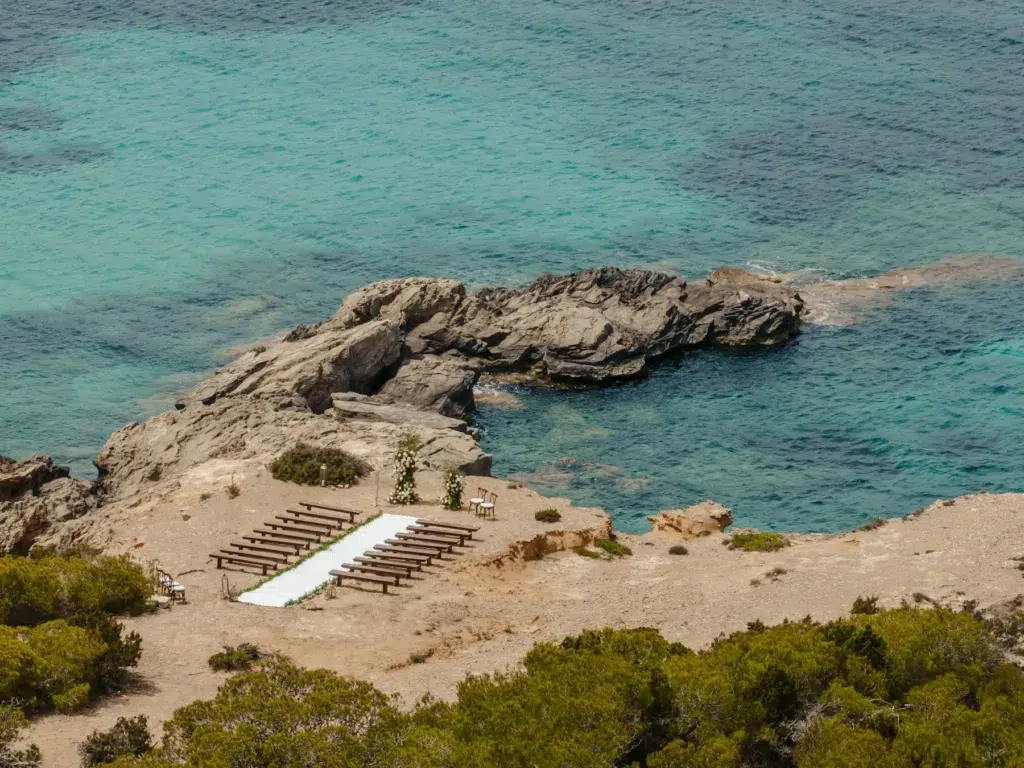
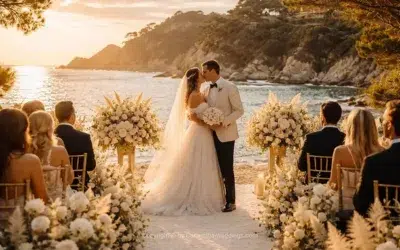
Ceremony with floral arrangements overlooking a bay at sunset
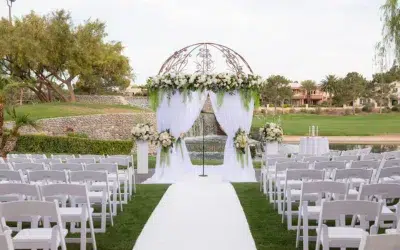
Ceremony aisle and floral arch on a manicured lawn

Golf & polo clubs

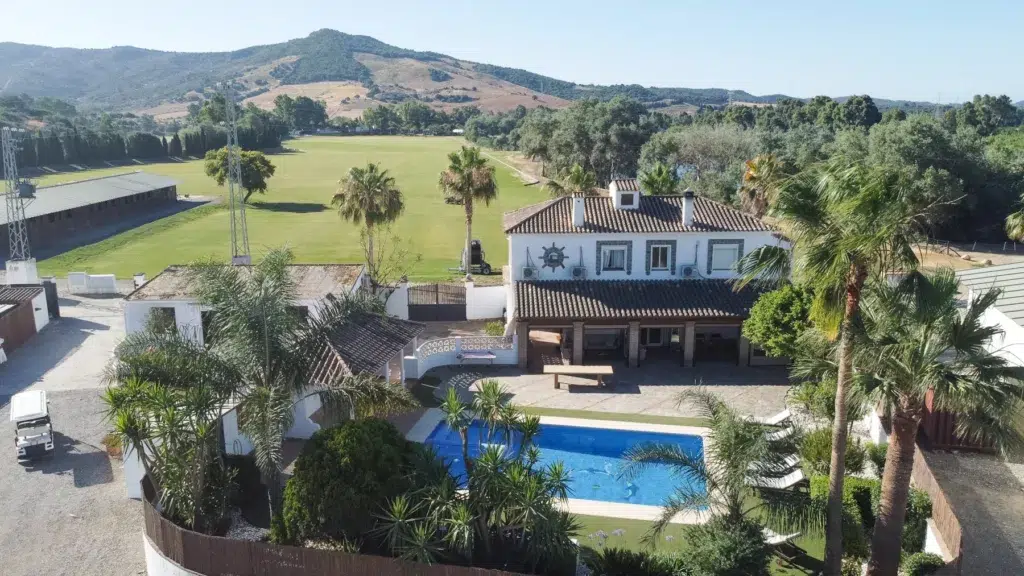
Manicured grounds, clubhouse elegance and superb facilities, concentrated around Sotogrande, Marbella and the Costa del Sol. Suits couples who want something refined and private without the formality of a castle, and there’s usually accommodation and plenty for guests to do nearby.

Guide price: hire from around €4,000 to €10,000, before catering and IVA. Guide only, fees vary by season and guest numbers.

Small & intimate venues

Not every wedding needs 150 people. Boutique hotels, small fincas, private dining rooms and villas that work properly for 20 to 50 guests,  where the space feels full rather than empty. Often the best value per head, and far easier to organise from abroad.

Guide price: hire from around €1,500 to €5,000, before catering and IVA. Guide only, fees vary by season and guest numbers.

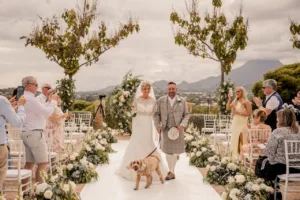
Couple walking back down the aisle past close-standing guests
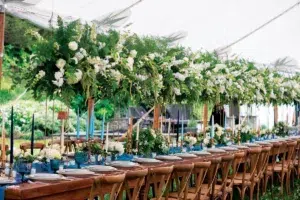
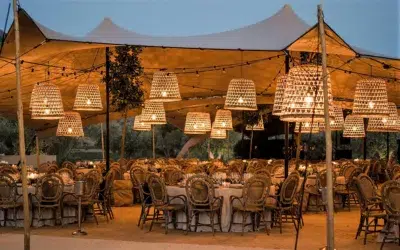
Marquee interior lit by hanging lanterns at dusk

Blank canvas & marquee sites

Land, a view and nothing else, you build the wedding from scratch. Total creative freedom, but you’re bringing in everything: marquee, power, kitchens, loos, furniture. Costs more than people expect and needs proper planning, but for a genuinely bespoke day nothing else comes close.

Guide price: the land from around €1,000, but budget €10,000 or more once marquee, power, kitchens and furniture are added. Guide only, fees vary by season and guest numbers.

Contact Us

Make Your Day Special with Us

Start Your Wedding Journey and discover our exceptional services, designed to make your day extraordinary and unforgettable. We look forward to creating wonderful memories with you.

Our Wedding Services

Wedding venue sourcing and tours across Spain

Venue Sourcing

Venue Sourcing & Tours | We expertly source and tour secure idyllic Andalucia wedding venues, from luxurious beachfront villas to rustic countryside fincas, perfectly tailored to your unique vision and style. See our hand selected Wedding Venues in Spain

Wedding planning services for weddings in Spain

Wedding Planning

Wedding Planning Services & Packages | Our professional Andalucia wedding planners meticulously handle every detail, from budgeting and guest logistics to design aesthetics, crafting personalised, stress-free celebrations. Also see our: Wedding Packages

On-day wedding coordination at a Spanish venue

On-Day Coordination

On-Day Wedding Coordination | Our dedicated on-the-day wedding coordinators ensure your Andalucia celebration flows seamlessly by managing timelines, vendors, and guest arrangements, so you can enjoy your special day.

Vendor sourcing and supplier management for Spanish weddings

Vendor Sourcing

Vendor Sourcing & Management | Leveraging our trusted network of premium local suppliers, from top caterers and talented DJs to photographers and florists, we seamlessly manage all vendor interactions.

Types of venues

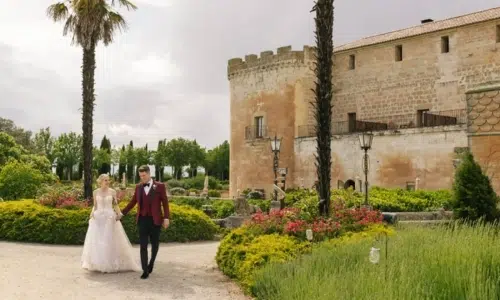
Bride and groom walking through gardens beside a stone fortress wall

Most couples choose a venue on how it looks, then discover how it works only after they’ve signed. That’s the wrong way round, because the way a venue operates affects your budget, your workload and your freedom far more than the view does. Spanish wedding venues run on very different models, two beautiful fincas an hour apart can be worlds apart in practice, one handing you everything, the other handing you a key. Here’s how they break down, so you know what you’re actually agreeing to before you fall for the photos.

All-inclusive venues — catering, drinks, staff and often accommodation bundled together. One contract, one invoice, less to manage. Easiest to plan from abroad, though you’re tied to their food and their suppliers.

Venue-hire-only (dry hire) — you get the space and bring everything else. Cheaper on paper, but once you’ve added catering, staff, furniture, power and loos, it often lands higher than the all-inclusive quote next to it. Worth it for total freedom, if you’ve the appetite for it.

Approved-supplier venues — the middle ground. You choose from their vetted list, which limits your options but usually guarantees people who know the site. Ask how long the list is; “approved” sometimes means one caterer.

Exclusive-use venuesthe whole place is yours. No other guests, no strangers in the background of your photos, no wondering who’s by the pool. Costs more, but for many couples it’s the thing they’re actually paying for.

Shared venues — hotels and resorts running other business alongside your wedding. Often cheaper and perfectly good, but you won’t be the only thing happening that day. Ask what else is booked and where it’ll be.

Licensed vs unlicensed for legal ceremonies — the one most couples don’t know to ask. Some venues can host a legally binding ceremony; many can’t, and you’d marry legally elsewhere and hold a symbolic ceremony on the day. Neither is a problem, but find out before you book, not after.

There’s no shortage of beautiful wedding venues in Spain,  that’s precisely the problem. Here’s the order that saves couples the most time and heartache.

Start with your guest number, not the venue. It’s the least romantic decision and the most useful one. A villa that’s perfect for 40 can’t take 150, and an estate built for 200 feels hollow with 30. Get roughly to a number first, and half the shortlist eliminates itself.

Then the region. It shapes your budget, the feel of the day and how easily people can actually get there. Be realistic about the last one: a venue two hours from the nearest airport will thin your guest list, however lovely the drive.

Then style. Beach, finca, castle, villa, city rooftop. This is the fun part, and it’s genuinely easier once the first two have narrowed the field.

Then work out how it operates. Before you fall for the photos, find out whether it’s all-inclusive, dry hire or approved-supplier only, whether you get exclusive use, and whether it’s licensed for a legal ceremony. This affects your budget and workload more than the view does.

Shortlist three, then go and see them. Photos flatter. Standing there tells you what a listing can’t, the light at your ceremony time, the noise from the road, the walk from drinks to dinner. If you can’t travel, a proper virtual tour with someone asking the right questions on your behalf is the next best thing.

What to ask when you’re there: real seated capacity, the noise curfew and how late the party can run, whether you can bring your own suppliers, what’s genuinely included and whether IVA is on top, the wet-weather plan (and whether it holds your full guest count), accessibility and parking, and what else is booked that day. Get the answers in writing.

And one honest word on budget. Venue hire typically accounts for around 40% of the total, so if a venue is stretching you before you’ve thought about food, flowers or photography, it’s the wrong venue. Better to love a place you can afford to fill with people than to marry somewhere breathtaking with a bar you can’t stock.

How to select your perfect venue?

Guests throwing rose petals over a couple after the ceremony

Contact Us

Make Your Day Special with Us

Start Your Wedding Journey and discover our exceptional services, designed to make your day extraordinary and unforgettable. We look forward to creating wonderful memories with you.

Find the Perfect Spanish Wedding Venues

Thinking of a Wedding in Spain? Our FAQs cover what couples ask us most. And if you’d rather not do the legwork, we’re Marbella-based, we know these venues first-hand, and we can shortlist and tour on your behalf.

Contact Wedding Venues ES Today!

Discover your perfect wedding venue in Spain

Common Questions

How much do wedding venues cost to hire?

Between €1,500 and €15,000 for venue hire alone, and where you land in that range depends on three things: the region, the style of venue, and the month.

Region matters most. The same finca costs meaningfully more in Marbella than in Ronda ninety minutes inland, and more again in Ibiza than either. That’s not about quality, it’s about demand and what the surrounding accommodation charges.

Style comes second. A boutique venue for 40 guests starts around €1,500. A restored castle for 250 starts around €6,000. A dry-hire villa looks cheaper on paper and frequently isn’t once you’ve added everything the venue doesn’t provide.

And season is worth thousands. A Saturday in June and a Thursday in November at the same venue can differ by 40% or more. If your dates are flexible, that’s the single biggest lever you have.


Guide prices by region

Venue hire only, for 100 guests, before catering and IVA.

RegionTypical hireNotes
Marbella€6,000 – €15,000The premium end of the mainland
Sotogrande€6,000 – €14,000Gated estates, polo and golf
Ibiza€8,000 – €18,000Highest in Spain, short season
Barcelona€5,000 – €15,000Masies inland cheaper than the city
Mallorca€5,000 – €12,000Fincas among the olive groves
Estepona€4,000 – €10,000Same coast, noticeably below Marbella
Málaga€3,500 – €10,000City venues and inland fincas
Tenerife€3,500 – €10,0007% IGIC rather than 21% IVA
Menorca€4,000 – €10,000Quietest of the Balearics
Fuengirola and Benalmádena€3,000 – €8,000Best value on the coast
Mijas€3,000 – €8,000Pueblo and coast both available
Cádiz and Tarifa€2,500 – €10,000Atlantic coast, wilder and quieter
Manilva€2,500 – €8,000The quiet western end
Ronda€2,500 – €7,000Dramatic, inland, relaxed curfews
Vejer de la Frontera€2,500 – €7,000Sheltered white village
Jerez de la Frontera€2,000 – €8,000Bodegas and cortijos, best value

Guide only. Fees vary considerably by season, guest numbers and what’s included.


Three things that change the figure

IVA at 21%. Most Spanish venues quote before tax. On a €10,000 hire fee that’s €2,100, which is enough to reorder your shortlist. Ask whether a quote is inclusive or exclusive before you compare anything.

What’s actually included. Some fees buy the space and nothing else. Others cover catering, drinks, staff, tables, chairs and setup. The gap between those two is easily €20,000 on a hundred-guest wedding.

Dry hire versus all-inclusive. A villa at €5,000 can finish above a hotel at €9,000 once you’ve added catering, staff, furniture, glassware and often a generator. The headline figure tells you very little on its own.

How far in advance should we book a venue?

Twelve to eighteen months for a peak-season Saturday. Six to nine months is realistic if you’re flexible.

Peak means May, June, September and early October, plus any Saturday in July or August. Those dates go first and they go early. Outside that, and particularly midweek, availability opens up considerably and so does your negotiating position.

The islands need longer. Ibiza, Mallorca and Menorca have short seasons and smaller supplier pools, so eighteen months to two years isn’t unusual for a summer Saturday. By January, popular Balearic venues are frequently full for the following September.

The mistake we see most often is falling for a venue before checking the date. Couples spend weeks building a shortlist, settle on somewhere, then find the only Saturday available is fourteen months after the one they had in mind. Check availability first, then fall in love.

And remember the suppliers book out too. The photographers, celebrants and bands or DJs worth having are often gone twelve months ahead in this region, so securing the venue is the start of your timeline rather than the end of it. A venue with your date free and no photographer available isn’t the win it feels like.

If your date is sooner than you’d like, it’s rarely hopeless. Midweek is genuinely available at short notice, October and November often are, and cancellations happen. What narrows quickly is a Saturday in June.

We run availability checks from €75. We contact the venue, confirm your date and tell you exactly what it takes to hold it, usually within a couple of days.

Do venues have a wet-weather plan?

Almost all say yes. The question worth asking is what it actually holds.

The gap is usually capacity. A venue that seats 200 outdoors might shelter 80. That’s not a venue being dishonest, it’s that the outdoor space is the reason it exists and the indoor one was never meant for a full sit-down dinner. Nobody asks until the forecast turns, and by then it’s too late.

So ask for two numbers, not one: the outdoor seated capacity and the covered seated capacity. Get both in writing. If the second is meaningfully below your guest count, you either need a different venue or a marquee budgeted from the start.

Then ask what the plan actually is. There’s a real difference between:

A permanent indoor space you’d be happy to be in. Best case, and it means the decision costs you nothing.

A covered terrace or pergola, which handles light rain and does nothing about wind.

A marquee on standby, which needs booking and paying for whether or not it rains, usually with a decision point 48 to 72 hours out.

Or “we’ll move things around on the day”, which is not a plan.

And ask who decides, and when. Most venues want a call by mid-morning. That’s a conversation you shouldn’t be having on your wedding day, and it’s one of the clearest arguments for having a coordinator.

Two things people forget. Wind matters as much as rain in Spain, particularly on the Atlantic coast and in the Balearics, and a covered space open on three sides doesn’t help with it. And if you’re moving indoors, the catering plan changes too: serving 100 covers in a different room affects staffing and sometimes the menu, so it should be agreed with the caterer as well as the venue.

Do venues open in winter?

Most do, and it’s the best value time of year to marry in Spain by a distance.

What you get. Availability at venues that are booked eighteen months out in summer, prices meaningfully below peak, suppliers who have time for you, and days that stay mild at 16 to 17°C on the coast.

What you give up is the evening. It’s dark by six, and temperatures drop to single figures. That rules out an outdoor dinner and makes an outdoor ceremony a lunchtime proposition rather than a sunset one. A winter wedding here works as an early afternoon ceremony with dinner indoors, which is a perfectly good day rather than a compromised one.

Which venues suit it. Anywhere with a proper indoor space: hotels, castles, palacios, bodegas and courtyard venues built around interior rooms. Beach clubs and dry-hire villas are the ones that struggle, since they’re designed around the outdoors and often have heating that was never seriously tested.

Three things to check. Whether the venue is genuinely open or running a reduced operation. Whether there’s heating, and whether it works in the space you’ll actually be using. And whether the local suppliers you want are still working, because parts of the Balearics and the Costa de la Luz largely close from November.

Where winter works best. The Canary Islands, which hold around 21°C in January and are the one place in Spain where year-round isn’t marketing. Then inland Andalucía, where a bodega or a castle with a fire is an entirely different and rather lovely kind of wedding.

Can venues be hired for more than one day?

Three days is now the pattern. A pamper day before, the wedding itself, and a pool party or barbecue the day after. Guests have flown out and taken a week off, so spreading it across three days changes what they get for that considerably, and it costs far less than couples expect.

Most private villas and fincas are hired by the day, so adding the day before or after is a matter of availability and cost rather than permission. Where a venue has accommodation, you’re often taking it for two or three nights anyway, in which case the welcome dinner and the day-after lunch cost very little on top.

Hotels and resorts are usually the easiest for a full weekend, since they’re set up for it. Beach clubs are the hardest, because they trade every day of the summer and taking one out of service twice is expensive.

What to ask: whether the rate is per day or reduced for consecutive days, whether your styling can stay up overnight or has to be struck and reset, and who’s responsible for security on the property in between. That last one catches people out when there’s furniture and equipment sitting in a garden overnight.

Do wedding venues include catering, or can we bring our own?

Most include it and require you to use it. A minority let you bring your own.

Spanish venues run on three models. In-house only, where the venue caters and you use their kitchen: simplest to plan from abroad, no coordination between suppliers, but you are tied to their menu and their pricing. Approved supplier list, where you choose from caterers the venue has vetted: a reasonable middle ground, though ask how long the list actually is, because “approved caterers” occasionally means one. And open or dry hire, where you bring anyone you like: maximum freedom, maximum work, and you will also be arranging furniture, glassware, staff and often the kitchen itself.

The same restriction usually extends to alcohol, and sometimes to photography and entertainment. Ask about corkage before you assume you can bring your own wine, because on some sites it removes the saving entirely.

Two questions worth asking early: what is the minimum spend per head, and is there a minimum guest number. Both are common and neither tends to appear in a brochure.

What's included in the wedding venue hire?

It varies enormously, and what is excluded matters more than what is included.

Some fees buy the space and nothing else. Others cover catering, drinks, staff, tables, chairs and setup. The gap between those two is easily €20,000 on a hundred-guest wedding, so settle this before you compare quotes.

Ask for a written answer on each of the following. How many hours the hire covers and what an extra hour costs. Whether tables, chairs, linen, glassware and crockery are included or hired separately. Whether setup and takedown are included or billed. Whether there is a cleaning fee and whether it is refundable. Whether the price includes IVA at 21%. Whether power is sufficient for a band and catering or you will need a generator. Whether there are enough toilets for your guest count. What the wet-weather plan is and how many people the covered space actually holds. Whether a coordinator is included on the day, and whether that is the venue’s or your own. And what else is booked at the venue that day.

The one couples forget is wet-weather capacity. A venue that seats 200 outdoors might shelter 80, and nobody thinks to ask until the forecast turns.

What deposit will we need to pay, and when?

Usually around 25% to 30% on signing, with the balance due one to three months before the wedding.

Deposits are generally non-refundable, and Spanish venues rarely offer the payment flexibility couples expect from home. Ask three things before you sign: what the cancellation terms are, whether the deposit transfers if you move the date, and whether the balance is fixed or subject to price increases before the day.

Wedding insurance is worth having and is cheap relative to a deposit. Check that your policy covers a wedding abroad, because plenty of UK policies do not by default.

Do venue hire prices include IVA?

Usually not. Most Spanish venues quote their hire fee before IVA of 21%, so it’s worth adding that on when you’re comparing costs or setting a budget. It’s not always obvious from a brochure, so whenever we get you a quote we’ll tell you clearly whether it’s inclusive or exclusive, and what the real total comes to.

Do we need to visit the venue before booking?

It helps enormously, but it is not essential, and plenty of our couples never see the venue until the week of the wedding.

Photographs flatter. Standing somewhere tells you things a listing cannot: where the light falls at your actual ceremony time, the noise from the road, the walk from drinks to dinner, whether the sea view requires you to lean.

If you can travel, we will take you round a shortlist in a day. Venue tours are €100 per visit, and sourcing starts from €180.

If you cannot, a proper video tour is the next best thing, but only if someone is asking the right questions on your behalf while they walk it. That means going at the time of day you would actually be marrying, filming the wet-weather space rather than just mentioning it, checking where the sun sits during the ceremony, and asking about noise curfews on site rather than by email. We do this for couples all over the world and it works, provided the person holding the camera knows what to look for.

Are the venues child friendly?

Most are, and Spain is genuinely good about children at weddings. They stay up far later than British parents expect, high chairs and children’s menus are standard, and no venue will look sideways at a toddler on the dance floor at eleven.

Rural fincas and villas tend to suit families best, because there’s space to run and somewhere for small children to be put down when they’ve had enough. Hotels work well too, since parents can go upstairs.

The thing to check is the pool. Most Spanish venues have one, and very few fence them. An unsupervised pool at an evening wedding with children present needs a plan, and the venue won’t raise it unless you do.

Professional childcare is straightforward to arrange through established local agencies if you’d rather parents had the evening to themselves.

Are there restrictions on music?

Often, and they’re more technical than couples expect.

Spanish noise regulation sets limits by zone. In residential areas the target is around 65 dB during the day and evening and 55 dB at night, rising to about 73 dB and 63 dB in designated recreational areas. Because most venues sit in or near residential zones, that’s the framework they work within.

In practice this means two things. Sound limiters are common: a device wired into the power supply that cuts the sound if the level exceeds a set threshold. Your DJ or band needs to know about it in advance, because a limiter tripping mid-set is jarring and it takes time to reset. And outdoor music is treated differently from indoor, so a venue that allows amplified music inside until two may require it outside to stop at midnight.

Some venues also restrict what you can use rather than just how loud. Acoustic-only for outdoor ceremonies is fairly common, and a few prohibit subwoofers entirely.

Get the specifics in writing: whether there’s a limiter and at what level, whether indoor and outdoor differ, and whether your suppliers have worked there before.

Will we have a music curfew?

Almost certainly, and it varies enormously by venue rather than by region.

Broadly: anywhere near housing, which includes most beach clubs, coastal hotels and city venues, will stop outdoor music somewhere between midnight and one. Rural fincas and country estates with no immediate neighbours are far more relaxed, and some genuinely have no fixed end time.

That single question shapes your whole evening. A ceremony at seven with a midnight curfew gives you four hours of party. The same ceremony at a rural finca with no limit gives you as long as you want.

Be sceptical of “no curfew” on a website. Some venues mean they hold a licence permitting late music. Others mean nobody has complained yet. Those are very different things, and the second one ends with police at the gate. Ask for the position in writing before you pay a deposit.

And know what the curfew actually means. At many venues it isn’t that everyone goes home, it’s that music moves indoors or drops in volume. A venue with a soundproofed inside space can often carry on for hours after the outdoor cut-off.

Do venues cater for guests with disabilities?

It varies, and Spain is a mixed picture.

Modern hotels and purpose-built event venues are generally well equipped, with level access, accessible bathrooms and lifts. Historic properties, hillside fincas and old town venues frequently aren’t, and that isn’t something they can easily change: cobbled courtyards, stone steps, gravel and uneven ground come with the buildings people choose them for.

Tell us early if it matters. It’s far easier to filter the shortlist than to work around a venue you’ve already fallen for. The things we check are level or ramped access to the ceremony, dining and bathrooms, whether the surfaces are navigable in a wheelchair or with a stick, parking close to the entrance, and whether there’s a lift where one is needed.

Worth thinking about accommodation too, since the same is true of hotels here, and the ones with the most character often have the fewest lifts.

Can you suggest hotels near the venue?

Yes, and we’d encourage you to sort it early rather than leaving guests to it.

What we’d normally do is put together two or three options at different price points within reach of the venue, so your guest list isn’t forced into one bracket. That matters when you’re inviting people across different budgets, and it’s the difference between guests coming and guests making excuses.

Where possible we’d concentrate everyone in one town rather than scattering them, since it makes transport simpler and gives people somewhere to be together the night before and the morning after.

And arrange coaches between the accommodation and the venue in both directions. Taxis are scarce late at night, particularly inland, and nobody should be driving after a wedding.

Will venues allow fireworks?

Some will, many won’t, and the rules are stricter than most couples expect.

Fireworks in Spain are regulated at municipal level, so the answer depends on your town hall as much as your venue. Displays generally need a permit, a licensed pyrotechnician and public liability insurance, and there are minimum safety distances between the firing point, your guests, buildings and any wooded ground. A good number of rural fincas and historic properties simply don’t have the space to meet them.

Three things that commonly rule it out. Many municipalities prohibit fireworks after midnight. Displays are banned near hospitals, in protected natural areas and in historic quarters. And during high fire risk periods, which means most of inland Spain in July and August, restrictions tighten considerably or ban them outright.

Ask before you sign the venue contract, not after. If a display matters to you, it should be part of choosing the venue rather than something you attempt to arrange later.

And there are alternatives that get round all of it: cold sparklers, which are indoor-safe and increasingly common at Spanish weddings, or a sparkler send-off, which costs almost nothing and photographs beautifully.

What is a dry hire venue?

A venue that rents you the space and nothing else.

No catering, no staff, no furniture, no bar, and often no kitchen. You get the site, the keys and a set of rules, and everything that makes it a wedding you bring in yourself. Most private villas and a good number of Spanish fincas work this way.

Why couples choose it. Total control. You pick your own caterer, your own bar, your own furniture and your own suppliers, and the day runs the way you want rather than the way the venue runs weddings. For couples with a specific vision, or a caterer they love, nothing else comes close.

Why it catches people out. The headline price is misleading. A villa quoted at €5,000 can finish above an all-inclusive hotel at €9,000 once you’ve added everything the venue doesn’t provide. That isn’t a hidden cost, it’s just a cost the quote never mentioned.

What you’ll actually be arranging:

Catering and kitchen equipment · Bar service and an alcohol licence · Tables, chairs, linen, glassware and crockery · Flowers and styling · Music and sound · Photography and video · Lighting, power and sometimes a generator · Toilets, if the site doesn’t have enough · Coaches for guests · And someone to run it all on the day

Five things to establish before you commit. Whether the property holds an alcohol licence, since many don’t and you can’t legally serve without one. What the noise curfew is, because villas sit in residential areas. Whether there’s a kitchen or your caterer is bringing one. Whether the power supply takes a band and catering equipment. And how many people the covered space genuinely holds if it rains.

Is it worth it? For some couples, entirely. If you want a specific caterer, a particular look, or a property nobody else has married at, dry hire is the only way to get it.

For couples planning from another country with limited time, an all-inclusive venue or a hotel will cost roughly the same and take a fraction of the effort. There’s no wrong answer, only a decision that should be made knowingly rather than discovered.

How we help. We source and manage every supplier on that list, price the whole thing properly so you’re comparing like with like, and coordinate them on the day. Dry hire is where our planning and vendor sourcing earn their money, because it’s the format with the most that can go wrong.

Our Testimonials

See all our Testimonials

Featured In

Make me married website logo
5 star wedding website logo
rmw logo
ruffeled website directory logo
the national wedding show logo
wedding_planning_award_logo
bridesclub wedding planning logo