Discover your perfect wedding venue in Spain

Handpicked Wedding Locations in Spain
Spain isn’t one wedding destination. It’s a dozen very different ones, and the region you choose shapes more than the photographs. It sets your budget, decides how many of your guests actually make the trip, and determines whether August is glorious or unbearable.
We’re a Marbella based team, and between us we’ve spent years working across these regions, so below you’ll find an honest guide to each: what it’s genuinely like, who it suits, and the drawbacks worth knowing before you commit. The same wedding costs meaningfully more in Marbella than in Ronda, forty minutes apart.
Once you’ve narrowed down where, our planners will help you find the venue. Tell us your date, your rough guest numbers and the sort of day you’re picturing, and we’ll shortlist places that genuinely fit and be honest about the trade offs. Venue sourcing starts from €180, and availability checks from €75.
Spanish Wedding Locations
Andalucia
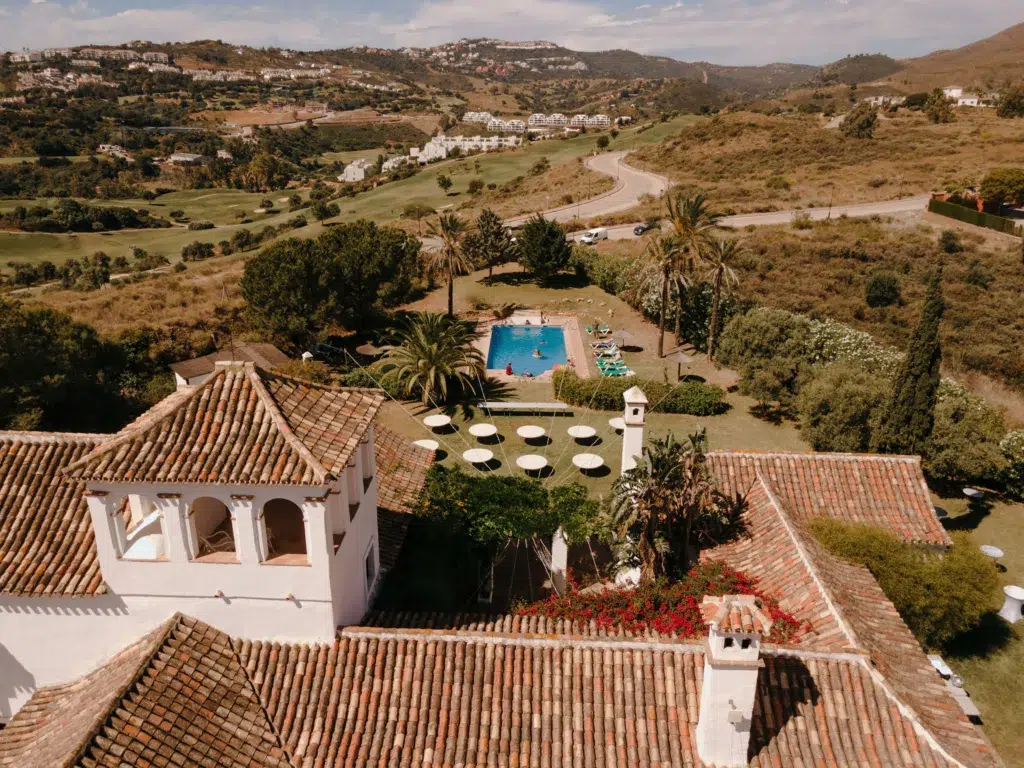
It’s vast, eight provinces spread across an area larger than Ireland. That scale is the point. Within ninety minutes of Málaga airport you can have a beach club in Marbella, a clifftop in Ronda, a working olive finca in the hills, or a Moorish palace courtyard in Seville. No other region in Spain offers that range without a second flight.
It’s also the Andalucia people picture when they picture Spain, and for once the cliché is earned. Eight hundred years of Moorish rule left the tiled courtyards and horseshoe arches you’ll find echoed in venues across the region. Flamenco was born here. The white villages string across the hills, and the olive groves run further than you can see.
It has venue types you won’t find elsewhere, too. A cortijo is a traditional Andalusian farmhouse built around a courtyard; a hacienda is its grander cousin, often a former olive oil estate. Both were working farms, which is why they suit weddings so well: a courtyard for the ceremony, room for long tables, and thick walls that stay cool in August.
We’re based in Marbella, so this is home ground. The honest summary: the coast gives you convenience and glamour at a price, inland gives you scenery and value at the cost of a longer drive. Neither is better. It depends on the day you’re picturing.
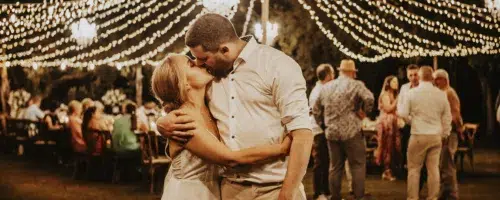
Costa del Sol
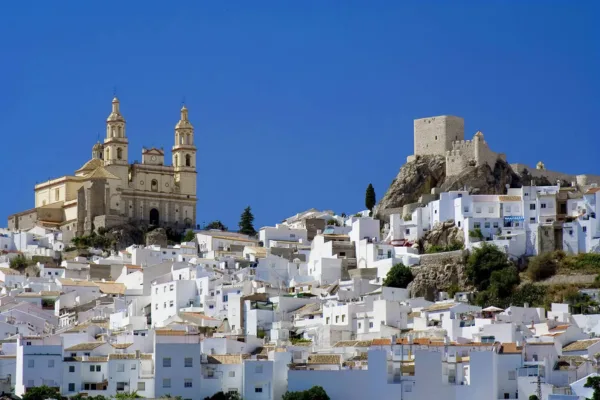
The umbrella name for roughly 150km of Málaga coastline, running from the city down to Manilva. It’s the easiest place in Spain to marry, purely because the infrastructure is already here: the airport, the hotels, the suppliers, the choice. What varies enormously along it is price and character, which is why the town you pick matters more than the coast you pick.
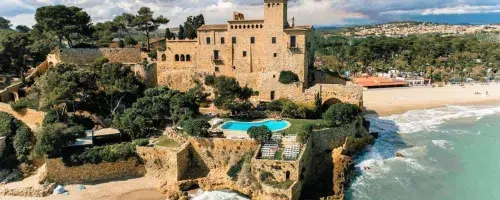
Málaga
The city itself is underrated for weddings. Historic churches, rooftop venues, a genuinely good food scene and the old town for atmosphere, with the airport twenty minutes away and countryside fincas a short drive inland. You get real Spain rather than resort Spain, and noticeably better value than the coast to the west.
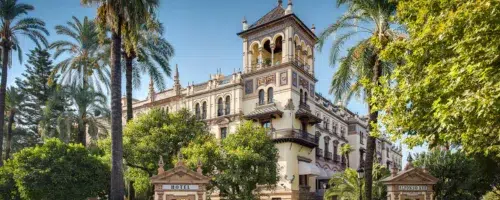
Marbella
The headline act, and priced accordingly. Golden Mile villas, Puerto Banús, five-star hotels, beach clubs and the best supplier network on the coast. It swings from an intimate ceremony in the Old Town to a 250-guest villa party. If your priority is glamour and choice, nowhere beats it. If it’s value, look twenty minutes either side.
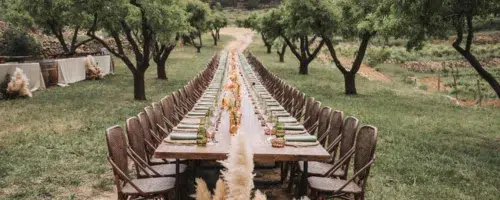
Benalmádena
Wedding Venues in Benalmadena →
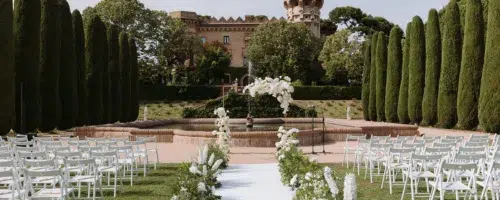
The practical choice. Not glamorous, and doesn’t pretend to be, but the Cercanías train runs from Málaga airport to Arroyo de la Miel in around 25 minutes, so guests arrive without a transfer or hire car. Add good value, accommodation at every price point, and plenty for guests with children to do, and it earns its place.
Fuengirola
Unpretentious and comfortable with it. A seven-kilometre beach, a long promenade, the Moorish Sohail Castle above the town, and prices well below Marbella’s. It’s a proper working town rather than a showpiece, which suits couples who want their guests relaxed rather than impressed.
Mijas
Wedding Venues in Mijas →
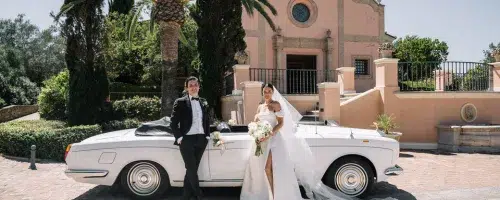
Two places with one name. Mijas Pueblo is the whitewashed village up in the hills, 400 metres above the sea with views down the whole coast, and it’s genuinely beautiful. Mijas Costa, down at La Cala, is the beach end. The pueblo photographs superbly; just plan transport, because the hill road isn’t one for guests after dinner.
Torremolinos
Wedding Venues in Torremolinos →
The original Costa del Sol resort, and still the liveliest. La Carihuela, the old fishing quarter, is the charming part, with seafood restaurants along the front. It’s also one of Europe’s most openly welcoming towns, with a long-established LGBTQ+ scene, which makes it a natural choice for same-sex couples marrying in Spain.
Estepona
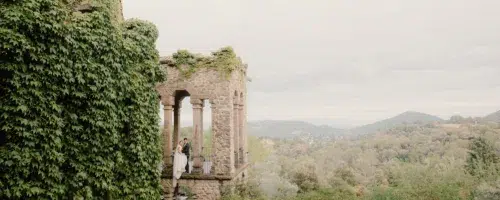
Marbella’s quieter neighbour, and the one couples increasingly choose. The old town is genuinely lovely, full of flowers and street murals, and the whole place feels more Spanish and less staged. Coastal and countryside venues, twenty minutes further from the airport, and a meaningful step down in price.
Manilva
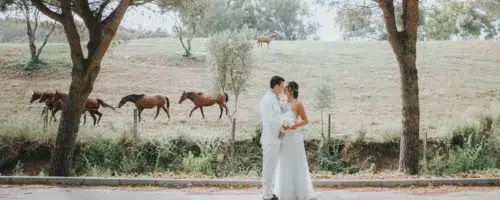
The far western end of the coast, and the surprise. It’s one of the few places on the Costa del Sol with working vineyards, growing muscatel grapes on the hillsides above the sea, so you can have a vineyard wedding without going inland. Puerto de la Duquesa gives you a marina setting, and Manilva is one of the last genuinely Spanish towns on this stretch, largely untouched by resort development.
Ronda
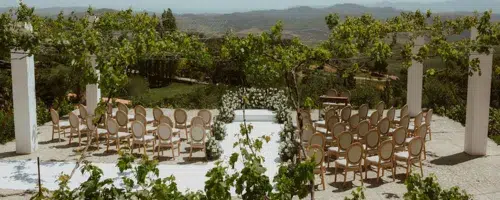
Ninety minutes inland and worth every one. The town sits on a cliff split by the El Tajo gorge, with the Puente Nuevo spanning it, and the surrounding country is all olive groves, vineyards and working fincas. Cooler than the coast in August, dramatically better value, and the scenery does what no venue budget can buy.
Sotogrande
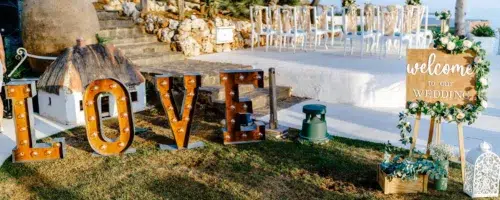
Sotogrande is the choice for couples who want privacy over buzz. It’s a gated residential estate rather than a town, purpose-built in the sixties and deliberately low-key ever since: polo grounds, championship golf, a marina at Puerto Sotogrande, and elegant private villas set back behind mature trees.
Cádiz and Tarifa
Wedding Venues in Cádiz →
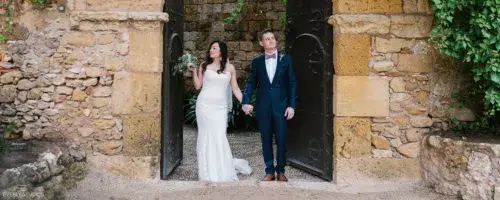
The Atlantic side, and a different country entirely. Cádiz claims to be the oldest city in western Europe, Vejer is one of the finest white villages, and Tarifa is where two seas meet. The beaches are wilder and emptier. The catch is the wind, which is relentless in Tarifa and worth checking anywhere here before you commit to an outdoor ceremony.
Contact Us
Make Your Day Special with Us
Start Your Wedding Journey and discover our exceptional services, designed to make your day extraordinary and unforgettable. We look forward to creating wonderful memories with you.
Balearic Islands
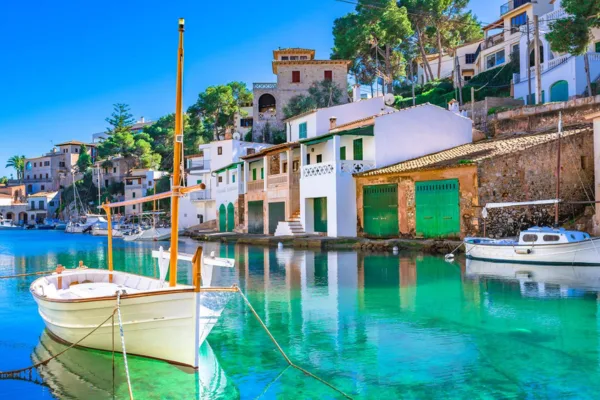
Wedding Venues in Balearic Islands →

Ibiza
Better than its reputation. Away from the clubs, the island is all almond groves, whitewashed fincas and sunsets that genuinely do stop conversation. It runs the full range, from a barefoot ceremony at a beach club to a private villa in the hills, and the supplier scene is excellent because the island has been doing this for decades. Prices are the highest in the Balearics, and August is busy in every sense.
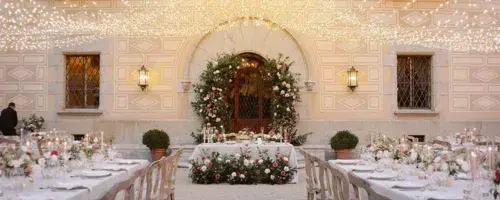
Mallorca
The most versatile of the islands. Palma airport is superbly connected, so guests arrive easily, and within forty minutes you can be at a seaside resort, a private villa, or a centuries-old stone finca in the Tramuntana mountains, which are a UNESCO World Heritage site and noticeably cooler than the coast in August. It’s the sensible choice that happens to also be beautiful.
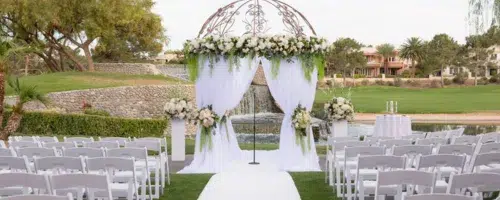
Menorca
Wedding Venues in Menorca →
The island couples pick when they want the Balearics without the noise. It’s a UNESCO biosphere reserve, which has kept development down and the coastline intact, so the coves are quieter and emptier than anywhere on Ibiza. Ciutadella’s old town is genuinely lovely. Fewer venues, fewer flights, and that’s rather the point.

Formentera
Wedding Venues in Formentera →
The smallest, reachable only by ferry from Ibiza, which is both its charm and its constraint. The water is astonishing and the pace is slow. But every guest, supplier and chair arrives by boat, so it works beautifully for an intimate wedding and becomes a logistical exercise for anything over about fifty.
Canary Islands
The Canaries are Spain’s outlier, and it’s worth understanding what they actually are before you weigh them up.
They sit off the coast of Africa, roughly 1,000km from the mainland, which is why they behave nothing like it. The flight is four to four and a half hours from the UK rather than two and a half. But that’s the trade you’re making for the one thing no other Spanish region can offer: reliable warmth in January. Average winter highs sit around 21°C, and while the mainland is planning around rain, the Canaries are simply having another pleasant day. If your heart is set on a winter wedding without a backup plan, this is the answer.
The other surprise is the landscape. This is volcanic country, so the scenery is black sand, lava fields, pine forest and craters, and Tenerife has Spain’s highest mountain in Mount Teide at 3,715 metres. Some couples find it dramatic and unlike anywhere else. Others find it stark. It’s worth looking at photographs honestly before committing, because it isn’t the Mediterranean and doesn’t pretend to be.
The practical picture is mixed. Value is good, often better than the Balearics, and there’s no peak-season scramble because the season never really peaks. Against that: the longer flight thins a guest list, and the supplier scene is smaller and more geared to resort weddings than the mainland’s. Worth knowing too that the Canaries sit outside the EU VAT area, using their own IGIC at 7% rather than 21% IVA, which is a genuine saving on a wedding budget.
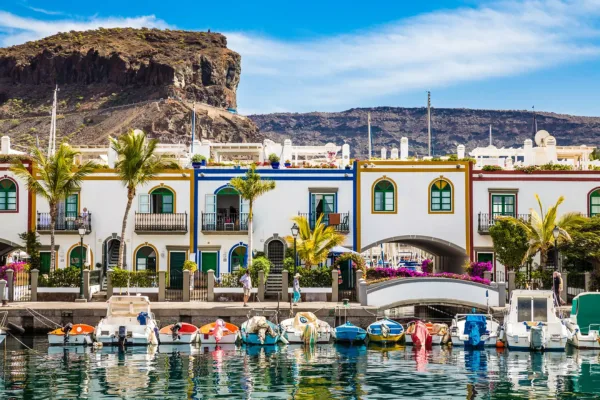
Wedding Venues in Canary Islands →
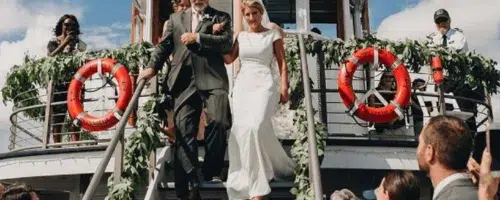
Tenerife
The biggest and best connected, with two airports and the widest choice of venues. Costa Adeje in the south has the resorts and the reliable sun; the north around La Laguna and La Orotava is greener, cooler and more genuinely Spanish. Teide dominates everything, and the light on it at sunset is worth planning your photographs around.
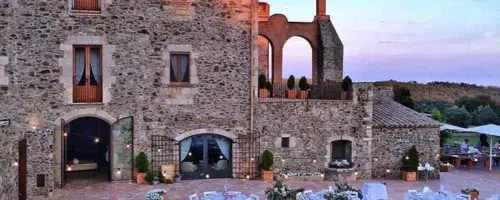
Gran Canaria
Wedding Venues in Gran Canaria →
Often called a continent in miniature, and not unreasonably: you can go from the dunes at Maspalomas to pine forest and mountain villages in an hour. Las Palmas is a proper working city with a real old town, and the island has a long-established, openly welcoming scene, which makes it a natural choice for same-sex couples.
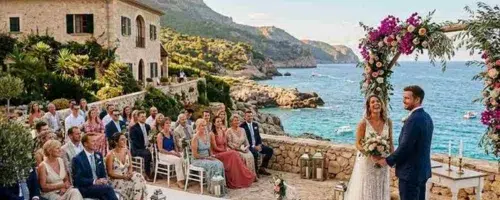
Lanzarote
Wedding Venues in Lanzarote →
The most distinctive of the four, and the one you’ll either love or won’t. It’s a lunar landscape of black lava, whitewashed cubes and no high-rises, largely because the artist César Manrique shaped the island’s architecture. Nothing else in Spain looks remotely like it, which for the right couple is exactly the appeal.
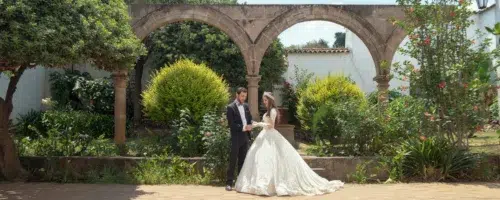
Fuerteventura
Wedding Venues in Fuerteventura →
The beach island. Long pale sands, dunes at Corralejo, and consistently the windiest of the group, which is why the windsurfers come. That wind is the thing to plan around: it’s rarely a problem for a sheltered venue and a real one for an exposed beach ceremony.
La Palma
Wedding Venues in La Palma →
Green, mountainous and barely developed, known as the beautiful island. It’s a UNESCO biosphere reserve with some of the clearest night skies in the world, which is why the observatories are here. Almost no wedding infrastructure, so it’s for couples who want somewhere genuinely off the map and are relaxed about bringing suppliers in.
Contact Us
Make Your Day Special with Us
Start Your Wedding Journey and discover our exceptional services, designed to make your day extraordinary and unforgettable. We look forward to creating wonderful memories with you.
Catalonia
Catalonia is the region that most rewards couples who look past the obvious, and it starts with understanding that it isn’t quite like the rest of Spain.
It has its own language, its own traditions and a strong sense of itself. Catalan and Spanish are both official here, and most local suppliers work in Catalan first, which occasionally surprises couples who’ve planned weddings further south. Everyone speaks Spanish too, and the wedding trade speaks good English, so it’s rarely a barrier. But contracts sometimes arrive in Catalan, and it’s worth having someone who reads both.
What Catalonia offers that nowhere else does is the masia. It’s the traditional Catalan farmhouse: stone-built, often sixteenth or seventeenth century, arranged around a courtyard with barns and land. They were working farms, which is precisely why they suit weddings so well. A courtyard for the ceremony, a threshing floor for the long tables, barns that convert into a reception, and walls thick enough to keep August bearable. Everything happens on one site, with no transfers, and the wet-weather plan is built into the architecture rather than bolted on afterwards.
Very few couples actually marry in central Barcelona. The landmark venues are magnificent, but the city brings tight noise curfews and awkward logistics for a full day. What most people do is use Barcelona as the arrival point, with guests staying and exploring there, and marry within an hour of it. That works because El Prat is one of Europe’s best-connected airports, at around two and a quarter hours from the UK.
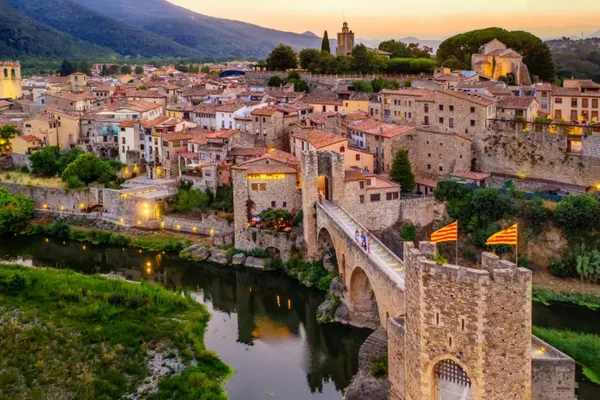
Wedding Venues in Catalonia →
Barcelona
Best used as the base rather than the venue. Rooftop terraces, design hotels and landmark buildings for couples who want a city wedding, with everything walkable and plenty for guests to do either side. The catch is the curfew: most city venues stop outdoor music well before midnight, so ask before you book if a late party matters.
El Vallès and Sant Cugat
Wedding Venues in El Vallès and Sant Cugat →
Twenty-five to forty minutes out, and where the great masies are. Countryside privacy without a long transfer, which makes it the most practical choice for an international guest list who are staying in the city. Close enough that nobody needs a hire car.
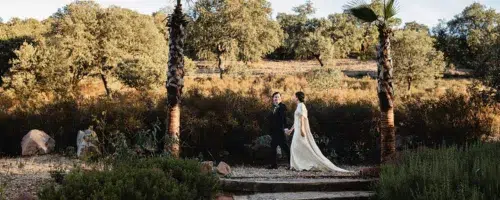
Sitges
Wedding Venues in Sitges →
Forty-five minutes south, on the Garraf coast. Clifftop estates and coastal villas with proper sea views, and the town itself is lively, characterful and one of the most openly welcoming places in Spain, with a long-established LGBTQ+ scene. Guests get somewhere genuinely enjoyable to stay.
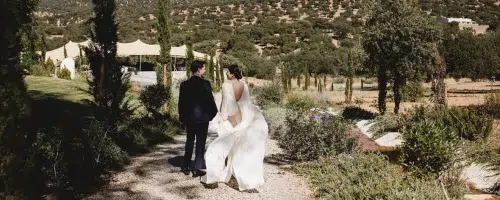
The Penedès
Wedding Venues in The Penedès →
An hour inland, and this is cava country rather than simply wine country. That distinction matters: it means working cellars, vine rows and food built around the wine, at estates like Masia Cabellut. Harvest around September is spectacular and books early. It’s the reason a Penedès wedding feels specifically Catalan rather than generically Mediterranean.
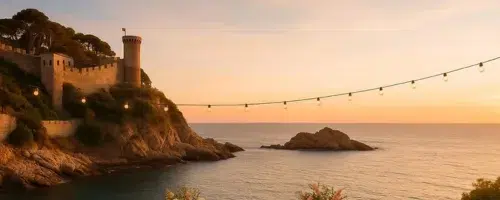
The Costa Brava
Wedding Venues in The Costa Brava →
Ninety minutes north, and the most beautiful of the lot: pine forests running down to rocky coves, with Begur, Cadaqués and S’Agaró the names to know. Girona airport is closer but has far fewer routes, so check before assuming guests can use it. Worth the drive, but budget for coaches with a large list.
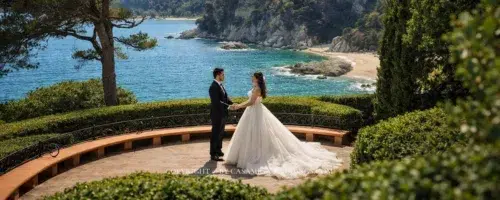
Girona and the Empordà
Wedding Venues in Girona and the Empordà →
Inland from the Costa Brava, and quietly one of the best food regions in Europe. Medieval Girona is stunning, and the Empordà countryside is all masies, vineyards and stone villages, at noticeably better value than the coast. Few couples look here, which is rather the point.
Valencia
The Valencian Community runs down Spain’s eastern coast for roughly 500 kilometres, from Castellón in the north through Valencia city to Alicante and the Costa Blanca. It has the same Mediterranean light, the same beaches and much the same weather as the more famous regions, at prices that are consistently lower. That’s the whole proposition, and for a lot of weddings it’s a compelling one.
Valencia itself is Spain’s third city and an increasingly obvious choice. It has a magnificent medieval old town, the Calatrava-designed City of Arts and Sciences for couples who want something architectural and modern, nine kilometres of urban beach, and the Turia gardens running through the middle where a riverbed used to be. It’s also the home of paella, which is not a small thing when you’re feeding 120 people. The airport is well connected and around two and a half hours from the UK.
South of the city, the Costa Blanca changes character every few miles. Jávea, Dénia, Moraira and Altea are the pretty end, with rocky coves, whitewashed villages and a quieter, more residential feel than the Costa del Sol. Further south around Alicante and Benidorm it becomes a fully-fledged resort coast. The northern stretch is where most destination weddings happen, and it has a large, long-settled British and northern European community, which means an unusually deep bench of English-speaking suppliers.
Wedding Venues in Valencia →
Valencia city
Wedding Venues in Valencia city →
The most underrated city wedding in Spain. Medieval palaces and courtyards in the old town, striking modern spaces at the City of Arts and Sciences, urban beaches, and food that needs no defending. Well connected, walkable, and considerably cheaper than Barcelona for something comparable.
Jávea
Wedding Venues in Jávea →
The pick of the northern Costa Blanca. It’s three places really: the old town inland, the port, and the Arenal beach, with the Montgó mountain over the lot. Rocky coves, pine and a settled, unshowy feel. Popular with couples who’ve been visiting for years and want to marry where they holiday.
Dénia
Wedding Venues in Dénia →
A working port town with a castle above it and a genuine food reputation, as it’s a UNESCO City of Gastronomy. Long sandy beaches to the north, rocky coves to the south. It also has the ferry to Ibiza and Mallorca, which is a nice option for a guest excursion.
Altea
Wedding Venues in Altea →
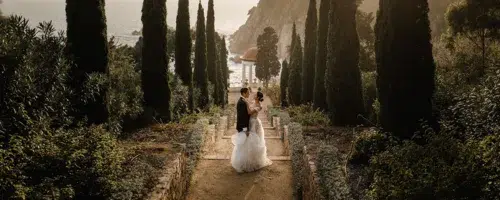
The prettiest of them. A whitewashed old town climbing a hill to a blue-domed church, with views along the whole bay. Long an artists’ town, so it has more character than its neighbours. Small, so venues are limited, but it photographs beautifully.
Moraira and Calpe
Wedding Venues in Moraira and Calpe →
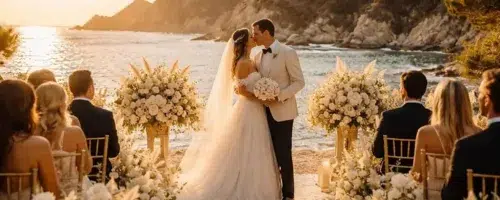
Quieter still. Moraira is small, low-rise and deliberately upmarket, with a marina and no high-rises. Calpe is defined by the Peñón de Ifach, the enormous rock rising straight out of the sea, which makes an unmistakable backdrop.
Alicante
Wedding Venues in Alicante →
The practical end. The airport is here, so guests arrive with minimal fuss, and the city has a castle on a hill, a proper old town and a long palm-lined seafront. Better value again than the coast to the north, and easy for a guest list flying in from several countries.
Castellón
Wedding Venues in Castellón →
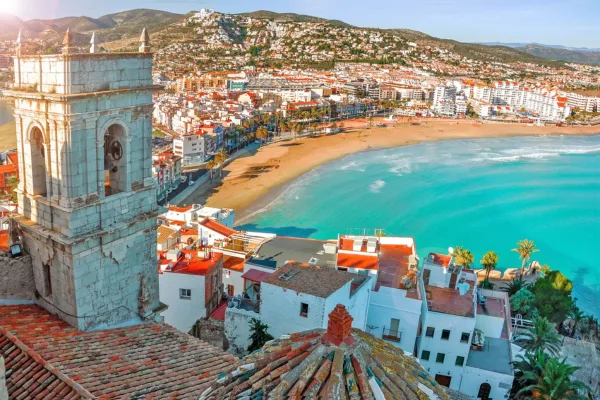
The northern stretch, and the least developed. Peñíscola’s walled sea castle is genuinely spectacular, and the interior has mountain villages almost nobody visits. Very few wedding venues, but if you want somewhere unphotographed, it’s there.
Madrid
Madrid is the one region on this list where nobody comes for the beach, and that turns out to be the point.
It sits almost exactly in the middle of Spain, 650 metres up on a plateau, and it’s the only major Spanish wedding destination that isn’t coastal. What it offers instead is grandeur. This was the imperial capital, and the venues reflect it: royal palaces, aristocratic estates, historic fincas in the countryside around the city, and elegant hotels in the centre. If you want formality and occasion rather than barefoot on the sand, nowhere in Spain does it better.
The practical case is strong too. Barajas is Spain’s busiest airport and one of Europe’s best-connected, which matters enormously if your guests are flying in from several countries rather than just the UK. It’s around two and a half hours from the UK, and the metro runs from the airport into the city in half an hour, so guests don’t need transfers or hire cars. Madrid is also a genuinely brilliant city to be a guest in, with the Prado, the food, and a nightlife that starts when other cities are finishing. A wedding weekend here fills itself.
The climate is the thing to plan around, and it’s unlike the coast. Madrid is dry and continental, with no sea to moderate it. Summers are fierce, regularly above 35°C in July and August, and there’s no breeze to save you, which is why Madrileños famously leave the city in August. Winters are properly cold, often near freezing at night, with the Guadarrama mountains snow-capped an hour away. That narrows the sensible window: May, June, September and October, with late September to mid-October arguably the best of it.
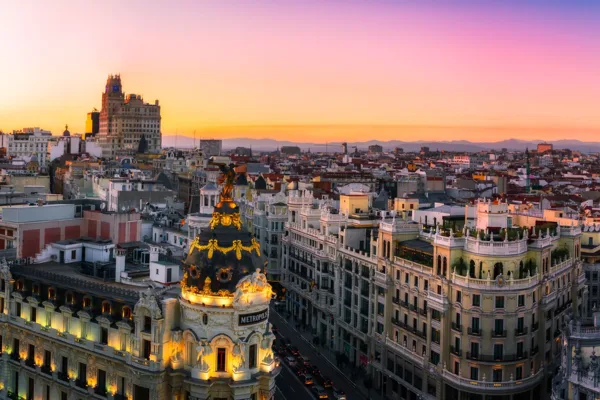
Wedding Venues in Madrid →
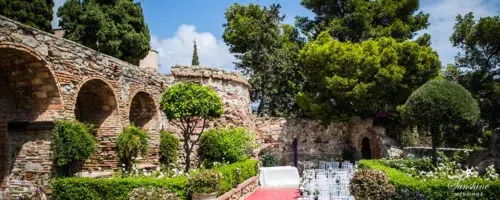
Madrid city
Wedding Venues in Madrid city →
Palaces, converted mansions, rooftop terraces and grand hotels, in a city that’s easy for guests and superb for a wedding weekend. The trade-offs are the ones any capital brings: price, and noise restrictions that vary by venue. The upside is that nobody needs a car, and there’s more to do between events than anywhere else on this list.
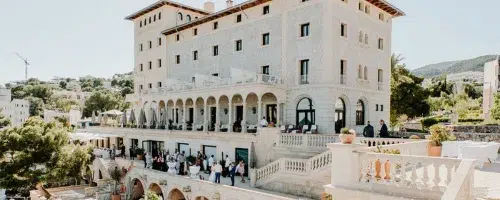
El Escorial
Wedding Venues in El Escorial →
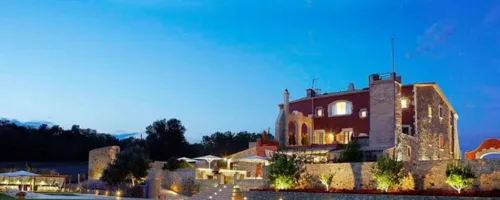
Forty-five minutes north-west, in the foothills of the Guadarrama. The vast royal monastery dominates the town, and the surrounding area has grand estates and cooler summer air than the city, which is exactly why the Spanish court came here to escape the heat. The same logic still applies to your August wedding.
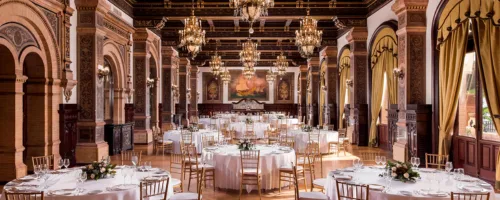
Chinchón
Wedding Venues in Chinchón →
An hour south-east, and unlike anywhere else near Madrid. The Plaza Mayor is a circular, arcaded, wooden-balconied square that’s been a bullring, a theatre and a market, and it’s genuinely arresting. The town is small and traditional, and it makes a wedding feel like a village celebration rather than a city one.
Sierra de Guadarrama
Wedding Venues in Sierra de Guadarrama →
An hour north, and the mountain option. Pine forest, granite peaks and a national park, with fincas and country hotels tucked into it. Ten degrees cooler than the city in high summer, which is the entire argument for it, and beautiful under snow if you fancy a genuinely different winter wedding.
Aranjuez
Wedding Venues in Caranjuez →
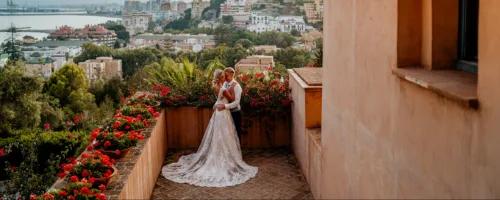
Fifty minutes south, and the elegant one. A royal summer palace with formal French-style gardens along the Tagus, laid out for exactly this sort of occasion. The whole cultural landscape is UNESCO-listed. If you want gardens and formality without the city, this is where to look.
Gibraltar
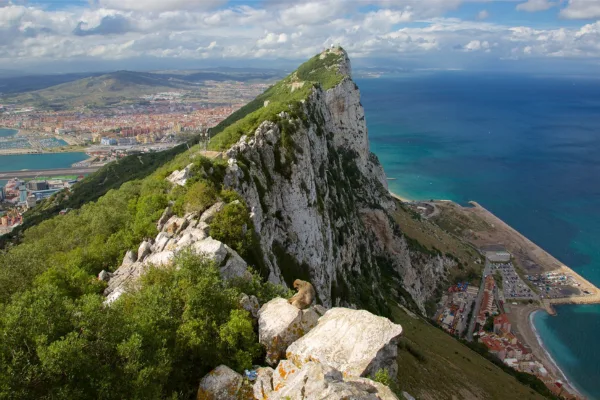
Gibraltar is the answer to a problem most couples don’t discover until they’re deep into planning a Spanish wedding: a legally binding civil marriage in Spain is genuinely difficult for non-residents.
Gibraltar isn’t Spain. It’s a British Overseas Territory, and the process here is the one you’d recognise from home. There’s no residency requirement. English is the official language, so no sworn translations. UK documents are accepted as they are, with no apostille and no certified translation. And you can typically be married within a couple of days of arriving rather than a couple of months.
That’s why it’s been a wedding destination for decades. John Lennon and Yoko Ono married here in 1969, precisely because it was quick and nobody needed to be resident. Sean Connery married here too. The Registry Office on Main Street has been doing this a very long time and does it well.
Marry legally in Gibraltar, celebrate in Spain.
It works because Gibraltar sits at the western end of the Costa del Sol. Sotogrande is twenty minutes away. Marbella is about an hour. So couples do the legal ceremony in Gibraltar, often just the two of you, or with a handful of family, and then hold the wedding proper at a Spanish venue, with every guest, on the day that matters. You get a legally binding marriage and complete freedom over where and how you actually celebrate.
Some couples do the whole thing in Gibraltar. Others treat it as an errand and think no more of it. Both are fine.
Getting Married in Spain
The legal side is the part that surprises people. Everything else about a Spanish wedding is easier than you’d expect; this bit is harder.
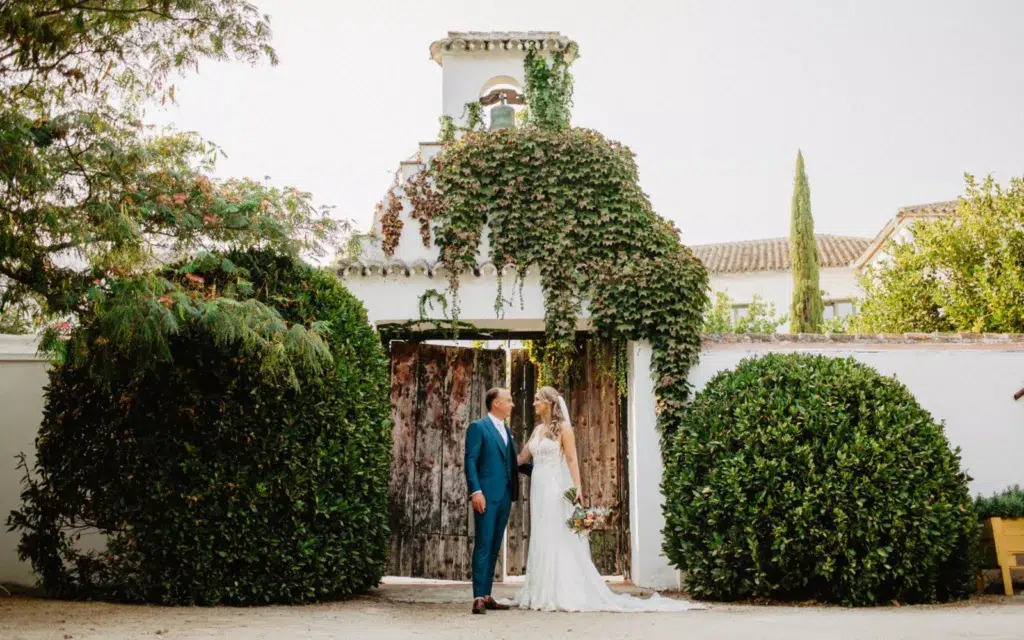
A legally binding civil wedding in Spain is difficult for non-residents. Most international couples therefore marry legally at home, in a brief registry office appointment, and hold their real wedding here as a symbolic ceremony. Nothing about the day changes. You still exchange vows, still have a celebrant, still have every guest watching. The only difference is that the paperwork was signed elsewhere.
That surprises couples who assume it’s a compromise. It isn’t. It’s what most people do, and it buys you something valuable: with a symbolic ceremony you can marry anywhere, at any time, in any format. No registry availability, no restrictions on the venue, no ceremony squeezed into a slot the town hall offered you. Your three options are:
Symbolic ceremony (what most couples choose). Legally married at home beforehand, celebrated properly in Spain. Total freedom over where, when and how. No Spanish paperwork at all.
Civil ceremony in Spain. Legally binding, but generally requires at least one of you to be resident and registered in the municipality, and the process runs through the Registro Civil or a notary. Documents must be gathered, apostilled and officially translated, and timelines can run to months. Genuinely possible if you have a Spanish connection; a considerable undertaking if you don’t.
Catholic church wedding. Open to non-residents, but both of you generally need to be baptised Catholics, with confirmation certificates, and your home parish must complete a pre-nuptial enquiry that’s forwarded to the Spanish diocese. Start at least a year ahead. Other denominations have their own requirements.
Wedding locations in spain
To ensure you find the best wedding location and you get the most out of your wedding experience, we highly recommend exploring our comprehensive FAQs.

Contact Us For More Information
Common Questions
Where's the best place in Spain for a family wedding?
Benalmádena, honestly, and it rarely makes anyone’s list. The Cercanías train runs from Málaga airport to Arroyo de la Miel in about 25 minutes, so grandparents and families with young children arrive without a transfer or hire car. There’s a marina, beaches and a cable car to fill the days either side, and accommodation runs from five-star to modest, so nobody’s forced into one price bracket. Fuengirola works similarly. Mallorca is the island equivalent: superb flight connections, and enough to do that guests get a proper holiday. What all three share is the thing that actually matters for a family wedding, everyone can get there, afford it, and enjoy it.
Where's best for an intimate wedding?
Inland, where small doesn’t feel empty. Ronda and the surrounding countryside is our first suggestion: working fincas built for 30 or 40, dramatic scenery, and prices that mean an intimate wedding feels generous rather than scaled back. Formentera suits couples who want tiny and remote, though everything arrives by ferry. Menorca is the calmer Balearic. The mistake to avoid is booking somewhere grand and filling a fraction of it, since a venue slightly too big feels emptier than one slightly too small. Look for places whose maximum is close to your guest count, not their minimum.
Where's best for a rustic wedding?
Inland Andalucía, without much argument. This is cortijo and hacienda country: stone farmhouses built around courtyards, olive groves, whitewashed villages, and thick walls that stay cool in August. Ronda and the hills behind the Costa del Sol are the heartland. Two strong alternatives: the Tramuntana mountains on Mallorca, where the stone fincas are UNESCO-protected and cooler than the coast, and Catalonia’s masies, sixteenth-century Catalan farmhouses an hour from Barcelona. Each is genuinely rustic in a different national accent.
Which is the coolest region in Spain?
By temperature, the north: the Basque Country, Galicia, Asturias and Cantabria, where summers sit comfortably in the low-to-mid twenties and the landscape is properly green. The trade-off is rain, which is why the north is green. If you want somewhere cooler but still reliably dry, look up rather than north, the Tramuntana on Mallorca, the Sierra de Guadarrama an hour from Madrid, or the hills around Ronda all run several degrees below the coast in August, without giving up the sunshine.
Which Spanish city is best for a cathedral wedding?
Seville and Santiago de Compostela are the two that carry the most weight, followed by Toledo, Burgos and Granada. But there’s a practical answer underneath the romantic one: cathedrals are working churches, not venues. A Catholic wedding in one generally requires both of you to be baptised Catholics with confirmation certificates, and your home parish must complete a pre-nuptial enquiry that’s sent to the Spanish diocese. Start at least a year ahead. Many couples find a smaller historic church gives them the same atmosphere with far less process, and some cathedrals won’t marry non-parishioners at all, so check before you set your heart on one.
What time of year is best to get married in Spain?
Late spring and early autumn, roughly May to June and September to October. Warm, dry and comfortable, without the peak-summer heat, and September is arguably the pick of it: the sea’s at its warmest, the crowds have thinned, and the light is beautiful. July and August are gloriously sunny but genuinely hot inland, where Seville and Córdoba regularly pass 40°C, so most couples plan a later ceremony. Winter is mild in the south and often the best for availability and value, though you’ll want a proper indoor backup. The Canaries are the exception to all of it, staying reliably warm in January.